There are many reasons to switch from gas to induction cooking, including cooking efficiency, ease of cleaning and health benefits
It’s important to consider the full cost implications of moving to induction cooking before you buy a new cooktop
CHOICE experts have reviewed a range of induction cooktops and portable induction cooktops. CHOICE members have exclusive access to our detailed reviews and ratings
If you’re choosing a new cooktop, there’s a lot to consider. More than just price and convenience, there are running costs, environmental impacts, and even health effects to take into account.
There are lots of reasons why a growing number of people are making the move away from gas cooking. Gas is no longer the low-cost option it once was. There are warnings about the health implications of using gas in the home, particularly for children and people living with asthma, and gas connections are being phased out of new homes in some states and council areas. All of these factors, combined with a desire to minimise reliance on fossil fuels, have understandably led many households to investigate alternatives to gas cooking.
If you’re contemplating extinguishing the flame in favour of an induction cooktop, here are some things to consider.
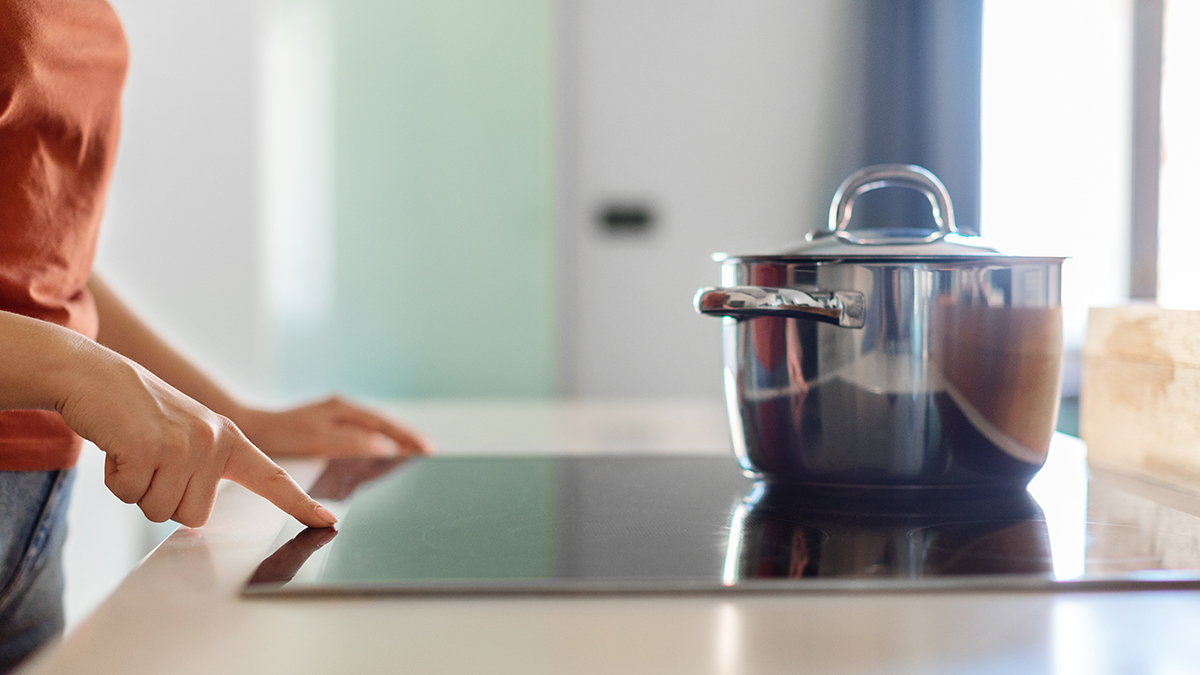
It may take a little while to become acquainted with an induction cooktop as you learn which size pan to use on which cooking zone and figure out how the safety features work.
“Trial and error is needed to work out the settings as they are a little different to a gas or ceramic cooktop,” says CHOICE home economist, Fiona Mair.
But once you’re comfortable, you’ll find little to no difference in cooking results. If anything, you may discover dinner is ready more quickly, due to induction’s efficiency.
With induction, energy is directed into the cookware base instantly, transferring with approximately 85% efficiency.
With induction, energy is directed into the cookware base instantly, transferring with approximately 85% efficiency. Cooktops that transfer energy via gas-powered heating elements operate at an efficiency of 32%.
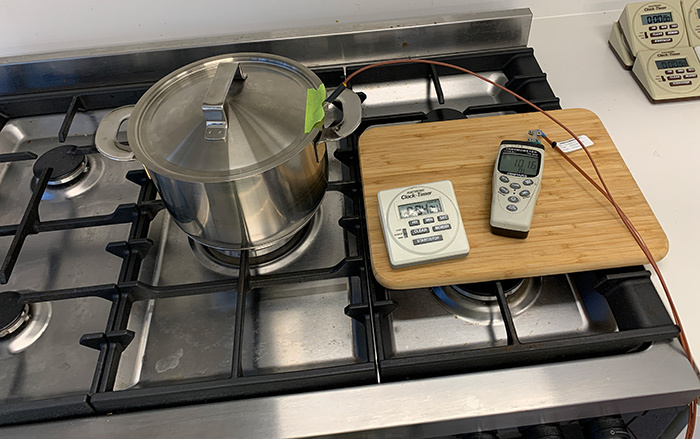
CHOICE experts measured how long it takes to boil one litre of water on a gas cooktop compared to induction.
To confirm which cooktop heats your pots most efficiently, CHOICE experts conducted a boil time test, measuring how long it takes to boil one litre of water. The results placed induction first, followed by gas and then ceramic.
One of the top performing models in our induction cooktop review takes just two minutes and 19 seconds to bring a litre of water to the boil, while a gas cooktop can take four minutes or longer. (Obviously this will depend on the specific cooktop and the cookware you’re using).
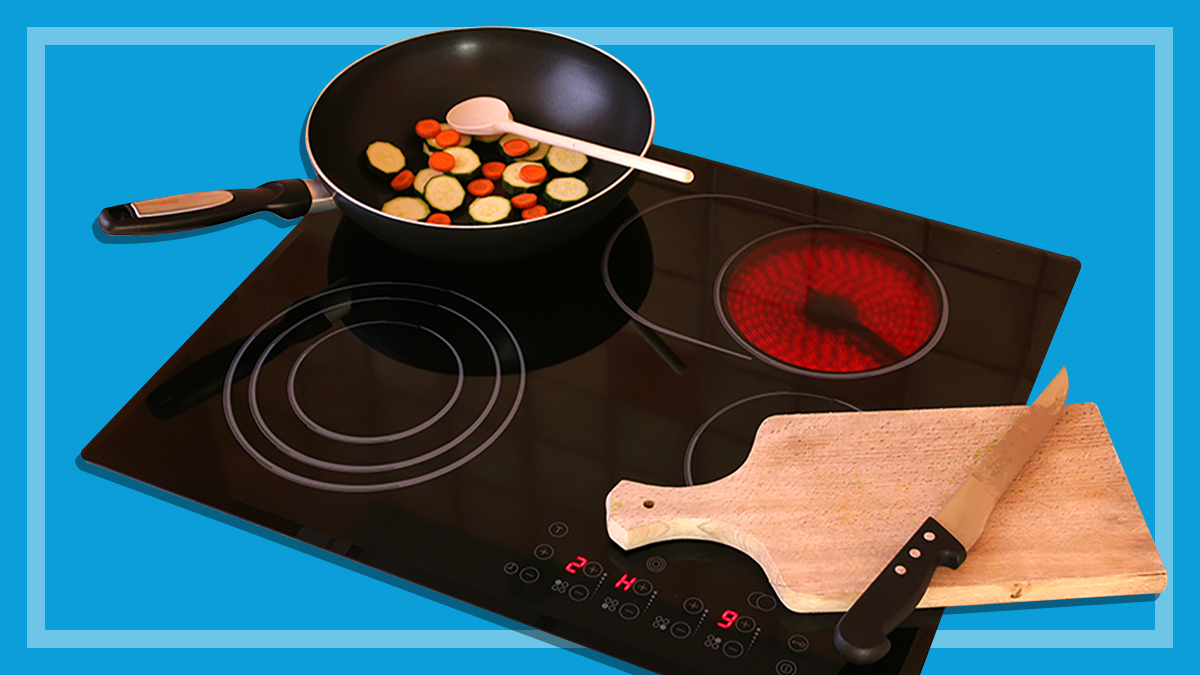
The most important thing when selecting an induction cooktop is to choose one with a range of cooking zone configurations. You should ensure the base of your pans closely matches the designated cooking zones, so that the entire base is in direct contact with the induction zone.
This is because it’s the pan itself that’s directly heated, and more contact means better heat transference. Using a pan with a smaller or larger diameter than the induction zone creates a weaker magnetic field and less heat output.
“Induction cooktops come in all sizes and have a range of cooking zone configurations,” says Fiona.
“Choose one that has a variety of cooking zones in different sizes, such as an extra-large, flexi (an enlarged single zone that heats pans of any size that are positioned within it) and a small cooking zone, as these are better matched to a variety of cookware sizes.”
While some cooks might lament the lack of a dedicated wok burner that many gas cooktops have, you can purchase flat-bottomed induction woks that will easily reach the required heat intensity for a good stir-fry. Instead of tossing the food in the wok, you simply need to use a cooking implement to move the food around.
Installation considerations: How much will it cost?
Not only can induction cooktops be expensive to buy, the installation costs can also be high and you’ll need to be sure the power supplied to your home has adequate wattage to service the cooktop.
“Before purchasing, check the power needs of the appliance you would like to buy, because if your home currently cannot accommodate the extra power needed, it can be extremely expensive to upgrade”, warns Fiona. “An induction cooktop may require a 20A, 32A or even 42A connection. These will have to be hard-wired by a licensed electrician if you don’t have an existing connection. You may also need an extra circuit to accommodate the higher wattage, and this will add more costs,” she explains.
Exactly how much those extra costs might be depends on your home’s current set-up. It might cost anything between $600 to $1200 for a new dedicated circuit and safety switch, but if a full switchboard or a mains upgrade is needed, it can cost between $3000 and $9000. For more accurate pricing, you’ll need to get a quote from a licensed electrician.
Check the power needs of the appliance you would like to buy, because if your home currently cannot accommodate the extra power needed, it can be extremely expensive to upgrade.
In good news, Fiona says some low-current alternatives are coming onto the market.
“We are beginning to see some induction cooktop brands available that are low current,” she says.
An induction cooktop with a total maximum power output below 5kW is commonly classified as a low-current cooktop, provided it is designed to operate on a single-phase, standard household supply. These units are designed to run on existing 20Amp wiring, making them suitable for upgrading from old electric or gas cooktops without needing a full circuit upgrade. However, their lower power capacity means cooking settings may be restricted when using multiple zones simultaneously.
The benefits of an induction cooktop win out over gas in many areas. But will switching from gas to induction save you money in the long term?
“Running costs for induction are certainly cheaper than gas, but because the purchase price and installation costs are so high for induction, you’re unlikely to make dramatic savings immediately,” says CHOICE expert Chris Barnes.
I don’t think we’ll ever again see the cheap gas prices of past decades that once made gas attractive
CHOICE expert, Chris Barnes
We’ve calculated the yearly running costs for the induction cooktops we reviewed in our most recent tests to be as low as $46 and as high as $80. This is based on using the cooktop for 30 minutes, three times a week and is based on an electricity cost of 40c/kWh. While we can’t perform a definitive cost analysis between gas and induction cooktops, the Climate Council has calculated that households can save between $14 and $111 a year on running costs, depending on where they live, by switching from a gas to an induction cooktop.
“You’re more likely to make significant savings when you switch away from gas for all your appliances – for cooking, heating and hot water. If you can also install a good solar power system and use it wisely, I would say that long-term savings are pretty much guaranteed,” says Chris.
If you do decide to go fully electric, ensuring you have your gas supply cut off is important, as even if you don’t use it, it may cost hundreds of dollars annually in supply charges. Removing an existing gas connection will usually cost between $250 and $500.
Heavy-based cookware such as cast iron, stainless steel, wrought iron, or cast iron enamel, will require less preheating time because they hold their heat well.
Getting the right cookware
Induction cooktops work by producing an electromagnetic field, creating energy that heats your cookware. So your pots and pans need a ferromagnetic base to work on an induction cooktop.
“Cast iron, steel, and some enamel steel and stainless steel pans will work on induction if the base is a magnetic grade of stainless steel,” says Fiona.
But there’s bad news if you have all aluminium, glass or ceramic pans: they’re not suitable for induction cooktops.
Before you rush out to buy new cookware, Fiona suggests using a magnet to check the pots and pans in your kitchen. If the magnet sticks well to the base, it’ll work on an induction cooktop.
Remember, too, that the quality of your cookware will affect your cooktop’s efficiency.
“Heavy-based cookware such as cast iron, stainless steel, wrought iron or cast iron enamel materials hold their heat well and are suitable for medium to high temperatures,” says Fiona.
With induction cooking, these materials require less preheating time, and because they hold their temperature well, they cook more efficiently.
“Cookware with a thin base and cheap, non-stick cookware can warp if heated on high temperatures and non-stick coatings can degrade. This leads to poor heat distribution and longer cooking times, increasing running costs.”
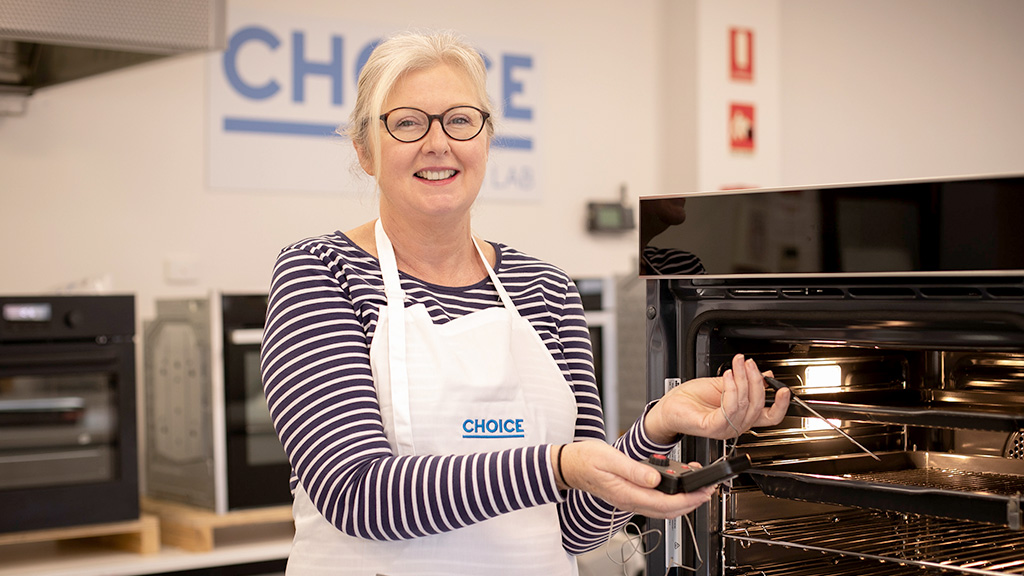
CHOICE kitchen expert Fiona Mair regularly puts cooking appliances to the test in our labs.
Gas vs induction: Which is easier to clean?
Anyone who has spent hours trying to clean those fiddly burners and trivets on a gas cooktop will find cleaning an induction cooktop a breeze. With their knob-free, continuous glass surface, induction cooktops are generally much easier to clean.
Fiona explains that even if you spill food onto an induction cooktop, it won’t bake on and become impossible to clean off (as often happens with gas and ceramic cooktops). This is because the induction cooktop surface doesn’t become too hot, so if spills occur, they won’t bake on, making them much easier to wipe up.
“On the downside, sugary substances can stick to the glass and create an uneven surface and you may have to buy a special cream to keep your cooktop streak-free and remove any marks from pans,” says Fiona. “Touch controls may also become unresponsive if they are greasy from cooking splatters.”
When testing cooktops, CHOICE experts always give each model an “Ease of use” score which includes a note on how easy each model is to clean. Induction cooktops continually come out on top in this respect.
Could a portable induction cooktop be right for you?
We’ve tested induction cooktops that range in price from $799 for a budget option, right up to $5699 for a high-end model with all the bells and whistles. If you’re looking for a more economical way to dip your toe into gas-free cooking, a portable induction cooktop could be a good place to start: The portable units in our most recent test range in price from $49 to $1858.
But they do have their drawbacks, and on the whole, they aren’t as efficient, intuitive, or as easy to use and clean as an installed induction cooktop. In fact, many don’t perform well at all – of the 10 portable induction cooktops our experts tested, only two are recommended.
If you want to get a feel for what it’s like cooking on an induction, a portable model may not be the answer
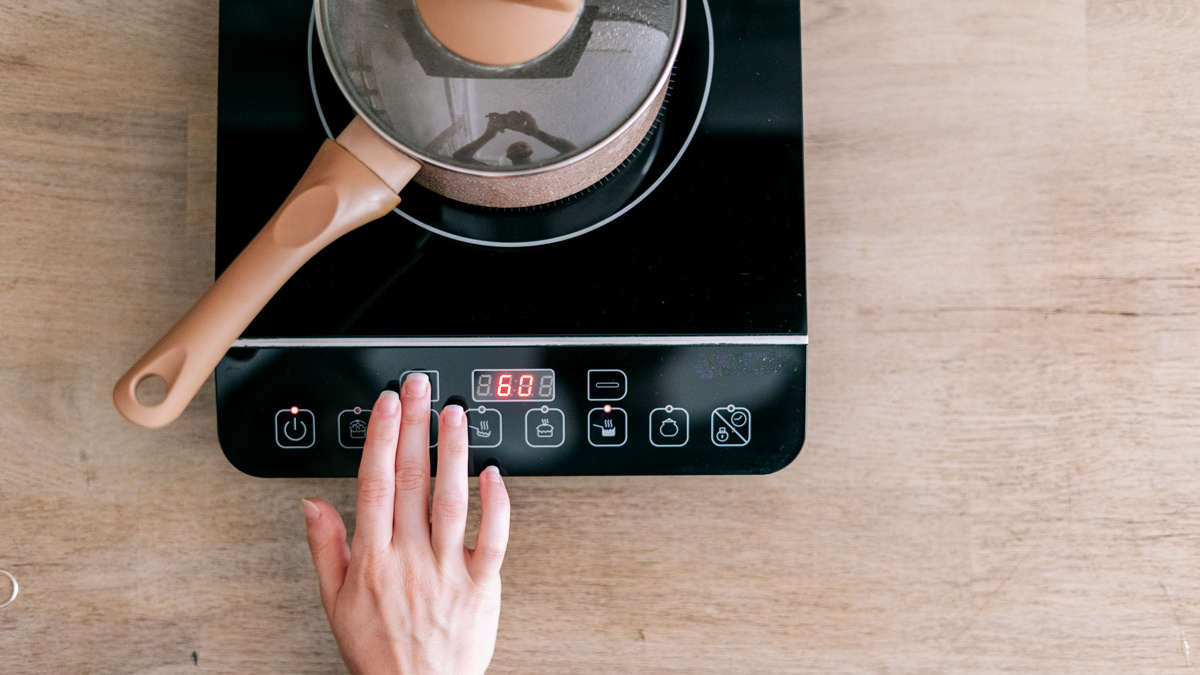
They also only have one or two cooking zones, which will limit the size of the cookware you can use, and although they don’t require installation (just plug them in and they’re ready to go), CHOICE experts say that cooking on a portable model can be a very different experience from using a built-in induction cooktop. So if you want to get a feel for what it’s like to cook on an induction, a portable model may not be the answer.
The list of cons may seem to outweigh the pros, but you can avoid many of the pitfalls of portable induction cooktops if you choose the right model, so it’s vital to do your research.
There’s conclusive evidence that gas cooktops contribute significantly to poor respiratory health. Most concerning of all is the effect on children.
“Gas cooktops contribute 12% of the childhood asthma burden, which is equivalent to tobacco smoke in the home,” an Asthma Australia spokesperson told us.
It’s alarming to think that something as simple as frying an egg can have such a detrimental impact.
While using any cooktop surface to cook your dinner can produce pollutants, such as the smoke you may see coming from the surface of a hot pan, burning gas produces additional pollution with the release of harmful gases and particulate matter.
Contaminants like nitrogen dioxide, formaldehyde and small particulates are breathed into the airways and can cross into the bloodstream
“There are a range of contaminants released from a gas cooktop that can impact your health,” the spokesperson told us. “Things like nitrogen dioxide, formaldehyde and small particulates that are breathed deeply into the airways and can cross into the bloodstream. So it’s not only the lungs that are impacted, it’s other organs.”
If you or other family members are living with asthma, she recommends that you always ventilate the kitchen with a rangehood, keep doors and windows open and, if possible, keep children out of the kitchen while cooking with gas.
Using an air purifier with a HEPA filter in the cooking area can also help alleviate pollutants. A 2014 study reported that air purifiers with HEPA and carbon filters can significantly decrease nitrogen dioxide concentration in the kitchen.
Margaret Rafferty joined CHOICE in 2018 as a Content editor and since then has filled the roles of Commissioning editor, Managing editor and now Editorial consultant.
Margaret has written on a wide variety of topics and enjoys making complex subjects easy to understand. With over 20 years of media experience, Margaret brings a strong storytelling background to CHOICE. She works closely with people across the organisation to help tell stories that make a positive difference to people and is passionate about uncovering bad practices and helping Australians to avoid falling victim to shonky products and services. LinkedIn
Margaret Rafferty joined CHOICE in 2018 as a Content editor and since then has filled the roles of Commissioning editor, Managing editor and now Editorial consultant.
Margaret has written on a wide variety of topics and enjoys making complex subjects easy to understand. With over 20 years of media experience, Margaret brings a strong storytelling background to CHOICE. She works closely with people across the organisation to help tell stories that make a positive difference to people and is passionate about uncovering bad practices and helping Australians to avoid falling victim to shonky products and services. LinkedIn
For more than 60 years, CHOICE has been fighting the good fight for Australian consumers.
In the past year alone we've uncovered systemic issues with sunscreens, investigated shonky supermarket pricing, fought for stronger scam protections and helped make complex energy pricing fairer and clearer.
CHOICE is here to provide unbiased advice and independent testing in our world-class labs. We buy the products we test, just like you do, and our expert reviews are influence free. We’re here to help you choose smarter. Hopefully you’ll also save some money along the way.
Thanks to CHOICE, you’ll never be alone when a business treats you unfairly. You can support our work by joining or donating to our cause.