If you’re making the switch from gas or replacing your existing electric cooktop, you might be wondering whether ceramic or induction is better. To the untrained eye, they look pretty similar, and cooking is cooking, right?
Well, not quite. We’ll talk you through the differences and explain which type wins on things like price, energy efficiency and how easy they are to use.
Regardless of which one you choose, there are winners and losers within each product type – so make sure you back a winner by checking our reviews to find the best induction cooktops or the best ceramic cooktops before you commit.
Prices compared
Induction cooktops are generally more expensive than ceramic cooktops as they use more sophisticated (and therefore more expensive) technology, have more safety features and may have larger cooking zones and flexi zones.
Ceramic cooktops in our test range in price from $389 to $2099, while induction cooktops in our test cost between $799 and $5699
If you opt for induction, you’ll also need to factor in the cost of installation as well as the cost to replace your cookware if it’s not induction-compatible.
CHOICE verdict: Ceramic cooktops are the winner for price.
Just remember, though, that the most expensive cooktop isn’t always the best. We regularly find more affordable options in our testing that perform as well as – and sometimes even better than – the most expensive models.
As the price of energy increases, the running costs of a cooktop may become a bigger factor in your decision-making. Here’s how induction and ceramic cooktops compare.
Induction cooktops heat up and cook food the fastest.
Are induction cooktops energy efficient?
Yes! Induction cooktops are generally very efficient because they deliver heat directly to the cookware, rather than the cooktop, so less energy and heat is wasted. They transfer about 85% of the energy they use to the cookware.
Induction is also the fastest cooking method, so you won’t need to keep the cooktop on for as long.
Induction cooktops and running cost variations
Induction cooktops are available in a range of power levels (measured in kiloWatt, or kW) and running costs can vary among these.
However, energy efficiency and running costs are ultimately determined by how efficiently the cooktop controls heat. A higher powered cooktop doesn’t make it more expensive to run, and in some cases, a lower wattage cooktop can actually cost you more in electricity.
Induction cooktops control temperature by switching the power on and off, and some do this more efficiently than others.
CHOICE Home Economist Fiona Mair has been testing all types of cooktops in the CHOICE labs for many years and says, “better-quality cooktops do this smoothly, keeping heat steady in the pan, while less-efficient models switch on and off more aggressively, meaning you might need to turn up the heat or cook for longer, both of which waste energy”.
Fiona explains that the way you’re using your cooktop can affect how expensive it is to run. Costs can change depending on:
how many cooking zones are being used at once
the heat setting selected
how long you cook for
whether you use high-power ‘boost’ settings
Energy efficiency is also dependent on the type of cookware being used. Flat, thick-based pans with a good ferromagnetic base coverage heat more efficiently. Warped or poor-quality pans waste energy. Pans should also match the size of the cooking zone being used. Pans that are too small don’t fully use the heating area, causing energy loss.
Are ceramic cooktops energy efficient?
Ceramic cooktops don’t conduct heat as efficiently as induction: they work by heating the glass surface itself, which then heats the cookware, resulting in longer cooking times. That extra step means that less energy is transmitted to the cookware than with an induction cooktop.
Like for induction cooktops, your cookware should have a base that is as close to the size of the cooking zone as possible for the best efficiency. It should also have a flat base to ensure better contact with the cooktop and therefore better heat transfer.
Running costs compared
We measure how much it would cost you to run your cooktop for 30 minutes, three times a week over a year. Based on our measurements, the induction cooktops we’ve tested will cost you $46 to $80 a year, while ceramic cooktops range from $38 to $72 for the year.
CHOICE verdict: Induction cooktops transfer heat more efficiently than ceramic but when it comes to running costs, there isn’t much between them.
How gas, ceramic and induction cooktops compare
Cleaning
Both ceramic and induction cooktops are far easier to clean than gas, so if you’re switching from gas to electric you’re already ahead on that front.
But how do ceramic and induction compare in terms of cleaning? They both have lovely sleek surfaces without the fiddly components of a gas cooktop, but they do have some slightly different cleaning considerations.
Spills on induction cooktops are less likely to bake onto the cooking surface.
Because the surface of a ceramic cooktop heats up and stays hot even after you’ve turned it off, spills can bake on, making them difficult to remove.
By contrast, the cooking zone of an induction cooktop doesn’t get as hot as the surface of a ceramic cooktop, so spills are less likely to bake on to the cooking surface.
Induction cooktops are made of one continuous surface – no cracks or dials for dirt and oils to hide in. You can clean the whole cooktop with just a few wipes.
Many ceramic cooktops have the same sleek surface, so they’re also easy to clean. However, if you choose one that has knobs to control the temperature, they can be a pain to clean around. They can be removed, but it’s an extra step, and the knobs themselves can get greasy and grimy.
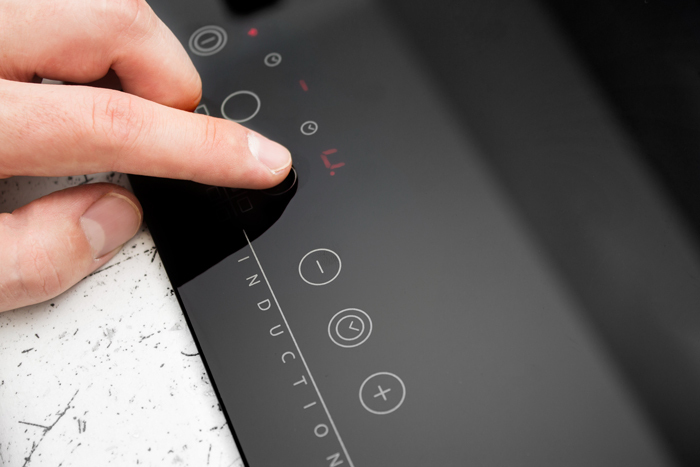
Keeping the control area clean is also important during cooking, particularly for cooktops with touch controls. If the controls get greasy they may become unresponsive to touch.
CHOICE verdict: Induction cooktops are generally easier to clean, but ceramic cooktops with touch controls aren’t far behind (just watch out for spills).
Many home cooks love gas for its instant responsiveness. If you opt for an induction cooktop, you won’t have to worry about giving that up: they’re just as responsive as gas, so when you change the temperature on the dial, the change is reflected immediately.
Ceramic cooktops take more time to respond when you increase or decrease the temperature, which could be frustrating for cooks who are used to cooking with gas or induction.
It’s worth noting, though, that if you’re used to being able to see temperature changes (for example, from the flame on your gas cooktop getting bigger or smaller), it may take some time to get used to an induction cooktop, which doesn’t give any visual feedback like this.
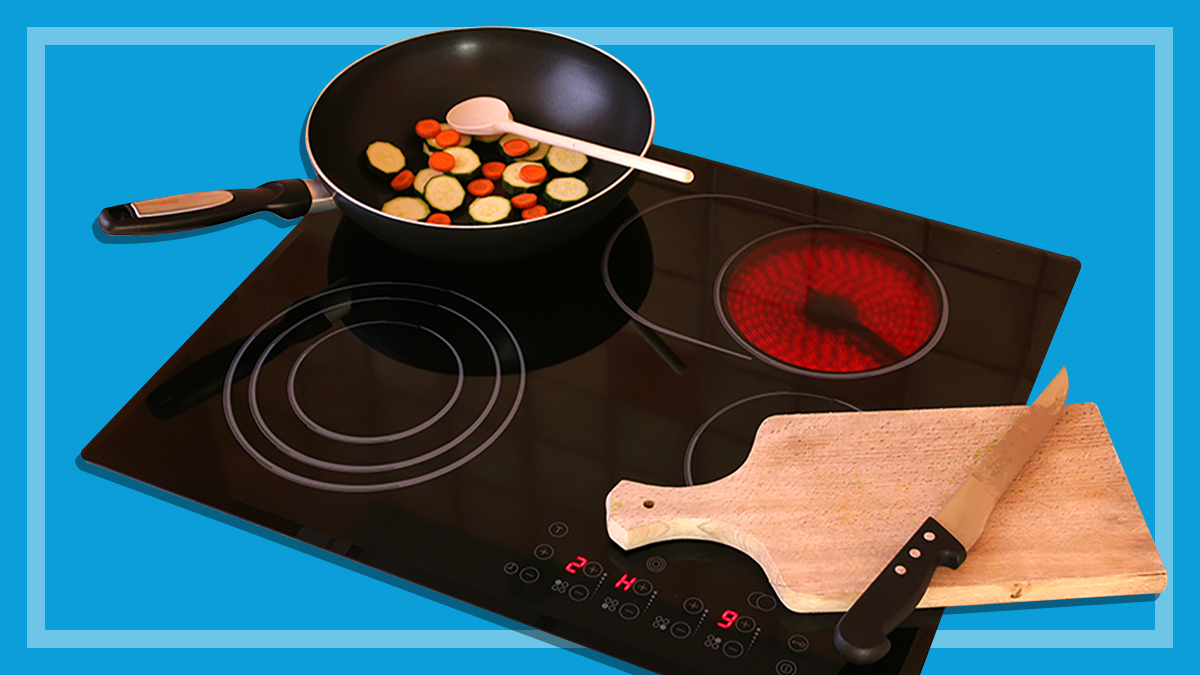
With ceramic cooktops, on the other hand, the cooking zone lights up when you switch it on.
CHOICE verdict: Induction is the winner for temperature responsiveness.
Ease of use and speed of cooking
When our experts rate appliances for their ease of use, cleaning makes up part of the score. But there are other things that also make appliances easier or harder to use. How do ceramic and induction cooktops stack up in this department?
Size of cooking zones
Induction options that come with a flexi zone can be the most versatile and flexible of them all.
However, regardless of whether you’re considering induction or ceramic, there are many size options for cooking zones available in both. As long as you consider the size of your cookware and make sure the largest cooking zone can accommodate your largest pan, there should be a cooktop to suit.
Speed
With induction, because the heat is coming from the cookware itself, rather than the cooktop, your cookware reaches the desired temperature more quickly, cooking your food faster.
When we conducted a ‘boil test’ to see how long each type of cooktop takes to boil a litre of water, induction came in ahead of gas, with ceramic taking the longest.
The quickest boil time in our induction cooktop review takes a speedy 1 minutes 51 seconds, and none of the models we tested took five minutes or longer to boil a litre of water.
In comparison, the boil time in our ceramic cooktop review ranged from 5 minutes and 2 seconds to just under eight minutes.
Controls
Many induction cooktops come with timers that you can program to switch particular cooking zones off after a certain period.
Some also have ‘power boost’ functionality for boiling water, stir-frying or searing meat. This heats the cookware even faster, saving around a third of the normal heat-up time. (Our experts warn against heating on the highest setting, as it can damage some cookware. It’s best just to use the boost setting when boiling large pots of water.)
CHOICE home economist, Fiona Mair says “we are starting to notice similar settings on ceramic cooktops too with features like boost, timers and pause”.
Induction cooking can take a bit of getting used to as it’s so different to gas and other electric forms of cooking, so expect to have a few mishaps while you’re learning. Once you get the hang of it, it’s pretty straightforward. Reading the manual and following the manufacturer’s temperature guides will be a big help.
CHOICE verdict: Induction cooking is faster and generally easier than ceramic, once you get the hang of it.
Modern cooktops tend to have plenty of safety features, so they’re much safer than the cooktops that many of us grew up with. But which cooktop is the safest?
Induction cooktops tend to have additional safety features like safety sensors that monitor temperature, automatic shut-off if cookware is overheating, safety cut-out for protection against overspills, timers that switch off the cooktop when the set time is complete, child locks and pan detection.
Induction cooktops generally have more safety features than ceramic.
Ceramic cooktops also have some of these features but, in general, induction comes out ahead.
Because they use electromagnetic energy to heat the pan rather than the cooktop surface, induction cooktops stay cooler to the touch during cooking.
Induction cooking zones can become hot due to the residual heat from the cookware, but how hot they get depends on the setting selected and how long the cookware is heated on the cooking zone. Generally the cooking zone will be safe to touch – just use caution when wiping over any spills.
Ceramic cooktops still hold heat when you turn them off. Many of them do have residual heat indicators that stay on until the surface reaches a safe temperature, but there’s still the potential for burns.
CHOICE verdict: Induction cooktops are a safer option than ceramic.
No matter which type of cooktop you choose, we recommend you always use a tradesperson to install your cooktop for safety and warranty reasons.
Installing an induction cooktop may be a bigger (and more expensive) job. The electrician may need to install a dedicated circuit if you don’t already have one, so it’s a good idea to consult an electrician before you even start your cooktop research. Sometimes it’s not possible to add another circuit.
Installing an induction cooktop may be a big job. The electrician may need to install a dedicated circuit.
Once you’re aware of your installation costs, you should add them to the cooktop price so you know how much it’ll cost you in total before you make your final decision.
You’ll still be paying a tradie regardless of which cooktop you choose, but it’ll probably cost you less if you’re replacing like for like – for instance, an electric coil cooktop with an electric ceramic cooktop, or a ceramic cooktop for a low current induction cooktop rather than a ceramic cooktop with a high powered induction.
Low current induction cooktops
Our experts have found manufacturers are increasingly offering low current induction cooktops. We’ve tested some of these low wattage alternatives from Bosch, Fisher & Paykel, Omega and Smeg. The models we’ve tested have a total maximum power output below 5kW.
Manufacturers have designed these options to operate on a single-phase, standard household electricity supply, meaning they can run on existing 20-amp wiring. In comparison, most induction cooktops require a 32-amp hard-wired connection to cater for higher power demands.
If you want to upgrade from an old electric or gas cooktop but rewiring is not possible or you want to do without the cost of a full circuit upgrade, a low current induction cooktop might work well for you.
Fiona says “keep in mind that their lower power capacity means cooking settings could be restricted when using multiple zones simultaneously.”
CHOICE verdict: Ceramic cooktops may be cheaper to install if you’re replacing an existing electric cooktop, however, lower wattage induction cooktops are designed to work on existing household supply and may not require additional rewiring.
Consult a licensed electrician on the installation costs and power requirements before making your final decision.
Rebecca Ciaramidaro is a Content producer in the Household team at CHOICE. Rebecca writes about a wide range of children's and household products, ranging from cots and strollers to ovens, BBQs, espresso machines and electric blankets. And also grocery items such as nappies, sanitary pads and laundry detergents.
Previously at CHOICE, Rebecca worked as a Test officer in the kitchen lab.
Rebecca has a Bachelor of Science (Nutrition and Food) from the University of Western Sydney. LinkedIn
Rebecca Ciaramidaro is a Content producer in the Household team at CHOICE. Rebecca writes about a wide range of children's and household products, ranging from cots and strollers to ovens, BBQs, espresso machines and electric blankets. And also grocery items such as nappies, sanitary pads and laundry detergents.
Previously at CHOICE, Rebecca worked as a Test officer in the kitchen lab.
Rebecca has a Bachelor of Science (Nutrition and Food) from the University of Western Sydney. LinkedIn
Alice Richard is a Content creator and marketer. Alice writes on a range of topics, from health insurance to heaters and BBQs to bargain-hunting, always with the aim to help consumers find the best products to buy, and which to avoid.
Alice can take vast amounts of data from CHOICE product tests and turn it into content that is easily digestible and fun for readers.
Alice has a Bachelor of Arts from the University of Queensland.
Alice Richard is a Content creator and marketer. Alice writes on a range of topics, from health insurance to heaters and BBQs to bargain-hunting, always with the aim to help consumers find the best products to buy, and which to avoid.
Alice can take vast amounts of data from CHOICE product tests and turn it into content that is easily digestible and fun for readers.
Alice has a Bachelor of Arts from the University of Queensland.
For more than 60 years, CHOICE has been fighting the good fight for Australian consumers.
In the past year alone we've uncovered systemic issues with sunscreens, investigated shonky supermarket pricing, fought for stronger scam protections and helped make complex energy pricing fairer and clearer.
CHOICE is here to provide unbiased advice and independent testing in our world-class labs. We buy the products we test, just like you do, and our expert reviews are influence free. We’re here to help you choose smarter. Hopefully you’ll also save some money along the way.
Thanks to CHOICE, you’ll never be alone when a business treats you unfairly. You can support our work by joining or donating to our cause.