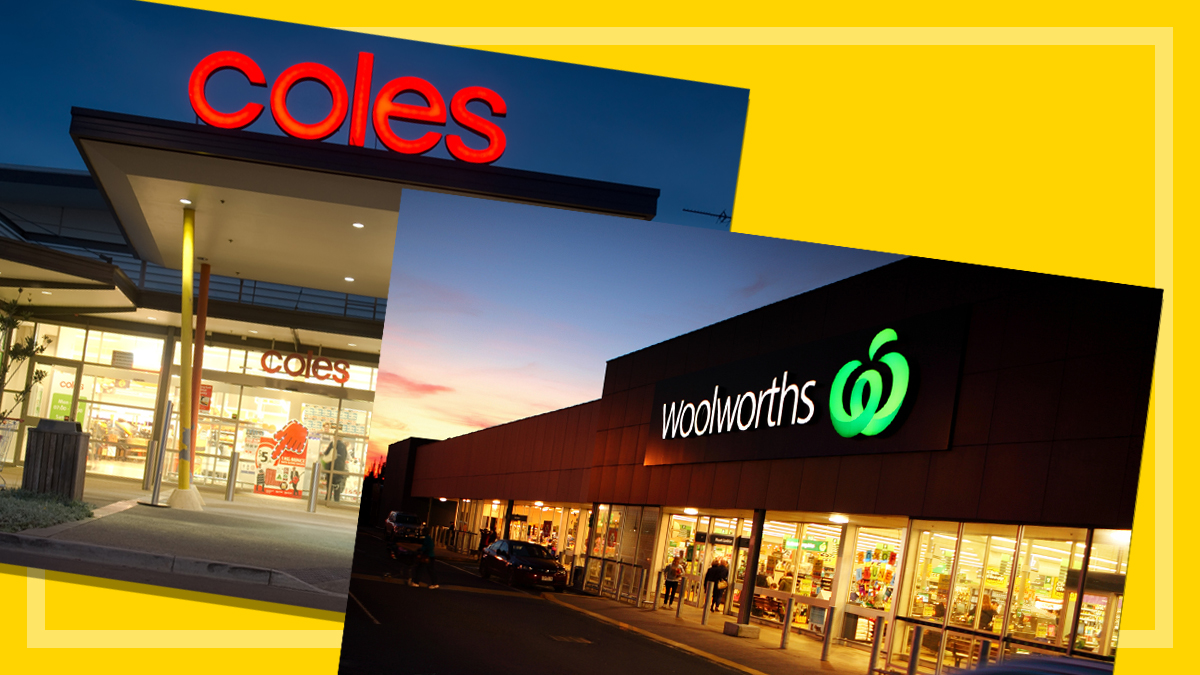
The case that’s currently running in the Federal Court against Coles Supermarkets is all about whether customers were intentionally deceived about prices.
A similar court case is on the cards against Woolworths. In both cases, filed by the Australian Competition and Consumer Commission (ACCC), the allegation is that the supermarkets artificially inflated prices for a short time and then dropped them down to the regular price and called it a sale.
It means the discounts would have been fictional, and shoppers would have been deceived into thinking they were getting a special deal. Coles’ “Down Down” and Woolworths’ “Prices Dropped” promotions were allegedly just a return to prices as usual – or, in some cases, prices higher than usual.
The allegation is that the supermarkets artificially inflated prices for a short time and then dropped them down to the regular price and called it a sale
“CHOICE welcomes the ACCC’s legal proceedings against Coles and Woolworths and we’re optimistic that it will bring some much needed clarity to the confusing pricing practices used in the major supermarkets,” says CHOICE senior policy and campaigns adviser Beatrice Sherwood.
“The case against Coles is significant as it will help to clarify the law around price representations – particularly in determining where the line is drawn when referring to previous prices.”
These cases are about whether we can trust the grocery duopoly – which has a combined market share of around 65% – to play fair with pricing and not take advantage of customers through tricky promotional tactics.
We’re calling for an end to the tactics we’ve called out in several investigations
At the moment the collective trust quotient is low. CHOICE recently lodged a submission to the federal Treasury’s consultation on improving price transparency in the supermarkets industry. We’re calling for an end to the tactics we’ve called out in several investigations.
In our submission to government, we’re asking for several improvements in the way supermarkets display and manage pricing. Here’s what they are.
It’s the simplest of things, but first and foremost, supermarkets need to make sure they are actually displaying prices in the first place. All too often, shoppers don’t find out how much a product costs until they go to pay for it, at which point they’re likely to pay whatever it costs. Had they known the price in the first place, they may have considered other options.
It’s a particular issue in remote communities, where the Code of Practice for Remote Store Operations commendably requires “stores to have clearly displayed and accurate prices”. The problem is that the code is strictly voluntary.
Unit pricing – which shows the cost per unit of measurement (such as grams or litres) – is the great leveller. It puts the truth to how much you’re actually paying for what you get. The alternative is to allow shoppers to be fooled into paying more through fancy packaging tricks.
Currently, the code only applies to stores with a floorspace of 1000 square metres or more, which means a lot of stores are bypassing it. We’re calling for a reduction of the floor-size threshold to 300 square metres, which would expand the code to many regional and remote stores, where shoppers could really use some fair play with pricing.
Making sure online and in-store prices are the same
Many shoppers use digital tools to compare supermarket prices before heading to the store to shop. But the online prices they see don’t always align with in-stores prices, pulling the rug out from under such proactive budgeting efforts.
In our submission to government, we’re calling for online price displays in large supermarkets to accurately reflect in-store prices – at all times.
Promotions and discounts should have context
As it stands, we’re forced to trust the supermarket when it tells us a product is on sale. But as the ACCC case against Coles and Woolworths shows, the supermarket may have just raised the price and then lowered it. Shoppers have told us they’re confused about promotions and discounts, mainly due to the lack of contextual information. If it’s on sale now, what did it cost before, and for how long?
Supermarkets use promotional colours such as red or yellow, or terms such as “new”, “while stocks last”, “super savers” or “everyday” indiscriminately. We’re calling for the introduction of new minimum information requirements so that “was/now” pricing is clear and accurate.
The above is the short list of what we’re recommending in our submission to policymakers. It also includes a call to put supermarket loyalty schemes under the microscope to determine whether they’re really benefitting consumers; to compel large supermarkets to allow third-party price-scraping technologies to access prices so consumers can easily compare; and to align fruit and vegetable pricing across large supermarkets.
Clear pricing information is essential to any consumer’s economic decision making
CHOICE senior policy and campaigns adviser Beatrice Sherwood
“Supermarket promotions are confusing consumers and can really influence how shoppers spend their money. Our research in 2024 found that on average one in four people found it difficult to identify if certain supermarket promotions represented a true discount or not,” Sherwood says.
“Clear pricing information is essential to any consumer’s economic decision making. Consumers need fair and transparent pricing on their food and groceries.”
Andy Kollmorgen is the Investigations Editor at CHOICE. He reports on a wide range of issues in the consumer marketplace, with a focus on financial harm to vulnerable people at the hands of corporations and businesses. Prior to CHOICE, Andy worked at the Australian Securities and Investments Commission (ASIC) and at the Australian Financial Review along with a number of other news organisations. Andy is a former member of the NSW Fair Trading Advisory Council. He has a Bachelor of Arts in English from New York University. LinkedIn
Andy Kollmorgen is the Investigations Editor at CHOICE. He reports on a wide range of issues in the consumer marketplace, with a focus on financial harm to vulnerable people at the hands of corporations and businesses. Prior to CHOICE, Andy worked at the Australian Securities and Investments Commission (ASIC) and at the Australian Financial Review along with a number of other news organisations. Andy is a former member of the NSW Fair Trading Advisory Council. He has a Bachelor of Arts in English from New York University. LinkedIn
For more than 60 years, CHOICE has been fighting the good fight for Australian consumers.
In the past year alone we've uncovered systemic issues with sunscreens, investigated shonky supermarket pricing, fought for stronger scam protections and helped make complex energy pricing fairer and clearer.
CHOICE is here to provide unbiased advice and independent testing in our world-class labs. We buy the products we test, just like you do, and our expert reviews are influence free. We’re here to help you choose smarter. Hopefully you’ll also save some money along the way.
Thanks to CHOICE, you’ll never be alone when a business treats you unfairly. You can support our work by joining or donating to our cause.