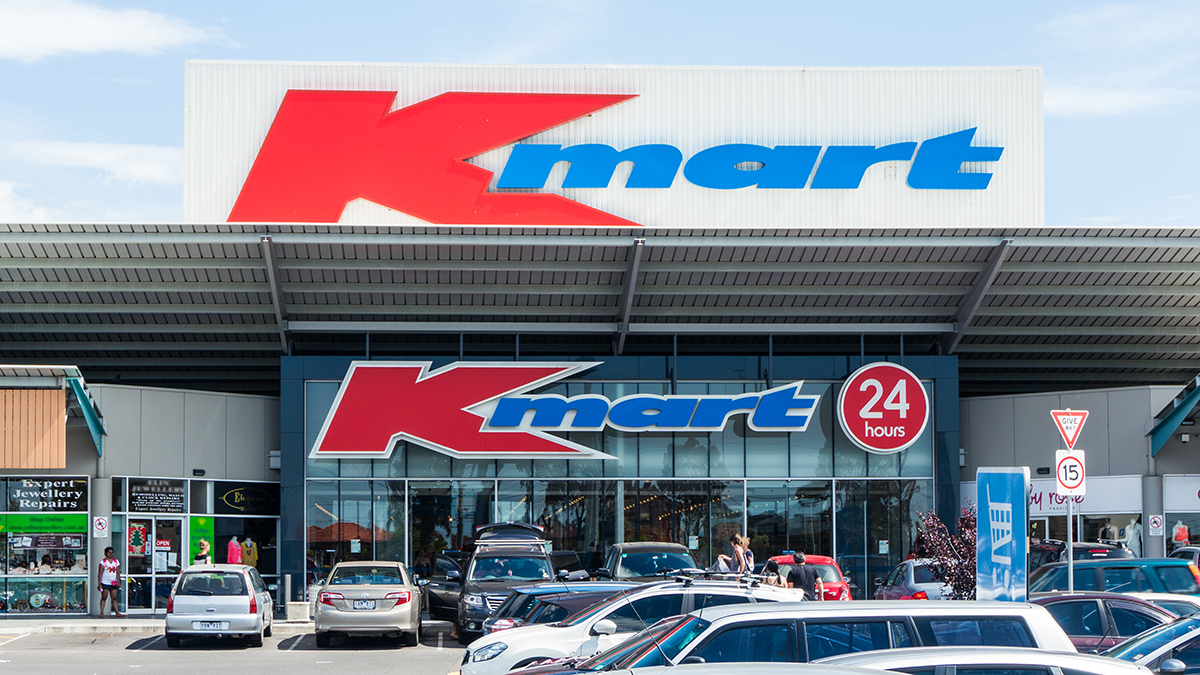
Australians are skeptical about the environmental claims made by major corporations, and with good reason. Several high-profile court cases across the consumer marketplace have shown that greenwashing is both entrenched and rampant.
Now, for the first time, large corporations in Australia will be subject to a mandatory scheme for reporting the risks their operations pose to the environment and the risks the changing climate poses to their businesses.
While many companies have made sustainability statements public to investors and consumers for several years, what sets the Australian Sustainability Reporting Standard apart is that it is compulsory for all large corporations.
For the first time, large corporations in Australia will be subject to a mandatory scheme for reporting the risks their operations pose to the environment…
Reports must be delivered to the Australian Securities and Investments Commission (ASIC) and published publicly this financial year (2025–26) for companies that meet two of three criteria; they have over $500 million annual revenue, hold $1 billion or more in assets, or have 500 or more employees. Those thresholds will drop as the scheme expands to capture more companies in future years.
“What mandatory climate disclosure does is force climate risk into the boardroom, for every company captured by the reporting standards,” says Gemma Yeates, investor engagement lead at the Australasian Centre for Corporate Responsibility (ACCR).
But just how effective will this new scheme be for driving positive environmental change, stopping greenwashing and holding businesses accountable for their emissions and impact on the climate?
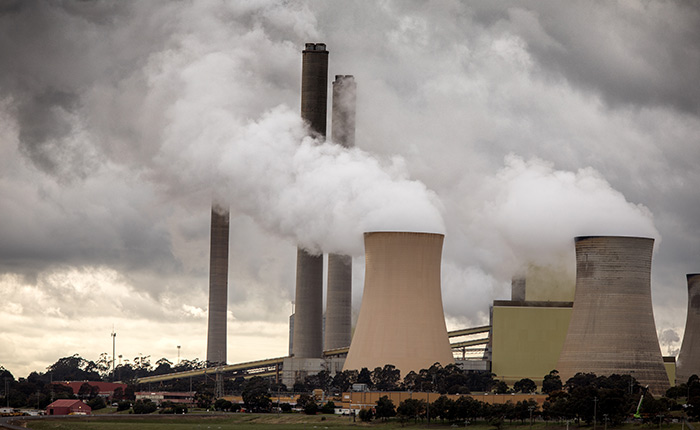
Energy providers will be among the companies reporting in the scheme.
Motivations behind the scheme
Australia’s new reporting regime has been designed to mirror the International Financial Reporting Standards sustainability reporting standard S2, and aims to provide consistency across the Australian market. Previously, companies in Australia used different reporting standards from one another making comparisons difficult. The reporting also didn’t always line up with international standards, creating further complications for international investors.
Associate Professor Nga Pham, a director at the Monash Centre for Financial Studies, says the reporting standard ASIC has selected is “quite comprehensive” for measuring climate risk.
“There is a link between disclosures and economic incentives leading to a change in behaviour,” she says. “Investors are going to reward companies that understand climate risk and are taking necessary measures to mitigate the risk in a long-term sustainable business strategy.”
She adds, however, that the standard is less useful for measuring other sustainability or social issues such as deforestation and environmental destruction.
Investors are going to reward companies that understand climate risk and are taking necessary measures to mitigate the risk
Associate Professor Nga Pham, Monash Centre for Financial Studies
Will van de Pol, CEO of environmental activist not-for-profit Market Forces, which focuses on investment and market issues, says the new reporting scheme is “an important step forward”.
“Super funds will be watching closely. It’s absolutely integral that super funds take not only a keen interest, but take action off the back of these climate risk disclosures,” he says.
“Super funds have a duty to manage financial risks on behalf of their members and ensuring that members’ money is not propping up the expansion of the fossil fuel industry – which poses a major financial risk to those members’ retirement savings – is necessary in order to comply with their duties to members.”
Co-CEO of the Australasian Centre for Corporate Responsibility Brynn O’Brien says timely, accurate disclosures are an integral part of our financial system and are incredibly relevant to all investment decision making.
“People rely on company disclosures to make decisions, it’s really important for retail investors, for consumers and to the market broadly. We want to be a country that has good investment standards and this is a part of market integrity,” she says.
“Investors are still concerned about climate change and are seeing the moment as an opportunity to accelerate decarbonisation in the Asia-Pacific region. The concern about climate change isn’t going away, even in the face of other global crises.”
It should drive companies into alignment with global climate goals like the goals of the Paris Agreement
Will van de Pol, Market Forces CEO
Van de Pol agrees and says a working disclosure regime is fundamental to the economy.
“What this really is about is companies making decisions that will either make or break our chances of having a stable global warming outcome, that provides long-term stable investment returns – obviously it applies to all of us and is of great interest to an increasing number of people,” he says.
“What is most important with all of this disclosure is that it’s not just more words and more numbers being pumped out into the market, but that those disclosures are demonstrating that companies are properly understanding and mitigating the financial risks of climate change, and where they’re not, investors have enough information to make the call to move their capital elsewhere,” van de Pol says.
“Most importantly it should drive companies into alignment with global climate goals like the goals of the Paris Agreement.”
While there is hope that these changes may help to motivate companies to do better, there are concerns that the environmental statements will be of limited value to non-professional investors (“retail investors”), or everyday consumers.
There are concerns around the utility of the statements.
“These financial disclosures are very sophisticated. Not much of the information that is being provided or the format of that information would be very relevant to the consumer. So it has more relevance to investors than consumers,” Pham, from Monash University, says.
“I do think that it is important to have all of these categories of investors in mind. Retail investors would have less tools and fewer capabilities to actually analyse and understand all of these climate disclosures compared to institutional investors because they are more well-versed in it,” she adds.
Van de Pol says while the scheme is geared towards industry investors, climate disclosure information, when properly presented in non-jargonistic and simple terms, is important to retail investors and shareholders trading on publicly listed companies as well.
Pham says that in years one to three of the new scheme, the assurance and auditing elements of reporting requirements are limited, with scope for them to be scaled up in future years.
CHOICE understands ASIC plans to take a light-touch enforcement approach to the reporting regime in the early years, giving companies time to get used to the new compliance scheme. Strong enforcement action of the reporting standards is not anticipated any time soon.
In May, the regulator released some preliminary observations on the statements of some 259 companies who had lodged by the end of last year.
“In general, we have seen an increase in the quantity and quality of climate-related financial information in the market compared to previous voluntary climate-related disclosures. Standardised requirements are driving more consistency and comparability,” ASIC says.
Share your thoughts: Help us understand how helpful these statements are
Over the next several months we want to track these sustainability statements as they come out and engage a wide audience of readers in a project to better understand how they could serve you.
Sign up to the Corporate Climate Accountability Project
We want to know how useful the disclosure regime really is and how readable the statements are, by surveying thousands of everyday consumers. We want to know what a different system actually designed for decision making at the check-out could look like.
What do you want, expect and demand from big companies when it comes to climate disclosures in 2026? What skills, data and information do you need to spot greenwashing and will it impact how you choose to spend or invest your money?
We want you to come along on a journey with us where your answers, thoughts and feedback will shape the direction of a series of articles and investigations as we grapple with these big questions and more.
Jarni Blakkarly is an award-winning Investigative Journalist at CHOICE. Jarni has worked for news organisations such as SBS, Reuters, Al Jazeera English, ABC 730, Radio National, BBC World Service and Deutsche Welle.
Jarni won the Walkley Foundation's young journalist of the year student category award in 2016 and was the recipient of a Melbourne Press Club Michael Gordon fellowship in 2022. In 2023 he was a highly commended finalist in the Quill Awards and a winner at the 2024 Excellence in Civil Liberties journalism awards. In 2024 he was elected to serve on the Federal Council (National Media Section) of the MEAA. Jarni has a Bachelor of Communications (Journalism) from the Royal Melbourne Institute of Technology (RMIT).
Jarni Blakkarly is an award-winning Investigative Journalist at CHOICE. Jarni has worked for news organisations such as SBS, Reuters, Al Jazeera English, ABC 730, Radio National, BBC World Service and Deutsche Welle.
Jarni won the Walkley Foundation's young journalist of the year student category award in 2016 and was the recipient of a Melbourne Press Club Michael Gordon fellowship in 2022. In 2023 he was a highly commended finalist in the Quill Awards and a winner at the 2024 Excellence in Civil Liberties journalism awards. In 2024 he was elected to serve on the Federal Council (National Media Section) of the MEAA. Jarni has a Bachelor of Communications (Journalism) from the Royal Melbourne Institute of Technology (RMIT).
For more than 60 years, CHOICE has been fighting the good fight for Australian consumers.
In the past year alone we've uncovered systemic issues with sunscreens, investigated shonky supermarket pricing, fought for stronger scam protections and helped make complex energy pricing fairer and clearer.
CHOICE is here to provide unbiased advice and independent testing in our world-class labs. We buy the products we test, just like you do, and our expert reviews are influence free. We’re here to help you choose smarter. Hopefully you’ll also save some money along the way.
Thanks to CHOICE, you’ll never be alone when a business treats you unfairly. You can support our work by joining or donating to our cause.