Spend less on fuel and groceries by checking prices in advance and going to the cheapest outlet near you
If you’re travelling, know your refund and insurance rights to avoid getting caught out of pocket unexpectedly
Check clearance sales or wait for EOFY discounts for bigger purchases like appliances
The cost of living is back on the agenda after turmoil in the Middle East put a rocket under fuel prices, pushing up costs everywhere from groceries and eating out, to travel and postal deliveries.
Farmers, airlines, restaurants and other businesses are passing extra charges onto customers to deal with spiralling overheads.
With the government warning the economic consequences of this far-flung conflict will be with us for some time yet, we’ve got five ways you can keep more of your money in your wallet.
The spike in petrol and diesel prices has been one of the most immediate and obvious consequences of the recent international turmoil.
Bowser prices jumped soon after war broke out between Iran and the US in late February, rising by as much as 50 cents per litre in two weeks in some parts of Australia, according to the ACCC.
Prices have dropped (for petrol) or at least stabilised (for diesel) in most parts of the country since the federal government cut fuel taxes at the beginning of this month, but going rates can still vary widely between retailers.
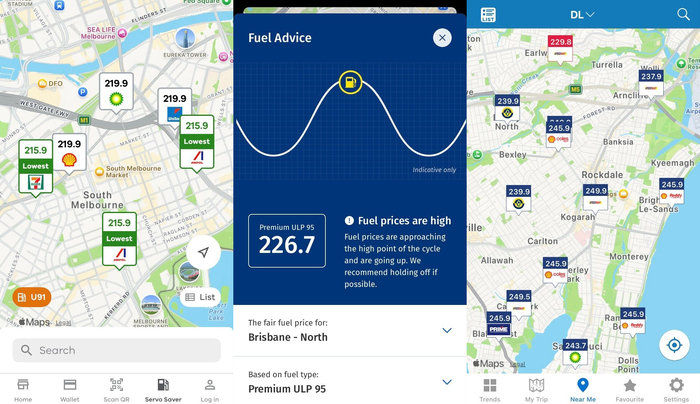
Each state and territory government runs a database of petrol prices that retailers are required to report to
So comparing prices before you fill up could save you a decent amount of money.
Luckily, this has become easier thanks to several states recently upgrading their fuel price comparison platforms to provide more information and make them easier to use.
How to compare fuel prices where you live
There are over 40 free fuel price apps and websites operating in Australia.
Each state and territory government runs a database of petrol prices that retailers are required to report to. Some share this information on their own apps and websites, while others make it available to third parties.
ACT: Most service stations are included on NSW’s FuelCheck app and website, but third-party services are also available.
NSW: Has a government-run database and app and website (FuelCheck). Third-party services are also available.
Northern Territory: Has a government-run database and website (MyFuelNT). Third-party services are also available.
Queensland: Has a government-run database. Data is provided to third-party apps and websites, including RACQ, PetrolSpy, MotorMouth and FuelRadar.
The fuel crisis has already hit food, with the Australian Restaurant & Cafe Association recommending its members add a surcharge to cushion against rising transport and supply costs.
In bad news for those who grow what we eat, the Middle East crisis has also impacted fertiliser supplies. This has combined with high fuel costs to put an extra squeeze on the producers of our grocery staples.
The National Farmers’ Federation has been lobbying supermarkets to increase shelf prices and pass some of these extra earnings back to growers and producers, while a major dairy co-operative has announced it will lift prices for its milk from next month.
The Middle East crisis has … put an extra squeeze on the producers of our grocery staples
As these pressures flow through to what you pay at the checkout, it’s worth knowing prices for the same or very similar grocery products often vary widely between supermarkets.
CHOICE regularly compares prices at Coles, Woolworths, Aldi and IGA, and our latest grocery basket survey found a difference of over $25 for the same basket of goods.
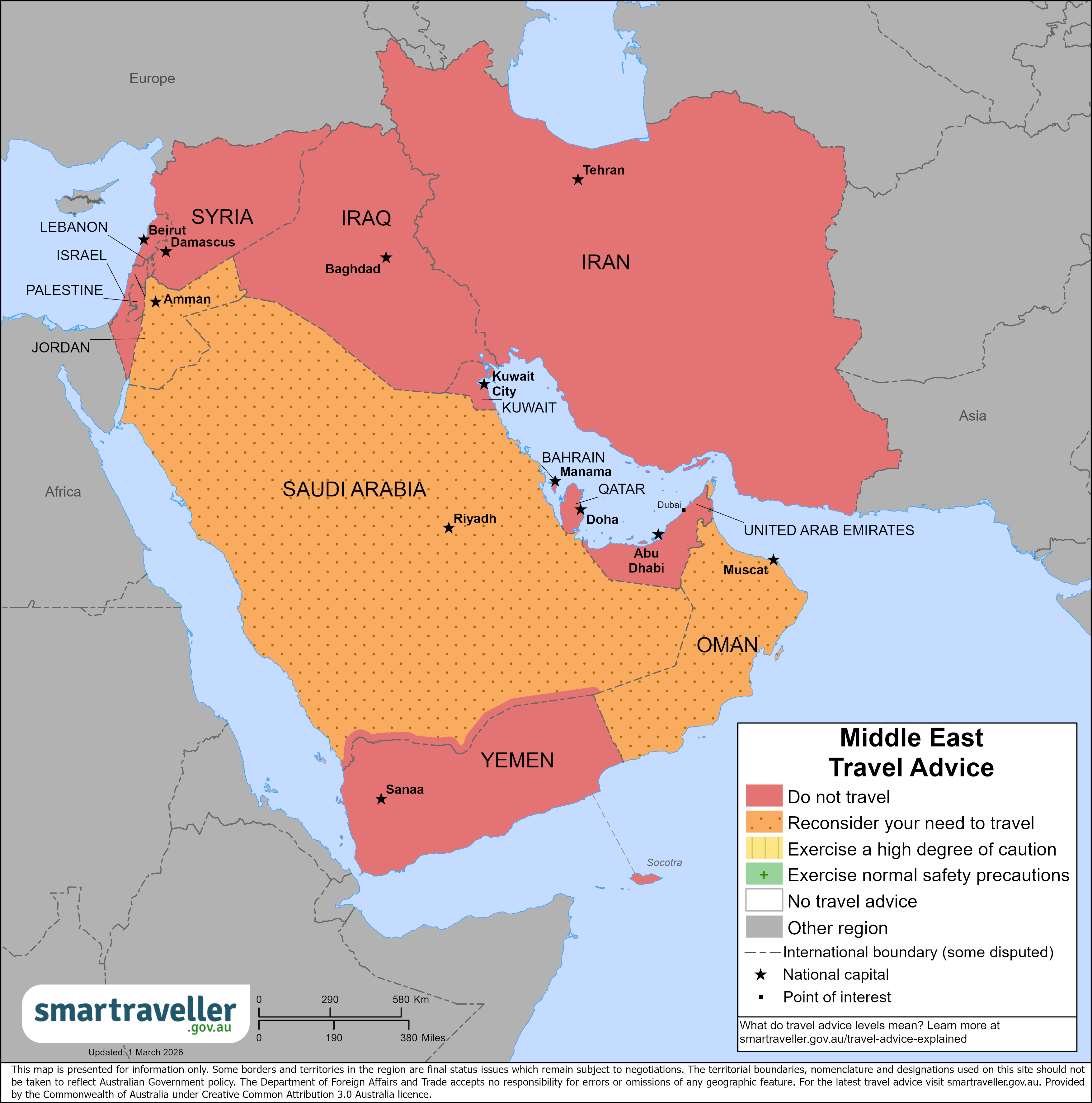
Many Middle East nations are currently listed as ‘Do Not Travel,’ meaning you won’t be covered by travel insurance if you visit.
Travel, especially overseas, is a big investment, and disruptions to holiday plans can leave you significantly out of pocket.
And upfront costs are set to increase. Qantas and Virgin Australia have announced plans to hike fares and reduce the number of services they operate, after jet fuel prices more than doubled in less than two months.
Continuing tensions in the Middle East also raise the chances of a sudden escalation in conflict putting a stop to your jaunt, especially if you’re transiting through the region.
With the holiday stakes this high, it’s important to know what you’ll get back in costs if your travel plans are upended.
If you cancel a plane ticket yourself, you’ll be at the mercy of your airline and its terms and conditions. In short, you’ll be unlikely to get your money back.
But if your carrier steps in to cancel the service itself, you will usually be entitled to a refund or credit.
So if you’re unsure about an upcoming journey, wait and see what your airline does.
If you’re unsure about an upcoming journey, wait and see what your airline does
Travel insurance is a must when heading overseas, but keep in mind that we haven’t seen any policies that provide cover for claims resulting from war.
Your policy also won’t cover you if you travel to a country with an Australian government ‘Do Not Travel’ warning. See which nations meet this threshold on the government’s Smartraveller website.
Check out our guide to travel insurance during war for more info, along with tips on getting your money back from accommodation and third-party booking sites.
When buying travel cover, see which policies offer the best value for money with our international travel insurance review, and take a look at our guides to the best insurance for popular destinations, including Japan, Bali, the UK and USA.
Some of the latest TVs and phones from big brands are fresh into stores, meaning discounts on older models. Runout deals have also been spotted on laundry and cleaning gadgets.
The EOFY sales aren’t far away, so put off any big purchases if you can.
These clearance sales are a good chance to grab a bargain on an older TV, washing machine or robot vacuum cleaner.
“With TVs especially, our expert testers say models change little year to year, so you’re unlikely to miss out on much by grabbing a slightly older release,” says CHOICE TV expert Denis Gallagher.
If you don’t see something you like in the current sales, or your favoured buy is still at full price, put off an impulse purchase and wait for the end-of-financial-year (EOFY) sales.
The fiscal year may not end until 30 June, but last year we saw EOFY deals dropping as early as start of May.
Last year we saw EOFY deals dropping as early as start of May
Once they get underway, you can expect most major retailers and manufacturer brands to get in on the action, with discounts averaging 20–50%, and sometimes as high as 80%.
Such bargains might end up being well-timed – inflationary pressures across the economy resulting from the conflict in the Middle East could push up prices of all goods, including tech and appliances, in coming months.
It’s worth remembering that stress can make us more vulnerable to scams, and dealing with rising prices and disrupted travel can certainly add to stress.
Scam losses ticked up for the first time in several years in 2025, according to the ACCC’s Targeting Scams report.
Mobile number fraud and cons targeting people buying and selling on online marketplaces are among the latest schemes consumers are being urged to watch out for.
Stress can make us more vulnerable to scams, and dealing with rising prices and disrupted travel can certainly add to stress
You can get free help from a financial counsellor if you’re struggling with expenses.
If you’re feeling overwhelmed by expenses or struggling to make ends meet, contact the National Debt Helpline (NDH) on 1800 007 007 for a free chat with a financial counsellor or visit the NDH’s website.
You might also be eligible for a No Interest Loan (NIL, worth up to $2000) to go towards the cost of essential goods and services.
NILs are provided by not-for-profit Good Shepherd, in partnership with local community organisations across Australia.
Visit the Good Shepherd website to find your local provider and check if you’re eligible.
Liam Kennedy is a Journalist with the Editorial and investigations team. He answers consumers' most burning questions, from which scams to be aware of and how to save money, to whether new services and products are worth using and how the latest developments in consumer news could affect them.
Prior to CHOICE, Liam worked in production in daily news radio and podcasting.
Liam has a Bachelor of Communication (Journalism) and a Bachelor of Arts in International Studies from the University of Technology Sydney. LinkedIn
Liam Kennedy is a Journalist with the Editorial and investigations team. He answers consumers' most burning questions, from which scams to be aware of and how to save money, to whether new services and products are worth using and how the latest developments in consumer news could affect them.
Prior to CHOICE, Liam worked in production in daily news radio and podcasting.
Liam has a Bachelor of Communication (Journalism) and a Bachelor of Arts in International Studies from the University of Technology Sydney. LinkedIn
For more than 60 years, CHOICE has been fighting the good fight for Australian consumers.
In the past year alone we've uncovered systemic issues with sunscreens, investigated shonky supermarket pricing, fought for stronger scam protections and helped make complex energy pricing fairer and clearer.
CHOICE is here to provide unbiased advice and independent testing in our world-class labs. We buy the products we test, just like you do, and our expert reviews are influence free. We’re here to help you choose smarter. Hopefully you’ll also save some money along the way.
Thanks to CHOICE, you’ll never be alone when a business treats you unfairly. You can support our work by joining or donating to our cause.