Washing less often reduces wear on your clothes helping them last longer
Treat stains promptly to avoid scrubbing or hot washing that can damage clothes
Read the care label and don’t ignore the instructions
If you’re a parent who’s recently sent a child back to school with a brand new uniform, or you’ve splashed out on new items for your own wardrobe, you’ll want to get the most from your investment. One way to do that is to ensure you’re caring for your clothes correctly, and your laundry routine is a big part of that.
We spoke to the experts to find out what you can do to keep your clothes looking good for longer, helping you to save cash in the long run.
Text-only accessible version
How to help your clothes last longer
Are your laundry habits harming your clothes? Here’s what you can do to make them last longer
Wash less often: Only wash clothes when they need it. Airing things outside in the sun, spot cleaning stains, steaming and spritzing can all help to keep things fresh between washes.
Wash in cold water: Using hot water increases the wear caused by washing.
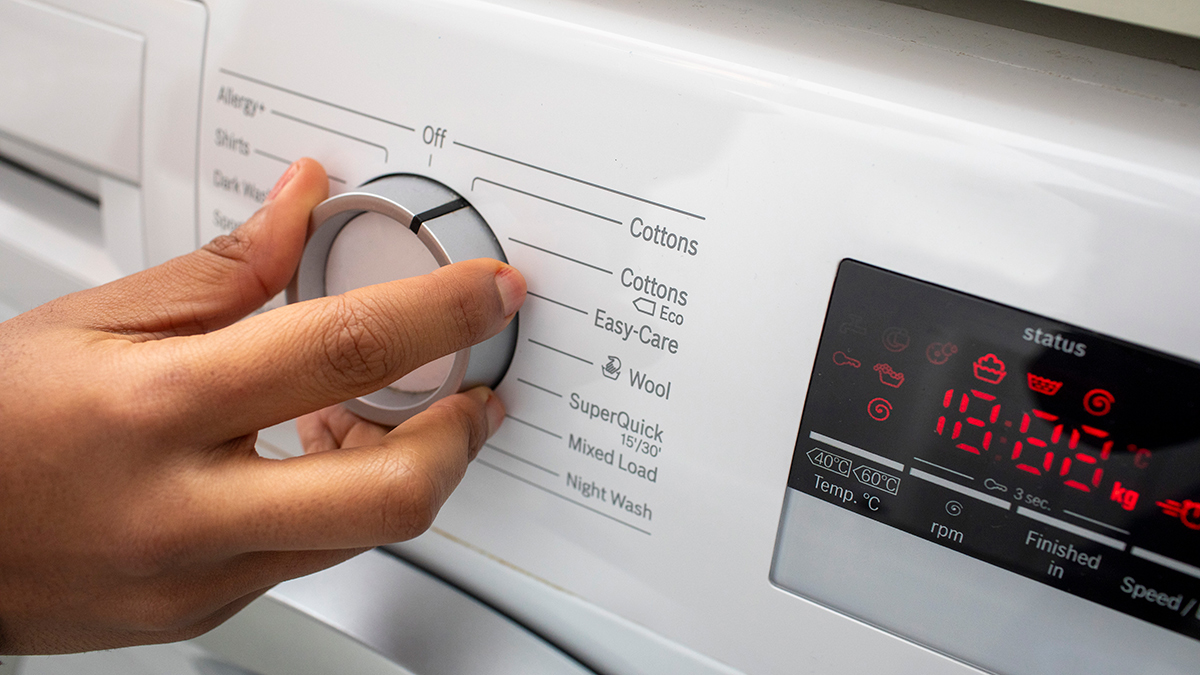
Choose a gentle machine: Check the CHOICE reviews and look for a machine with a high gentleness score.
Treat stains promptly: Don’t leave stains too long. Treat them early and soak heavily soiled items overnight to save scrubbing and avoid the need for a hot wash.
Read the care labels: It might be tempting to throw that handwash-only item in the machine, but doing so can ruin your delicate items.
Wash less
When it comes to keeping your clothes fresh, you might be surprised to learn that the washing machine should not be your first choice.
Leah Giblin is a sessional academic and textiles technician at the University of New South Wales, currently completing a Master’s in fashion and sustainability. She says that too much washing is damaging our clothes.
“Most of us get into the habit of throwing things into the wash after one wear, without checking first if they actually need washing,” she says. “Fashion sustainability theorist Kate Fletcher suggests that only 7.5% of the clothes we wash are considered ‘heavily soiled’, so often clothes are being washed unnecessarily.”
Not only does washing too often consume significant amounts of water, energy, and chemicals, but it also prematurely ages our clothing.
Not only does washing too often consume significant amounts of water, energy, and chemicals, but it also prematurely ages our clothing
“The process of washing – especially when using hot water and dryers – fades, stretches and erodes our clothing,” says Leah. “The less we wash, the longer our clothes will last.”
To extend the time between washes, there are some simple steps you can take:
Air things out – turn the garment inside out and hang it outside in the sun and fresh air to get rid of musty smells and kill bacteria.
Steam it – if you have a steamer or your iron has a steam function, you can use it to freshen clothes between washes. The heat of the steam kills bacteria, and you’ll get rid of wrinkles at the same time. If your garment is synthetic, be careful not to damage it with heat and be sure to hold the iron at least 5cm away.
Spot clean stains – if the garment is clean aside from a small patch, use a small amount of appropriate detergent on a clean cloth to remove the stain.
Spritz – you can make a bacteria-busting clothing spritz using a clean 500ml spray bottle, 100ml vodka, 300ml water and a few drops of eucalyptus oil (test this on an inconspicuous area of the garment before using it on anything delicate). This freshens clothing and keeps it smelling great between washes.
“Our testers assess how gentle a washing machine is on clothes by including a control swatch of loosely woven fabric in our test load,” he explains. “When the load is finished, we remove the swatch and measure how much it has frayed. The less fraying, the higher the gentleness score.”
Keeping kids’ school shirts stain-free is a challenge.
How to keep school uniforms looking their best
Every parent knows the sinking feeling when your child comes home in week two of term with paint splashed on their brand-new school shirt. Was it too much to expect you’d get at least a month before that $30+ shirt was ruined?
You can always send your kids to school with some sort of protective item like an apron or smock to help keep uniforms clean, though they may not always use it. Leah says the most important thing you can do to keep school clothes looking good is regular maintenance and gentle care.
“Washing in cold water with a full load reduces wear and tear on garments. Treating stains early and soaking heavily soiled garments overnight to save scrubbing or having to wash in hot water also helps to prevent unnecessary damage,” she says.
Washing in cold water with a full load reduces wear and tear on garments
Textiles technician and academic at UNSW, Leah Giblin
As with other items in your wardrobe, you should wash uniforms sparingly.
“My kids’ school shirts are always filthy at the end of each day, so they usually get cold-washed after each wear, but school shorts or pants I leave for a few days between washes,” Leah says.
Workout gear that no longer looks, or worse yet, smells its best isn’t pleasant to wear. If you’re using the state of your shirts, shorts or leggings as a reason to skip the gym, these tips are for you.
The problem is that all that strenuous activity can be hard on clothes, and cleaning them thoroughly might add to the wear and tear. The synthetic fibres that most exercise garments are made from can also create an extra challenge.
“Synthetic fibres have a special ability to retain odour, but these can be easily treated with a paste of bicarb soda and lemon juice left to sit on the smelly bits for a few hours,” says Leah, who warns that testing on an inconspicuous part of the garment first is a good idea.
As with other synthetic fibres, always wash in cold water, on a gentle cycle and never put them in the dryer.
Delicate items are often among the most expensive in your wardrobe. Keeping them looking good so that you get a reasonable return on your investment takes a different approach.
Handwashing is often recommended for these items, and even if your machine has a delicate cycle, it may not be a suitable substitute for taking the time to wash them by hand.
“Delicate cycles usually use cold water, a short cycle and a slow spin speed. Whether the cycle is a good substitute for handwashing or not depends on the machine type and the garment,” says Leah.
Even if your machine has a delicate cycle, it may not be a suitable substitute for taking the time to wash by hand
As our lab testing shows, every machine is different; some are OK with delicates, others are not. Check the gentleness score in our reviews and test the delicate cycle on your machine before committing your precious items by first washing a less valuable garment with similar fibre content.
While our CHOICE experts don’t suggest that the delicate cycle is necessarily a good substitute for handwashing, it can be an option for clothes that you feel need extra care.
“The rinse and wash cycle is shorter, but it’s the spin speeds that are the main concern, and the delicate cycle would have the lowest revolutions per minute (RPM) to limit any damage,” says Denis.
Can you ignore the care labels?
Pushed for time and impatient to get the boring job of laundry out of the way, who hasn’t been tempted to ignore that “dry clean only” label and run something through the washing machine?
Unfortunately, it’s a move that can come back to bite you.
“We ignore clothing care labels at our own peril!” says Leah, though she says there may be exceptions. “If you know the fabric type, and you’ve had some experience or advice for washing it, it may be OK.
“If you choose to take things into your own hands, the safest bet is a cold, gentle hand wash with gentle detergent (wool or silk wash),” says Leah. Once washed, dry the garment flat on a towel in the shade and never use a dryer. Also, test water and detergent on an inconspicuous part of the garment before committing.
Margaret Rafferty joined CHOICE in 2018 as a Content editor and since then has filled the roles of Commissioning editor, Managing editor and now Editorial consultant.
Margaret has written on a wide variety of topics and enjoys making complex subjects easy to understand. With over 20 years of media experience, Margaret brings a strong storytelling background to CHOICE. She works closely with people across the organisation to help tell stories that make a positive difference to people and is passionate about uncovering bad practices and helping Australians to avoid falling victim to shonky products and services. LinkedIn
Margaret Rafferty joined CHOICE in 2018 as a Content editor and since then has filled the roles of Commissioning editor, Managing editor and now Editorial consultant.
Margaret has written on a wide variety of topics and enjoys making complex subjects easy to understand. With over 20 years of media experience, Margaret brings a strong storytelling background to CHOICE. She works closely with people across the organisation to help tell stories that make a positive difference to people and is passionate about uncovering bad practices and helping Australians to avoid falling victim to shonky products and services. LinkedIn
For more than 60 years, CHOICE has been fighting the good fight for Australian consumers.
In the past year alone we've uncovered systemic issues with sunscreens, investigated shonky supermarket pricing, fought for stronger scam protections and helped make complex energy pricing fairer and clearer.
CHOICE is here to provide unbiased advice and independent testing in our world-class labs. We buy the products we test, just like you do, and our expert reviews are influence free. We’re here to help you choose smarter. Hopefully you’ll also save some money along the way.
Thanks to CHOICE, you’ll never be alone when a business treats you unfairly. You can support our work by joining or donating to our cause.