The rising cost of living has seen more and more people swapping expensive cafe flat whites for a home coffee machine instead. A good manual or semi-automatic espresso machine can deliver a great cuppa in the comfort of your kitchen, but with so many variables at play – beans, grinding, tamping, milk frothing and more – there are also plenty of things to fine tune and troubleshoot.
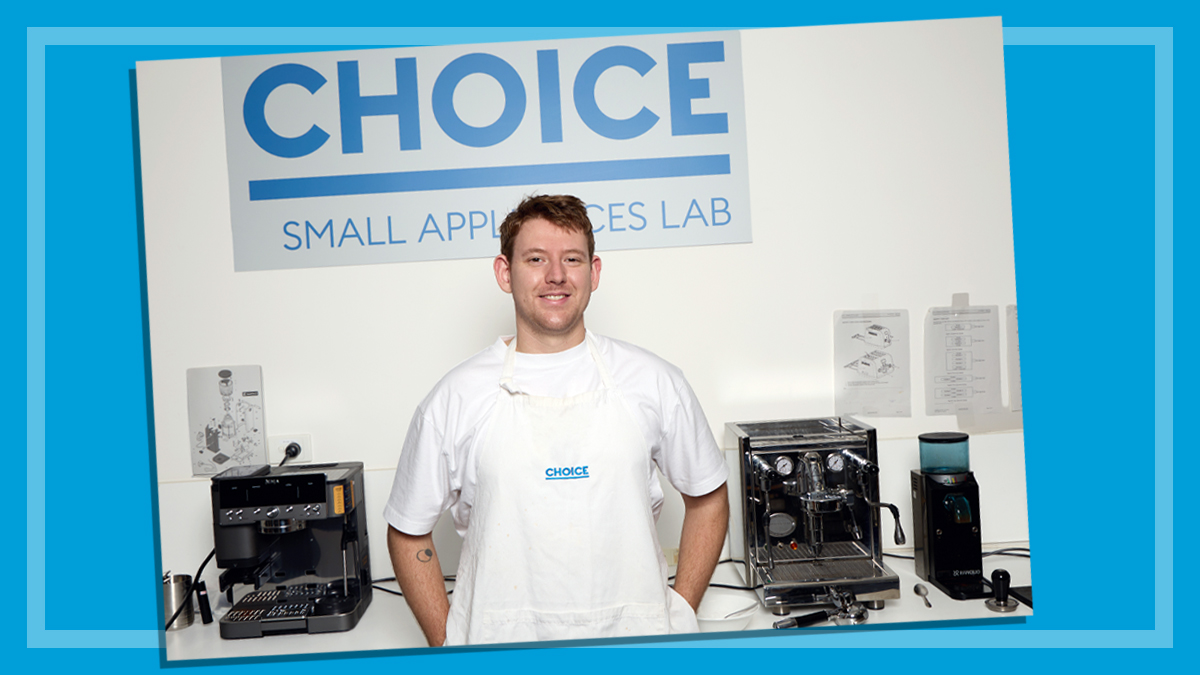
If you’re struggling to get the same quality of coffee your barista used to deliver, CHOICE coffee expert Adrian Lini is here to help.
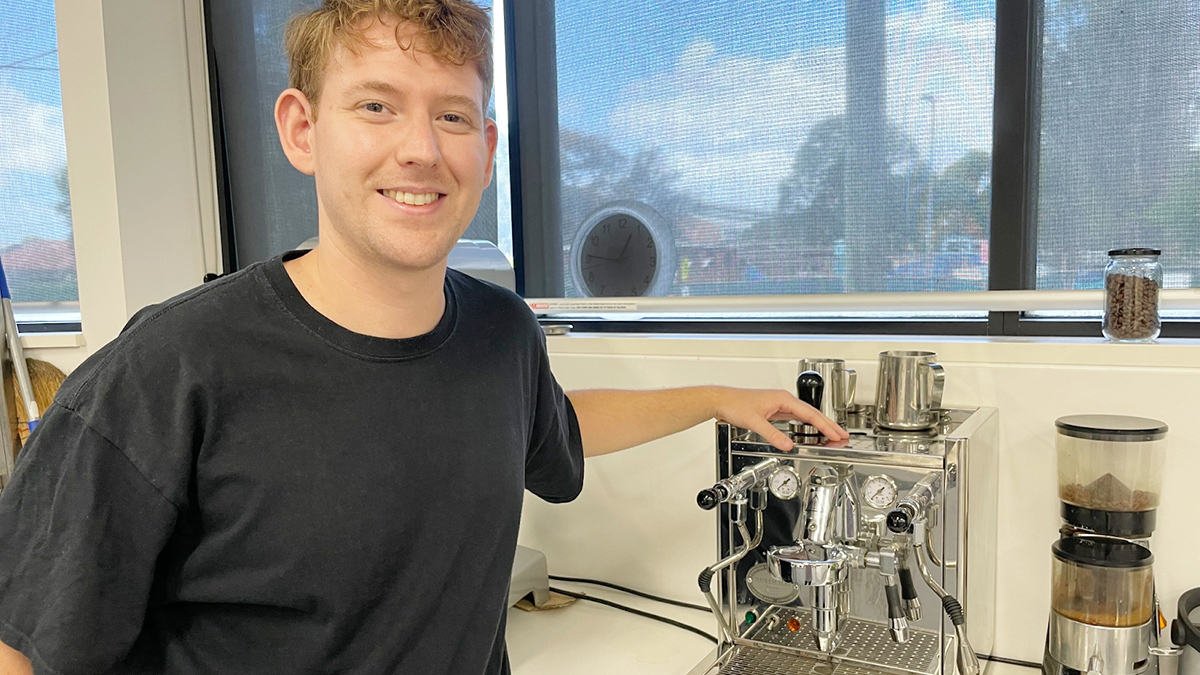
Provided you have a good manual espresso or semi-automatic machine, there’s no reason why you can’t turn out cafe-quality espresso shots at home
CHOICE coffee expert Adrian Lini
Adrian spends hours in the CHOICE labs putting dozens of coffee machines through their paces, tweaking settings and extracting shot after shot in order to get the best cuppa possible out of the tested models. We share some of his tips for things you can do to improve your coffee game.
“Provided you have a good manual espresso or semi-automatic machine, there’s no reason why you can’t turn out cafe-quality espresso shots at home and save yourself quite a few bucks in the process,” says Adrian.
“If you’re not getting coffee you’re happy with, there are a few things that could be going wrong and some things you can tweak to get better results.”
1. Ensure your beans are as fresh as possible
The first place to start is the coffee – and fresh is definitely best.
“You’ll never get a great cup of coffee from old, stale beans,” says Adrian.
He recommends you find beans you love the flavour of – asking a cafe you like which beans they use is a good start. Check the date they were roasted (it will hopefully be stamped on the packet) to ensure it’s not too long ago and buy beans in small batches to ensure they’re as fresh as possible.
Storing coffee beans correctly is vital too: “Keep them in an airtight container, away from the sun and from moisture. A darkened pantry is a great place to store coffee beans,” he says.
2. Use a quality grinder to get a good, consistent grind
“I can’t emphasise enough how important it is to get a good, consistent grind when making coffee at home,” says Adrian.
“So if you’re not getting the flavour you love from your coffee, looking at how you’re grinding your coffee and at what size it’s being ground to is a good place to start making some tweaks.”
The ideal grind size is dependent on how you are making your coffee. If you are using a French press, you’ll need a coarser grind, whereas if you’re using an espresso machine, you’ll need a much finer grind.
Freshly ground coffee will always give you the best results
CHOICE coffee expert Adrian Lini
“The ground size corresponds directly to the extraction time,” says Adrian.
“If the grinds are too coarse, it will under-extract, pouring the shot too quickly, and the coffee will lack flavour and come out thin and watery.
“If the grinds are too fine, it will over extract and the coffee will taste burnt and bitter. Generally, a good espresso extraction takes about 25–30 seconds on a manual machine. Semi-automatic and other machines aim for a similar extraction time, although it can vary slightly depending on how the machine heats water.”
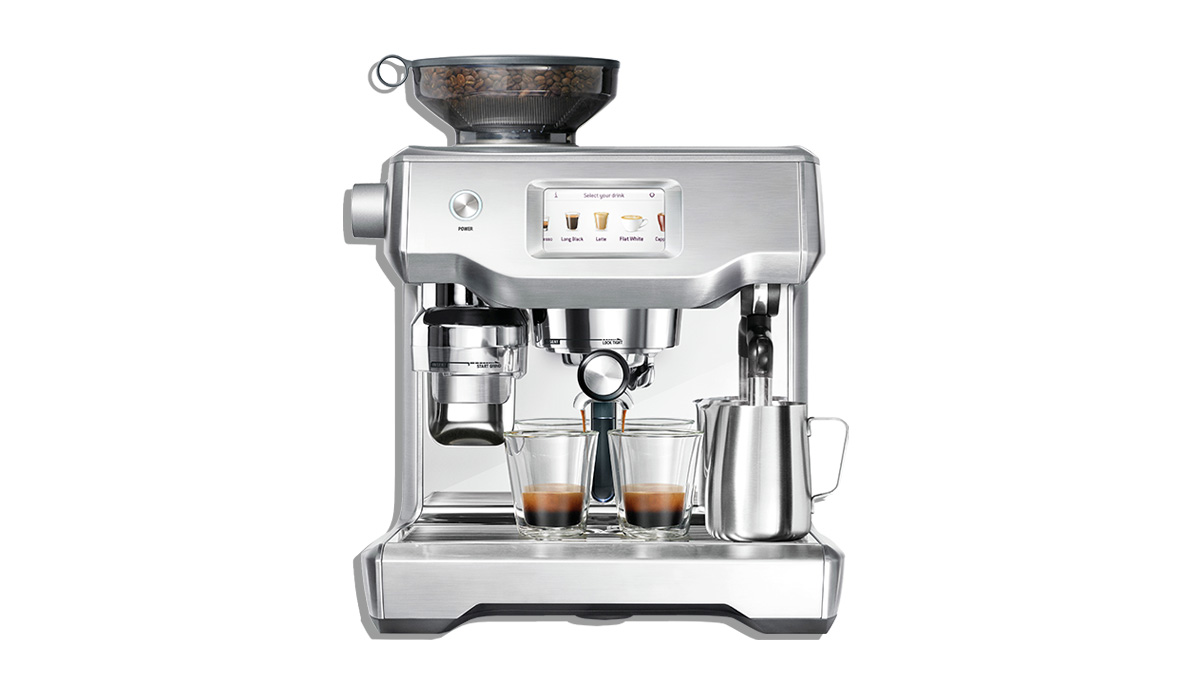
“Freshly ground coffee will always give you the best results. Some semi-automatic coffee machines have inbuilt grinders so, if you’re not satisfied with the flavour of your coffee, tweaking the settings will make an immediate difference,” he says.
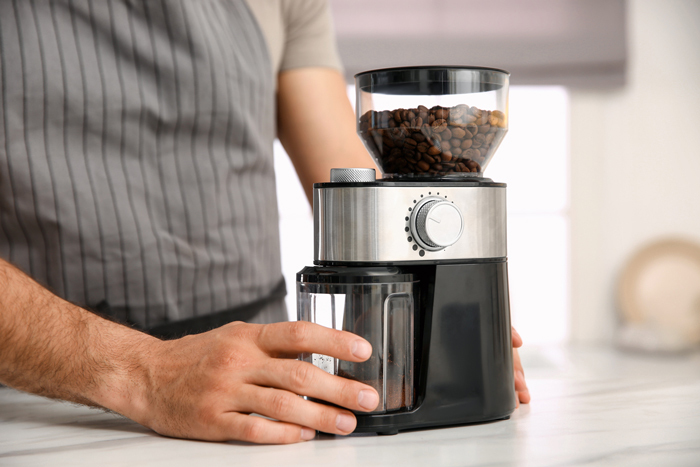
Conical or flat burr grinders vs blade grinders
If you have a separate grinder, Adrian says you want to opt for a burr grinder as opposed to a blade grinder.
“Blade grinders are not consistent enough to make good grinds for anything other than French press coffee,” he says.
“They work by spinning a blade very quickly and chopping up and breaking apart the coffee beans. Lots are chopped very fine and some are left chunky. This makes it almost impossible to get a consistent extraction time.”
Conical or flat burr grinders work by essentially crushing the coffee grinds and not letting the grinds escape until they fit the specific size you’ve set. It makes the grinds extremely consistent and ready for different coffee type preparations, such as espresso.
Once you’ve sorted out the perfect grind, you need to ensure you’re getting the right amount of coffee in your portafilter – too much or too little will change the extraction time (the time taken for the water to run through the grind and create your espresso shot) which affects the taste of the coffee.
Generally, you should aim for 7–9g of coffee for a single shot and 14–18g for a double shot, depending on your preference.
Another vital part of the process that impacts the flavour you get in your cup is tamping – this is the action of compacting your coffee into the portafilter.
You want to apply the perfect amount of pressure with a coffee tamp to evenly compact the coffee so the water can “channel” through the grounds evenly.
CHOICE expert Adrian Lini is a pro when it comes to getting the best out of your coffee machine.
“The recommended weight to apply to the coffee grinds when tamping is about 18–20kg,” says Adrian. “Too much tamping pressure can result in a bitter cup and too little pressure can result in a watery shot, because the water will flow too quickly through the grounds.”
Tips for tamping your coffee
Ensure your grounds are evenly distributed in the portafilter. You can level it with your finger (some machines comes with a levelling tool to help you do this).
You should tamp straight down, not at an angle. Hold the tamper like a doorknob and push down with consistent pressure, using your body weight. Once the tamper stops moving downward, the coffee is fully compressed.
Press down only once. Once you have tamped, do not “re-tamp” as this will ruin your extraction.
Brush away any stray coffee grounds before inserting the portafilter into your machine.
Frothing your milk perfectly takes practice, and results can also be affected by the quality of the milk frother on the machine you’re using, which is why we give every machine in our lab tests a milk-frothing score.
Adrian shares some of his top tips for success.
Always use cold milk or milk substitute. You want to heat the milk to a temperature of 60°C to 65°C. Heating milk past 70°C will scald it, resulting in a burnt taste. Some premium milk jugs come with built-in temperature gauges.
Keep the steam wand tip just below the surface so it can get air into the milk and froth it. It should make a bubbling sound rather than a whistling sound. Don’t let the milk get too hot or else it’ll burn and change the taste.
Try to keep the milk jug at an angle to create a whirlpool that will help make the foam consistent and as you froth slowly raise the tip of the wand so it stays at the edge of the liquid’s surface.
Tap the milk jug on a flat surface before pouring – this helps release any bubbles.
Pour the milk into the centre of your cup/espresso shot – start higher and bring the jug down closer to the cup as you smoothly pour.
How you are grinding your beans can make a big difference to the flavour that ends up in your cup.
6. Clean your machine and equipment (grinder) regularly
A clean, well-maintained coffee machine will turn out better-tasting coffees for longer.
“It’s really important to keep your coffee machine clean,” says Adrian.
“It’ll keep it running well and make sure your coffee keeps tasting its best.”
Built-up oils and other deposits in the machine can taint the flavour of your brew and cause issues with the functionality of your machine.
While you should be cleaning your porta-filter and steam wand after every use, ensure you’re also scheduling a more intense clean once or twice a month.
If your machine’s getting on and/or none of our tips or suggestions above seem to be working, it may be time to go shopping and try a new style of machine.
Just be wary that certain styles have their limitations. For instance, Adrian says it’s unrealistic to expect cafe-quality coffee from a pod machine.
“Pod machines can be really convenient and easy to use, but our blind taste tests consistently show that pod machines produce an inferior-tasting cup of coffee to semi-automatic and manual espresso machines,” says Adrian.
You can find lots of information here at CHOICE about the benefits of manual espresso machines and semi-automatic coffee machines and how they compare to pod or capsule coffee machines and automatic machines. Start your research at our coffee machine topic page.
Pru Engel is the Audience and Engagement editor at CHOICE. Her job is to ensure as many Australians as possible know about the great work we do at CHOICE.
She works closely with our testers and experts to find the gems of information in our data and research that will resonate with Australian consumers and help them make the best decisions, whether they're purchasing an air fryer, looking for a new mattress or trying to find the cheapest car insurance. She also helps to drive meaningful change for consumers by collaborating with our Campaigns team on content covering issues such as grocery pricing, product safety and scams.
Prior to CHOICE, Pru worked as an editor at many of Australia's leading food and lifestyle titles.
Pru has a Bachelor of Arts in Communication (Journalism) from the University of Technology, Sydney.
LinkedIn
Pru Engel is the Audience and Engagement editor at CHOICE. Her job is to ensure as many Australians as possible know about the great work we do at CHOICE.
She works closely with our testers and experts to find the gems of information in our data and research that will resonate with Australian consumers and help them make the best decisions, whether they're purchasing an air fryer, looking for a new mattress or trying to find the cheapest car insurance. She also helps to drive meaningful change for consumers by collaborating with our Campaigns team on content covering issues such as grocery pricing, product safety and scams.
Prior to CHOICE, Pru worked as an editor at many of Australia's leading food and lifestyle titles.
Pru has a Bachelor of Arts in Communication (Journalism) from the University of Technology, Sydney.
LinkedIn
For more than 60 years, CHOICE has been fighting the good fight for Australian consumers.
In the past year alone we've uncovered systemic issues with sunscreens, investigated shonky supermarket pricing, fought for stronger scam protections and helped make complex energy pricing fairer and clearer.
CHOICE is here to provide unbiased advice and independent testing in our world-class labs. We buy the products we test, just like you do, and our expert reviews are influence free. We’re here to help you choose smarter. Hopefully you’ll also save some money along the way.
Thanks to CHOICE, you’ll never be alone when a business treats you unfairly. You can support our work by joining or donating to our cause.