Artificial sweeteners have been extensively studied; there's no clear evidence that they cause cancer in humans
But some research shows that artificial sweeteners may cause weight gain by causing people to eat more
If you're considering artificial sweeteners to lose weight, try replacing sugary foods and drinks with unsweetened substitutes and slowly cut down on the amount of sugar you use
Artificial sweeteners seem like an easy way to have your cake without looking like you’ve eaten it too.
But sweeteners have a problematic history, and the science is still out on whether they cause certain negative health effects. (Spoiler alert: experts are pretty certain they don’t cause cancer.)
How much sugar is OK?
The World Health Organization (WHO) recommends that free sugars (known as ‘added sugars’ in Australia) make up less than 10% of your total energy intake. For an average adult consuming 8700kJ per day, that’s about 51g, or 13 teaspoons. Children generally have lower energy requirements, so should eat less than this.
Australians have trouble sticking to these recommendations. The average Aussie consumes 60g of sugar each day – around 14 teaspoons. Teenage boys have the highest intake, averaging 22 teaspoons per day, with some eating a whopping 38 teaspoons.
Most sugar comes from energy-dense, nutrient-poor ‘discretionary’ foods and drinks – aka ‘sometimes foods’. Aside from crowding nutritious foods out of our diets, sugar is linked to a range of potential negative health outcomes: weight gain, dental cavities, type 2 diabetes and possibly even depression.
Sugar in drinks our biggest source
Since just over half our added sugar intake comes from drinks, reducing our consumption of these is a good place to start.
“The reason for starting with drinks is that the body doesn’t register any fullness (satiety) from drinks that contain sugar, so people don’t eat less of something else when they consume them. For comparison, if you eat an extra slice of bread, you’re likely to eat a little less of something else,” says nutrition expert Dr Rosemary Stanton.
But before you reach for a diet soft drink instead of your usual sugary one, bear in mind that artificially sweetened drinks are still not great for your teeth. Whatever they’re sweetened with, soft drinks are still very acidic and can erode tooth enamel.
Artificial sweeteners, also known as non-nutritive sweeteners, are chemical additives that are sweeter than sugar but contain zero kilojoules/calories.
The most commonly used artificial sweeteners in Australia are Acesulphame K (additive number 950), Alitame (956), Aspartamine (951, e.g. Equal), Cyclamate (952), Neotame (961), Saccharin (954, e.g. Sweetex) and Sucralose (955, e.g. Splenda).
Other types of sweeteners include nutritive sweeteners which contain less energy than sugar but are not kilojoule-free (e.g. Fructose, Xylitol and Maltodextin) and natural sweeteners like Stevia, which is derived from a plant and contains no energy.
Are artificial sweeteners bad for you?
Concerns around artificial sweeteners tend to focus on whether they can cause cancer, weight gain, obesity, type 2 diabetes or cardiovascular problems.
But government food regulators have repeatedly found artificial sweeteners to be safe, and the Cancer Council says there’s no clear evidence that artificial sweeteners cause cancer in humans.
A 2019 review concluded there is no strong evidence linking artificial sweeteners to any positive or negative health outcomes – although the authors did note that there’s not enough evidence to rule out potential harm from long-term use, and further studies are needed.
Cancer and artificial sweeteners – what does the research say?
Since the first artificial sweetener, saccharin, was discovered in 1879, artificial sweeteners have been dogged by controversy. Aspartame in particular has been the subject of many studies, a conspiracy theory or two, and a particularly pervasive hoax. (Google ‘Nancy Markle’ if you’re up for an interesting read.) It’s been accused of causing a range of health effects, ranging from nausea and dizziness to cancer and multiple sclerosis.
While some studies have linked artificial sweeteners and cancer, many more studies have found them to be safe. Aspartame, for example, is one of the most exhaustively studied sweeteners, with more than 100 studies supporting its safety. Several studies claiming links with negative health effects have since been found to have significant flaws. However, negative press is difficult to shake, and artificial sweeteners have developed a bad name in some circles.
The dose makes the poison
Safety studies of artificial sweeteners generally involve administering massive doses to animals – doses far higher than people would consume.
From there, regulators set the acceptable daily intake (ADI) levels: the estimated maximum a person can safely consume every single day for an entire lifetime without appreciable risks to health. ADIs are about 100 times less than the smallest amount that might cause health concerns, and even people with the highest daily sweetener consumption generally don’t hit the ADI.
In Australia, the ADI for aspartame is 40mg per kilogram of body weight per day. A 375mL can of diet soft drink contains around 200mg aspartame, so a 75kg adult would need to drink almost 15 cans or 5.6L per day to exceed the ADI – a fairly unlikely scenario.
Even people with the highest daily sweetener consumption generally don’t hit the ADI, or acceptable daily intake.
Research bias
If you’re tempted to get all science-y on artificial sweeteners and do your own digging, take what you read with a grain of salt. Part of the reason scientists can’t agree may have to do with who’s paying their bills.
“Reviews funded by artificial sweetener companies are about 17 times more likely to have results reporting that artificial sweetener use is associated with lower weight, or weight loss,” says Professor Lisa Bero from the University of Sydney, who co-authored a 2016 paper on research bias.
Research funded by competing industries (such as the sugar industry, which has a vested interest in people not using artificial sweeteners) is likely to draw unfavourable conclusions about artificial sweeteners, so you even need to be wary of research that’s anti-sweetener.
Food Standards Australia New Zealand (FSANZ), the Australian food regulator, rigorously examines raw data from safety studies before approving anything for use. It also considers other research and consults government agencies and the public. FSANZ keeps an eye on what its international counterparts are doing, and says it will amend the ADI if new information comes to light.
Can artificial sweeteners help you lose weight?
It’s hard to say. One 2014 review found that switching to low-calorie sweeteners results in modest weight loss and may help people manage their weight.
But a 2017 review found that people who regularly consume sweeteners (both stevia and artificial sweeteners) may have a higher risk of weight gain, obesity, type 2 diabetes and cardiovascular events.
A 2019 review that found there’s no strong evidence that artificial sweeteners have any effect on weight loss.
So while there’s still no consensus on the link between artificial sweeteners and weight loss, one recent study may explain how artificial sweeteners could possibly lead to weight gain. It found that sucralose significantly increased fruit flies’ calorie intake from other sources. The study concluded that artificial sweeteners could lead to glucose intolerance by interfering with gut bacteria, and that artificial sweeteners contribute to weight gain by causing people to eat more.
“We found that inside the brain’s reward centres, sweet sensation is integrated with energy content. When sweetness versus energy is out of balance for a period of time, the brain recalibrates and increases total calories consumed,” says Professor Greg Neely from the University of Sydney.
Unlike sugar, artificial sweeteners do not raise blood sugars in the short term. A 2018 study reviewing 29 research articles found that artificial sweeteners had no effect on blood sugars in the minutes and hours directly after consumption.
But new research is emerging that suggests regular consumption of artificial sweeteners may have negative effects on blood sugar regulation in the long term.
A 2020 study by a group of Yale researchers found that consuming the artificial sweetener sucralose and a carbohydrate at the same time alters the way the brain responds to glucose and can result in high blood sugar, a condition that increases the risk of diabetes. This effect was not present when the sweetener was consumed on its own. While further studies are needed, the researchers say their findings indicate that consumption of sucralose with a carbohydrate may disrupt the gut-brain system that controls glucose metabolism.
Other researchers have also suggested that artificial sweeteners may disrupt the body’s natural systems for regulating blood sugars, resulting in negative long-term effects.
A number of studies have found a link between the consumption of artificially sweetened beverages and type two diabetes, although there isn’t enough evidence to conclude that artificial sweeteners cause diabetes.
There’s some evidence that Aspartame may cause or exacerbate migraines and headaches for some people.
What are the side effects of artificial sweeteners?
While message boards and comment sections are full of claims that artificial sweeteners cause a range of immediate side effects from dizziness to depression, there’s not a lot of evidence to back this up.
However, there is some evidence that the artificial sweetener Aspartame may cause or exacerbate migraines and headaches for some people.
Nutritive sweeteners including Isomalt and the sugar alcohols Lactilol, Mannitol, Maltitol, Xylitol and Sorbitol may also have a laxative effect and cause wind and diarrhoea, especially when large quantities are consumed.
Diet Coke a pain in the arm?
“I switched from drinking Coke to Diet Coke when weight gain became an issue,” says CHOICE member Kim, “and spent about 20 years drinking more and more Diet Coke per day until I was consuming over four litres of the stuff daily. My initial weight loss reversed and I got fatter and fatter over the years.”
Kim says she does overeat, but that this tendency has increased over time – which could be a cause of the weight gain or possibly the result of so much artificial sweetener, or a combination of both.
When Kim took a two-week break from Diet Coke, the chronic nausea she’d experienced for years disappeared. It returned as soon as she took up the habit again, so she cut back to four cans a day.
“At that point I noticed the chronic bursitis in my shoulder/upper arm went away, a result which even steroid injections had failed to achieve,” she says.
“Since then my tolerance for Diet Coke has dwindled to the point where even a single glass of the stuff triggers a return of the bursitis. I am presuming the aspartame is the cause of these symptoms, but it’s just a guess based on literature promoting the belief that this stuff is toxic.”
Other CHOICE members say they avoid artificial sweeteners at all costs, while some use non-sugar sweeteners to reduce sugar consumption or help manage health issues such as diabetes. Several members said negative press and recent research has left them suspicious of artificial sweeteners.
If you’re not sold on artificial sweeteners, the best way to avoid them is by studying the ingredients list. Generally, anything labelled ‘diet’, ‘sugar-free’ or ‘low-calorie’ probably contains a non-sugar sweetener.
The most commonly used artificial sweeteners in Australia
These are the artificial sweeteners you’re most likely to encounter in your food in Australia, plus their additive numbers and some examples of products in which you’ll find them.
Acesulphame potassium (950)
Bundaberg Diet Ginger Beer
Diet Coke
Coke No Sugar
Coke Zero
Pepsi Max
Saxby’s Diet Ginger Beer
Yoplait Formé Zero
Aeroplane Jelly Lite
Lipton Light Peach Iced Tea
Powerade Zero
Cottee’s Apple Raspberry No Added Sugar cordial
Mentos Pure Fresh
Wrigley’s Extra Spearmint chewing gum
Equal tablets
Aspartame (951)
Bundaberg Diet Ginger Beer
Diet Coke
Coke No Sugar
Coke Zero
Pepsi Max
Lipton Light Peach Iced Tea
Mentos Pure Fresh
Wrigley’s Extra Spearmint chewing gum
Equal tablets
Sugarless sachets
Cyclamate (952)
Saxby’s Diet Ginger Beer
Aeroplane Jelly Lite
Cottee’s Apple Raspberry No Added Sugar cordial
Sucaryl tablets
Saccharin (954)
Sucaryl tablets
Hermesetas Mini Sweeteners
Sugarine sweetener tablets
Sugarless liquid sweetener
Sweet ‘N Low sachets
Hermesetas Mini Cubes
Sucralose (955)
Bundaberg Diet Ginger Beer
Saxby’s Diet Ginger Beer
Yoplait Formé Zero
Aeroplane Jelly Lite
Powerade Zero
Cottee’s Apple Raspberry No Added Sugar cordial
Sugarless tablets
Hermesetas Mini Sweeteners
Hermesetas Mini Cubes
Splenda granular sweetener
Aussie Bodies Protein Revival
Neotame (961)
Saxby’s Diet Ginger Beer
Nutritive sweeteners contain far fewer kilojoules than sugar, but they’re not completely kilojoule-free.
Alternatives to sugar and artificial sweeteners
Nutritive sweeteners
Nutritive sweeteners are based on different types of carbohydrates and are often listed as ‘modified carbohydrates’. Nutritive sweeteners contain far fewer kilojoules than sugar, but they’re not completely kilojoule-free.
Examples include sugar alcohols such as xylitol (additive number 967), sorbitol (420), mannitol (421) and erythritol (968). They’re difficult to digest, so impact blood sugar less than normal sugar, but eating too much can cause flatulence and diarrhoea. They don’t react with oral bacteria to form plaque and cavities, so they’re more tooth-friendly than sugar.
Natural sweeteners
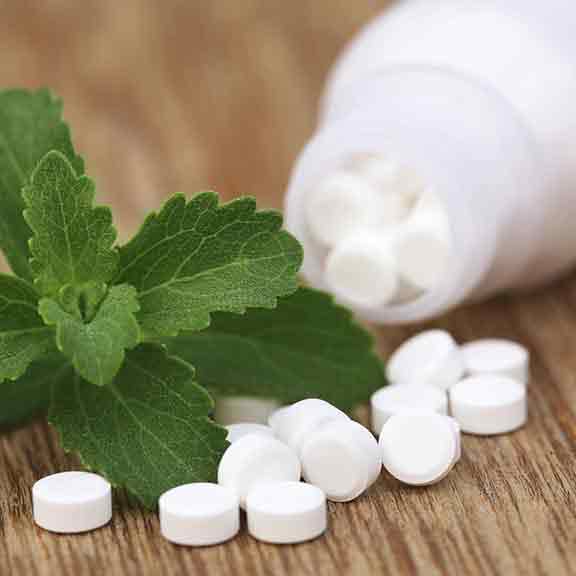
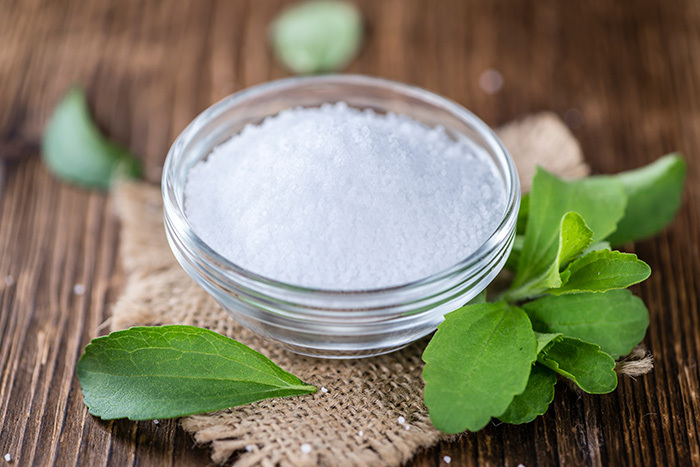
‘Natural’ sweeteners such as stevia and monk fruit (luo han guo) are gaining ground, likely in response to suspicion of ‘artificial’ sweeteners. Stevia is 250 to 300 times sweeter than sugar, but doesn’t have negative effects on blood sugar levels, and may even help control them.
But even though they come from natural sources, they’re still potentially problematic – and often aren’t as natural as they appear. “Stevia is added to food as purified steviol glycosides – so it’s not entirely ‘natural’,” says Stanton.
Neely says he wouldn’t be surprised if ‘natural’ sweeteners have similar affects on appetite as artificial sweeteners. Sweetness signals that an energy hit is on the way; when that energy doesn’t arrive, we seek out those ‘missing’ kilojoules elsewhere. “It doesn’t matter if a plant made it accidentally or if a factory made it on purpose,” he says – a sweetener is a sweetener.
‘Healthier’ sugar alternatives
If you’ve ever searched for healthy baking recipes online or checked the ingredients lists in the health food aisle, you’ve likely come across natural sugar alternatives. Products like honey, brown rice syrup, maple syrup, coconut sugar and molasses are often touted as being better for your health. According to Stanton, they have no nutritional advantages over regular sugar, although they may have slightly differing amounts of glucose and fructose. “They do not retain any of the nutritional virtues of the original product,” she says.
“They are basically just ‘sugar’ and have been extracted and sold in concentrated form.”
Although they may sound healthier, these products are still considered ‘added sugar,’ so keep an eye out for them on food labels and don’t go overboard when using them for home cooking.
While sugar replacements reduce kilojoules, they don’t actually address people’s preferences for sweet foods. “I consider one of the major reasons for not going from sugar to artificial sweeteners is that they will continue to feed the desire for sweet tastes,” says Rosemary Stanton.
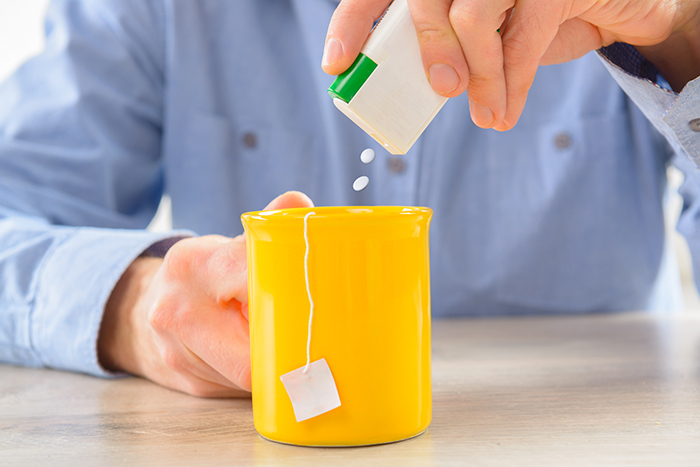
“One example that I often use is when people stop taking sugar in their tea (or coffee), they lose the liking for sweet tea (or coffee). Indeed, if you give someone a cup of sweetened tea when they no longer take sugar, they usually dislike the taste so much that they can’t drink it. However, if they had instead switched to artificial sweetener, their liking for sweet tea would not have abated in this way.”
Tips to curb your sweet addiction
Sweeteners generally replace sugar in discretionary foods which have little nutritional value. Reducing discretionary foods, regardless of what they’re sweetened with, leaves more room in your diet for nutritious foods.
If you reduce your need for sweetness, you reduce your intake of both sugar and artificial sweeteners. It’s boring advice, especially compared with fads that promise fast results, but the best approach is to stick to whole foods, as unprocessed as possible, and have everything in moderation.
Try a two-pronged approach: replace sugary foods and drinks with unsweetened substitutes, and slowly cut down on the amount of sugar you use.
Stanton suggests:
“For those who like fizzy drinks, use sparkling mineral water with mint and a couple of slices of lime or lemon.”
“With tea and coffee, if you take two teaspoons, go for one and a half, then decrease to one, then half, and you generally find your tastebuds adjust.”
“For other foods with sweeteners, for example confectionery, I’d recommend not buying these as a regular thing. Have some fruit instead – blueberries or strawberries are a good alternative for lollies. Or have a few nuts. Lots of studies show that when people eat nuts, they usually eat less of other foods as nuts are particularly filling.”
Other things to remember
Just because it’s a ‘diet’ product doesn’t mean you can eat twice as much of it!
Nutrition information panels can be helpful, but they only list total sugar, not added sugar.
Sugar can be listed under 43 different names. Don’t get caught out by healthier-sounding sugars like panela and turbinado.
Focusing on one dietary component like sugar can mean we make poor choices when it comes to other dietary components. It’s important to look at your whole diet.
Alice Richard is a Content creator and marketer. Alice writes on a range of topics, from health insurance to heaters and BBQs to bargain-hunting, always with the aim to help consumers find the best products to buy, and which to avoid.
Alice can take vast amounts of data from CHOICE product tests and turn it into content that is easily digestible and fun for readers.
Alice has a Bachelor of Arts from the University of Queensland.
Alice Richard is a Content creator and marketer. Alice writes on a range of topics, from health insurance to heaters and BBQs to bargain-hunting, always with the aim to help consumers find the best products to buy, and which to avoid.
Alice can take vast amounts of data from CHOICE product tests and turn it into content that is easily digestible and fun for readers.
Alice has a Bachelor of Arts from the University of Queensland.
Grace Smith is a Content editor, she creates and edits content, stories and feature articles for CHOICE magazine and digital platforms.
Grace writes on a diverse range of topics, from money-saving and consumer rights, to product safety and household goods. Previously, she worked as a verifier, reviewing lab data and written content to ensure all information was accurate and rigorous, and also as a Content producer for the Household team.
Grace is the writer and producer of CHOICE Cheapskate newsletter, full of money saving ideas and tricks.
Grace has a Bachelor of Arts from the University of Sydney. LinkedIn
Grace Smith is a Content editor, she creates and edits content, stories and feature articles for CHOICE magazine and digital platforms.
Grace writes on a diverse range of topics, from money-saving and consumer rights, to product safety and household goods. Previously, she worked as a verifier, reviewing lab data and written content to ensure all information was accurate and rigorous, and also as a Content producer for the Household team.
Grace is the writer and producer of CHOICE Cheapskate newsletter, full of money saving ideas and tricks.
Grace has a Bachelor of Arts from the University of Sydney. LinkedIn
For more than 60 years, CHOICE has been fighting the good fight for Australian consumers.
In the past year alone we've uncovered systemic issues with sunscreens, investigated shonky supermarket pricing, fought for stronger scam protections and helped make complex energy pricing fairer and clearer.
CHOICE is here to provide unbiased advice and independent testing in our world-class labs. We buy the products we test, just like you do, and our expert reviews are influence free. We’re here to help you choose smarter. Hopefully you’ll also save some money along the way.
Thanks to CHOICE, you’ll never be alone when a business treats you unfairly. You can support our work by joining or donating to our cause.