The mayonnaise you use can make or break your coleslaw, potato salad, or deviled eggs. And without mayonnaise we wouldn’t have aioli, tartar sauce or thousand island dressing. Put simply, a good quality mayo is a kitchen must-have.
It’s easy to make (see our mayo recipe below), but even easier to grab from the supermarket shelf. So which store-bought mayos cut the mustard for taste? And what’s in them? We compared 33 mayonnaises, from brands including Best Foods, Heinz, Kewpie, and Praise, to help you choose the best.
Best tasting mayonnaise
We assess store-bought mayonnaise products for both taste and nutrition, and recommend those that receive an overall score of 70% or more. Of the 33 products we tested, seven made that cut, and the following two received the equal top score of 79%.
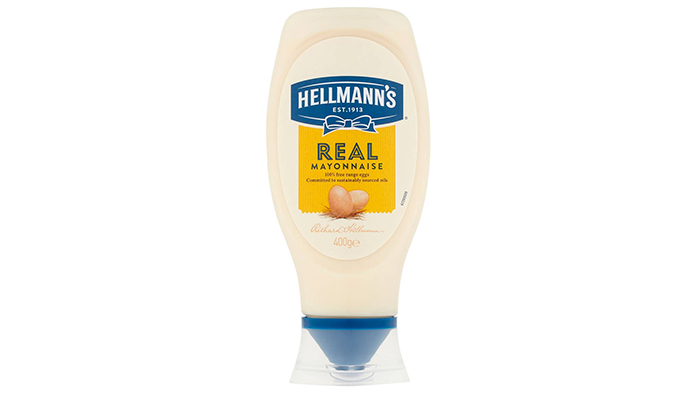
Hellman’s Real Mayonnaise
CHOICE Expert Rating: 79%
Price per 100g: $1.55
Country of origin statement: Made in Spain from local and imported ingredients.
Experts say:
“Creamy aroma. Great texture and aftertaste. A bit salty but would work well for many recipes. Good set and sheen. Nice egg flavour and balance. Overall a good, emulsified product.”
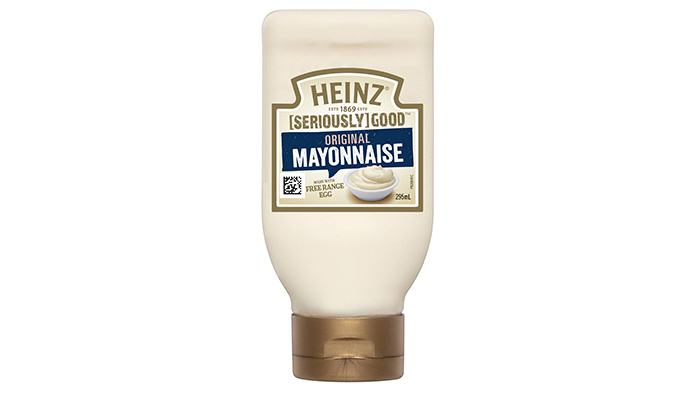
Heinz Original Mayonnaise
CHOICE Expert Rating: 79%
Price per 100g: $1.36
Country of origin statement: Made in New Zealand from local and imported ingredients.
Experts say:
“Glossy smooth appearance. Simple mayo taste. Nice texture, depth and overall flavour. Beautiful and creamy. Well balanced.”
Best vegan mayonnaise
Six products in our taste test are suitable for vegans, whether by design (specifically marketed as vegan) or by default (egg-free to achieve a lower price point or fat-free status).
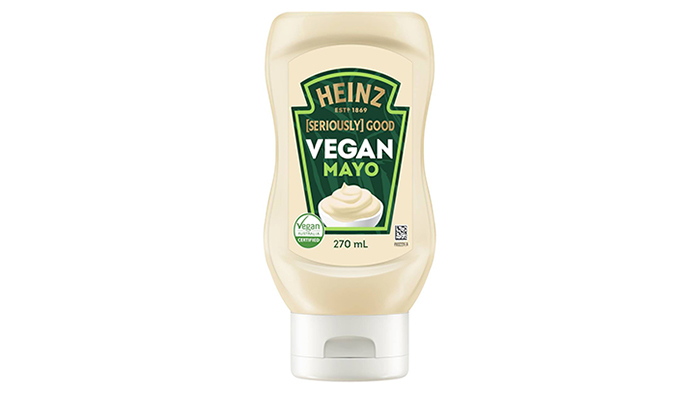
Of these, the best tasting is Heinz Vegan Mayo which received a score of 67%, just shy of our top rating products.
Experts described it as: “Tangy, sweet, nice texture, shiny appearance, more like a salad/coleslaw dressing.”
What is mayonnaise made of?
A typical mayo recipe calls for an emulsion of oil, egg and lemon juice or vinegar seasoned with salt and mustard.
The ingredients in store-bought mayonnaise, however, are varied and often more numerous. While some products stay close to a traditional recipe, many skimp on oil and egg and bump up the salt or include sugar and additives to compensate, resulting in something that’s more like a runny or gummy, sweet glue than the naturally dense, smooth and creamy emulsion traditionalists would offer up. In the 33 products we tested:
a variety of oils are used including (in order of most to least popular) sunflower, canola, soybean, ‘vegetable’ and rapeseed oil
egg content ranges from 0% up to 9.5% – whole egg is used more often, sometimes in combination with egg yolk, and just three products use yolk only
about half (18 of 33 products) include lemon juice or juice concentrate as well as vinegar, 14 use vinegar only and one uses kombucha (no lemon or vinegar)
two thirds (23 of 33) contain mustard, and many contain spice extracts for flavour.
Salt
Salt is a standard ingredient in mayonnaise. But our expert judges – even the chefs, who generally have a high tolerance to salt – frequently commented on how salty some mayos tasted. In fact, 17 of the 33 products can be considered high in sodium (≥600mg per 100g).
The worst offenders are Coles Coleslaw Mayonnaise (1000mg per 100g) and Kewpie Mayonnaise 50% Reduced Fat (1180mg per 100g).
Sugar
While salt is no stranger to mayonnaise, sugar is a far less common bedfellow. And yet 32 of the 33 products in our test are sweetened – typically with sugar, but also corn syrup, honey, fructose and stevia. A phenomenon that didn’t go unnoticed by our expert judges.
Four products can even be considered high in sugar (≥15g per 100g), and have at least double the sugar content of all other products on test:
Woolworths Essentials Mayonnaise (17.7g per 100g)
Coles Mayonnaise 97% Fat Free (18.9g)
Coles Coleslaw Mayonnaise (19.2g)
Praise 99% Fat Free Traditional Mayo (20.9g).
It’s perhaps unsurprising that these products’ taste scores are among the lowest.
The only unsweetened product in our test is the full fat Kewpie Mayonnaise.
Reduced fat
If you’re watching your weight, reduced fat (sometimes labelled ‘fat-free’, ‘light’ or ‘lite’) options are available.
To achieve this low-to-no-fat status, the bulk of the oil is usually replaced with water, which is why water rather than oil appears first on the ingredients list for the lowest fat mayos. The amount of egg the mayo contains can also be minimal. Praise 99% Fat Free Traditional Mayo, for example, contains no egg at all. Neither does Woolworths Essentials Mayonnaise, which – although it’s not labelled as reduced fat – is the second lowest fat product we tested. And Coles Mayonnaise 97% Fat Free doesn’t give details of its egg content, although egg is a long way down its ingredients list.
Bear in mind that reduced fat doesn’t necessarily mean healthy. When fat is removed, something else is generally added to provide flavour – usually sugar. The three lowest fat mayos in our test are among the four most sugary. To simulate the texture and consistency of traditional mayonnaise, thickeners and stabilisers such as xanthan gum (additive number 415) and maize thickener (1442) are also added.
Gluten free
Store-bought mayonnaise tends to be gluten free. But there are a few ingredients you should watch out for if you need to avoid gluten.
The dijon mustard in Heinz Japanese Style Mayonnaise, for example, contains wheat, as does the malt vinegar in Praise Traditional Mayo and Praise Whole Egg Light Mayo. And a number of products contain additive 1442, a modified starch thickener that’s derived from maize (which means it’s gluten free) or wheat, in which case it may be listed as ‘modified starch thickener (from wheat)’.
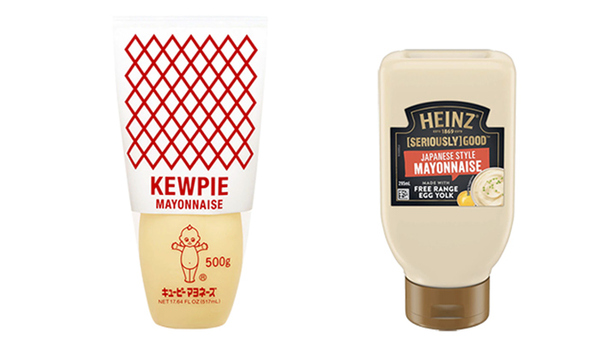
Japanese mayonnaise brand Kewpie ($1.57 per 100g) has swathes of devoted fans worldwide.
It’s made with soybean oil, rice vinegar and egg yolk which gives it a more rich and ‘eggy’ flavour than mayos made with whole egg. This combined with the presence of additive 621 (monosodium glutamate, more commonly known as MSG) give Kewpie a distinct umami flavour.
Although beloved by many, it received less love from our judges who described it variously as “extremely salty”, “anchovy like”, “very savoury (seriously tastes like it has beef in it?)” and “quite overpoweringly unpleasant”. It received an overall score of 55% in our taste test.
Presumably eager to capture some of the market of the cult favourite, Heinz launched its own version of Japanese style mayo. Like Kewpie, it’s made with egg yolk and rice vinegar, but there’s no MSG. At $1.53 per 100g it’s only slightly cheaper, but it performed better in our taste test receiving a score of 64%.
In a food processor bowl with the blade attachment place egg yolks, lemon juice, mustard and salt. Process until combined, approximately 15 seconds. If the blade isn’t contacting the ingredients add an extra egg yolk
Keep the food processor running and gradually add oil through the chute or through a mini processor feed hole in a slow, steady stream, approximately 30 seconds.
Scrape down the sides of the bowl and process again until thick and incorporated evenly. Season if required.
Tips
Use a small processor bowl if available, otherwise you may need to double the quantity.
A neutral oil such as is best to allow the other flavours to stand out. Canola oil, sunflower oil, rice bran oil and ‘light’ olive oil are all good options.
Garlic, capers, herbs, chilli sauce or tomato sauce can be used to flavour the mayonnaise.
A stick blender can be used to make mayonnaise by adding all the ingredients into a narrow tall jug or cup, placing the stick blender into the jug with the guard touching the bottom, turning on the stick blender to a high speed and very slowly pulling the stick blender up. When the ingredients have started to emulsify, move the stick blender around to combine the ingredients well.
Tawnya Bahr is an experienced food consultant, chef and founding partner of regional food tour company Straight To The Source. Her culinary journey began after moving to Australia from San Francisco in 1995 when she created her own condiment product line and gourmet distribution businesses. A Le Cordon Bleu-trained chef, Tawnya is an accomplished culinary judge and on the Royal Agricultural Society of NSW committee as Industry Advisor for its Sydney Royal Fine Food Show across all categories.
Mimmo Lubrano is the CEO of Sandhurst Fine Foods, the largest foodservice player in the olive and condiment market in Australia. Since its establishment more than 30 years ago he has worked in all areas of his family-run business including manufacturing, quality control and procurement. Mimmo’s deep knowledge and understanding of the foodservice market, product and food culture and passion for quality means he’s a frequent guest alongside chefs at food events including commercial cooking classes. Mimmo has judged olive oil, sauces and other condiments at the NSW Royal Agricultural Society Fine Food Show.
Adam Moore is a prolific culinary judge. His credits include judging for Le Cordon Bleu cooking school and Royal Agricultural Society (RAS) Fine Food competitions across a range of categories. He has formal qualifications in pastry, charcuterie and butchery, sensory evaluation, food styling and food photography. With more than 25 years in the industry, he has worked in restaurants, food service, retail, food manufacturing, marketing and sales. He’s a certified global executive chef, and culinology director at Culinary Revolutions.
Petra Sugiarto has an academic background in food science and technology and food microbiology and has been working in the food industry for more than 20 years, in particular the dairy and dairy alternative industry in various applications including milk, yoghurt, cheese, ice cream/gelato, and desserts. For the past 15 years she’s been on the judging panels for the Dairy Industry Association of Australia (DIAA NSW and Vic), Sydney Royal Agricultural Society in the Cheese & Dairy Produce competitions and for the Australian Grand Dairy Awards.
How we test mayonnaise
Products
We tested 33 mayonnaise products with the word ‘mayonnaise’ or ‘mayo’ on the label available nationally in major supermarket chains. This included ‘light’ or reduced fat versions and vegan products. We excluded uniquely flavoured varieties.
Price is as purchased in stores (not on special) in January 2022.
Tasting
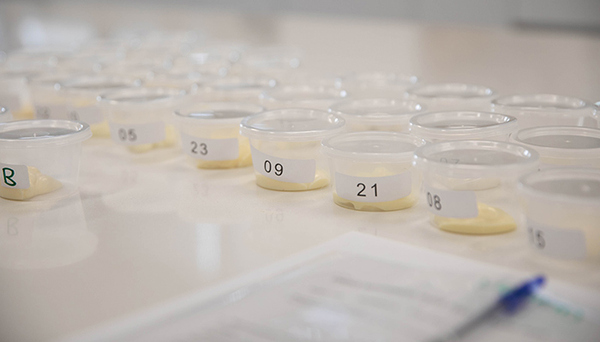
Mayonnaise samples are put into coded containers immediately before the test. Our experts taste the mayonnaise samples ‘blind’ (without knowing the brands) and in a randomised order, which is different for each expert.
Scores
Experts independently judge all mayonnaise products, scoring each sample for appearance, aroma, texture and flavour.
The CHOICE Expert Rating is made up of taste 90% (50% flavour/taste and eating quality, 30% texture/mouthfeel, 15% appearance and aroma, 5% true to name) and nutrition 10% (based on the product’s Health Star Rating, calculated from the details in the nutrition information panel and converted to a percentage).
We recommend mayonnaise with a CHOICE Expert Rating of 70% or more.
Rachel Clemons is an award-winning journalist who worked at CHOICE from 2004–2022.
During her time at CHOICE her core focus was on food and nutrition, from reviewing breakfast cereals and fast food to dispelling myths about the benefits of detox kits and gourmet salt or translating confusing food labels – with the occasional taste test thrown in for good measure.
Prior to CHOICE she lived overseas, working predominantly in hospitality when she wasn't travelling and eating her way through various cuisines. She holds a Master of Science in Nutrition from King's College London (where she also researched and wrote for CHOICE's UK sister organisation, Which?), and a Bachelor of Science, Health Sciences from the University of Adelaide.
In 2017 she won the Dietitians Association of Australia's Nutrition Journalism Award and she's currently on the Steering Committee as a Parent Member of Parents' Voice.
You can find her on Twitter and LinkedIn.
Rachel Clemons is an award-winning journalist who worked at CHOICE from 2004–2022.
During her time at CHOICE her core focus was on food and nutrition, from reviewing breakfast cereals and fast food to dispelling myths about the benefits of detox kits and gourmet salt or translating confusing food labels – with the occasional taste test thrown in for good measure.
Prior to CHOICE she lived overseas, working predominantly in hospitality when she wasn't travelling and eating her way through various cuisines. She holds a Master of Science in Nutrition from King's College London (where she also researched and wrote for CHOICE's UK sister organisation, Which?), and a Bachelor of Science, Health Sciences from the University of Adelaide.
In 2017 she won the Dietitians Association of Australia's Nutrition Journalism Award and she's currently on the Steering Committee as a Parent Member of Parents' Voice.
You can find her on Twitter and LinkedIn.
For more than 60 years, CHOICE has been fighting the good fight for Australian consumers.
In the past year alone we've uncovered systemic issues with sunscreens, investigated shonky supermarket pricing, fought for stronger scam protections and helped make complex energy pricing fairer and clearer.
CHOICE is here to provide unbiased advice and independent testing in our world-class labs. We buy the products we test, just like you do, and our expert reviews are influence free. We’re here to help you choose smarter. Hopefully you’ll also save some money along the way.
Thanks to CHOICE, you’ll never be alone when a business treats you unfairly. You can support our work by joining or donating to our cause.