01.Long life bulbs
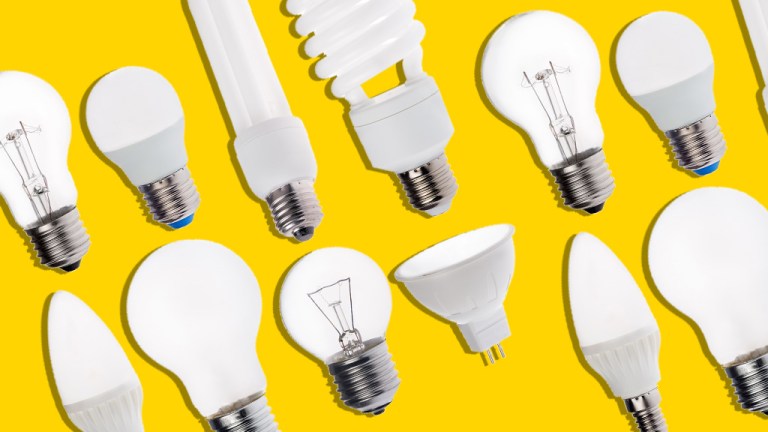
Since November 2009, incandescent bulbs (apart from a few specialised sizes and types) have not been available for sale in Australia as part of the government’s drive to reduce energy consumption and lessen the impact of electricity production on the environment and economy. They have been replaced by compact fluorescent light (CFL) bulbs in most domestic lighting applications.
Early CFL bulbs, which CHOICE first tested back in 2000, cost up to $20 or more and were slow to warm up to full brightness. Now, cheaper to buy – typically about $5-$10 per bulb – and run, they are also faster to warm up and have fewer failures. We’re only 2000 hours into our testing of compact fluorescent light bulbs but results are encouraging; so far, only three bulbs (each of a different model) have failed.
Incandescent bulbs are still available in very small sizes, but will be phased out as CFLs in these sizes become available.
Phase-out of incandescent bulbs
The Australian government’s incandescent light bulb phase-out program applies Minimum Energy Performance Standards (MEPS) to lighting products. Products that don’t meet MEPS will be restricted from sale.
-
Tungsten filament incandescent general lighting service (GLS) light bulbs (the typical pear-shaped bulbs used in most domestic light fittings) don’t meet MEPS and have not been available in stores since November 2009.
-
From October 2010, MEPS will apply to >40W candle, fancy round and decorative lamps, mains voltage halogen non-reflectors, and extra-low voltage (ELV) halogen reflectors.
-
From October 2012, MEPS will apply to mains voltage reflector lamps, including halogen (PAR, ER, R, etc), and >25W candle fancy round and decorative lamps.
Depending on when efficient alternatives become available, pilot lamps 25W and below will also be subject to MEPS.
How do they work?
Incandescent bulbs work by passing an electric current through a metal filament, making it white-hot so it gives off light. They’re simple and cheap to manufacture but inefficient to run; most of the electrical energy is converted into heat rather than light.
CFL bulbs pass a current through a mixture of gases in a tube, causing the gases to emit UV radiation, which makes the phosphor coating on the inside of the tube glow (or fluoresce). This process is much more energy-efficient; it uses only about 20%-25% of the electricity needed to light an equivalently bright incandescent bulb.
26 Feb 2009
|
With the increased cost of power generation, household bills are set to rise nationally over the next few years and consumers will be on the look-out for cheaper energy prices.
6 Jun 2011
|
This guide covers enegry efficent appliances, transport options, water usage and more.
1 May 2007
|
Switching to accredited GreenPower would significantly reduce the greenhouse gas emissions your household is responsible for, and it’s now available to all Australian households.
8 Mar 2009
|
If a new bill becomes law, nearly one million households could be paying for renewable energy that does nothing to reduce Australia’s greenhouse gas emissions.