Resolving to eliminate junk food and do more exercise will help your physical health, but what about your financial wellbeing?
We’ve crunched the numbers from our lab tests, insurance comparisons and investigations to come up with some simple steps you can take to reduce your cost of living this year on everything from energy bills to grocery costs.
“Sometimes it doesn’t even require huge amounts of sacrifice! Something as simple as switching your health insurance or being more selective about your energy provider can save you hundreds – sometimes thousands – of dollars.”
We’ve crunched the numbers to bring you eight simple ways that could help you save almost $11,500 in 2026.
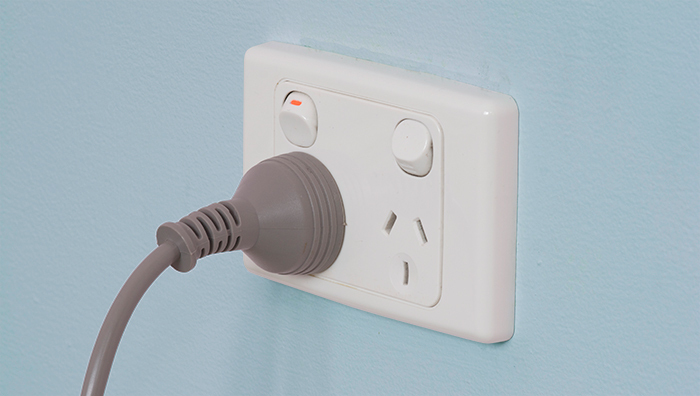
Turn off appliances at the power point: Stop wasting power and save up to $240/year
Switch your health insurance provider: Our experts calculate you could save up to $2130/year
Find a new deal on your car insurance: By choosing a better policy you could save up to $567/year
Review your home insurance: Get a better deal and save up to $1595/year
Change your laundry routine: Tweaks to the way you wash your clothes could save up $1473
Make smart beverage choices: Switch to making your daily coffee at home and save up to $1283/year
Change your energy provider: By signing up to Bill Hero it’s estimate you could save on average $331 a year
Spread your weekly grocery shopping: By shopping at different supermarkets to find the best deal you could save up to $3860 a year
Turning off appliances at the power point could save up to $240 a year.
1. Turn off appliances at the power point
Energy costs are one of the biggest concerns for Australians. In our June 2025 Consumer Pulse survey, 84% of Australians told us they’re concerned about their electricity costs.
Choosing energy-efficient appliances, turning off lights you’re not using and making sure your home is well-insulated to reduce heating and cooling costs are well-known ways to manage your spending on electricity.
But what about the energy being stealthily consumed by appliances in standby mode?
If you’re among the 45% of Australians with hospital cover or the 55% with extras cover, chances are you’re paying more than you need to.
Our experts independently compare the policies of 48 health funds (some commercial comparison sites compare as few as seven) and time and again we see significant savings on offer if you shop around.
While the two biggest health funds – Medibank and Bupa – dominate with a combined market share of more than 52%, it’s often the smaller funds where we see savings.
Whether you have a Gold, Silver or Bronze policy, it’s likely that you’ll be able to find a cheaper deal that will give you exactly the same amount of cover
CHOICE health insurance expert Mark Blades
But while switching to a cheaper policy can save you some cash, our longstanding advice is to carefully consider whether or not you need health insurance at all, especially extras.
Our recent Consumer Pulse survey shows increasing worries about the price of private health insurance, with 81% of Australians expressing concern about this household cost in our June 2025 survey.
If you do want to hang on to your health insurance, our experts calculate that if you switch your hospital insurance to a cheaper policy there are potentially significant savings.
“The same cover with a different insurer can be hundreds of dollars cheaper,” says CHOICE insurance expert Mark Blades.
“Whether you have a Gold, Silver or Bronze policy, it’s likely that you’ll be able to find a cheaper deal that will give you exactly the same amount of cover.”
Our experts found that:
People with Gold policies could save up to $2130 a year by moving to a cheaper Gold policy.
People with Silver policies could save up to $1150 a year.
People with Bronze policies could save up to $840 a year.
Car insurance is another household cost causing concern for Australians. In June 2025, our Consumer Pulse survey found 77% of us were worried about the cost of car insurance. That’s an awful lot of people troubled by how much they’re being asked to pay.
The good news is our expert analysis found that, in all states, average premiums for the most expensive policy are more than double the average premiums for the cheapest, so there are savings to be found.
Our experts found that, in most states, you could save significantly if you switched from the most expensive to the cheapest policy, but, of course, some cheap policies won’t give you the coverage you need. The policies our CHOICE experts recommend have superior cover, and they’re often cheaper than average policies.
Our experts found that when we looked at the average premium of the cheapest policies that scored high enough to be recommended, compared to the average of all other policies, there were savings to be had in every state.
In ACT you could save $422
In NSW you could save $317
In NT you could save $567
In Qld you could save $87
In SA you could save $302
In Tas you could save $204
In Vic you could save $378
In WA you could save $298
Total possible savings: up to $567
4. Review your home insurance
Not surprisingly, this is another of those increasingly expensive household costs causing concern for Australians. Some 80% of those we surveyed in our June 2025 Consumer Pulse told us that they were concerned about the price of their home insurance premiums.
As with the other types of insurance we’ve looked at, shopping around can save you thousands of dollars.
Here are the potential savings you can make for insurance if you were to switch to one of the policies we recommend in our review:
NSW: $160
NT: $1480
Qld: $1595
SA: $847
Tas: $832
Vic: $609
WA: $309
The ACT is not included in this list because in our most recent 2025 comparison, the average price of our recommended policy in ACT was $59 higher than the market average. Because we take cover, as well as price, into account when making recommendations, we sometimes recommend policies that are not the absolute cheapest available.
If you’ve been with the same insurer for more than 24 months, CHOICE insurance expert Daniel Graham advises calling your insurer to ask them if you can get a better deal.
“You should also get quotes from at least three other insurers to compare and find the best value – some will match or beat competitors’ premiums. And new customers often get a discount to sweeten the deal,” he says.
A good place to start is the CHOICE home insurance review. We’ve compared more than 50 different home insurance policies from across the market to help you find the right cover for your building and contents.
Total possible savings: Up to $1595 a year.
Lots of small changes can add up to big savings in the laundry.
5. Change the way you wash your clothes
Because we regularly test laundry detergents and washing machines in our laundry lab, we can accurately calculate how much you can save by tweaking the way you wash your clothes.
“Washing full loads in cold water rather than small loads in warm, and switching to a top-performing but cheaper detergent – and using less of it – will save you about $700 over the course of a year.”
You could save nearly $480 a year just by switching to line drying
“We found in our testing that this approach gets clothes just as clean but costs significantly less. Cutting out unnecessary fabric softener could further cut your costs by as much as $295.
“And reducing your reliance on a dryer will add even more savings: we calculated you could save nearly $480 a year just by switching to line drying,” he says.
Our washing machine reviews can also help you save if you’re in the market for a new machine: we factor energy use into our ratings, so if we’ve scored it high enough to be recommended, it will be efficient to run.
If you’re a coffee lover, buying your drinks rather than making them yourself can end up costing you more than you might think.
Sure, that mid-morning coffee might only be a few dollars, but if you’re buying one most days that will quickly add up.
Making coffee at home rather than buying it from a cafe could literally save you thousands.
When we looked at the cost of making your coffee at home, including buying the machine itself, parts, maintenance and all the ingredients, we calculated it could set you back about $724.50 for one double-shot of coffee each day for a year.
To buy the same coffee from a cafe each day for a year would end up costing you about $2007.50.
This means you could save $1283 by making your coffee at home, a significant saving for most of us who are watching our budgets.
Total possible savings: Up to $1283 a year.
7. Change your energy provider
With concerns about gas and electricity prices on the rise for many Australians, finding the cheapest retailer is something that could really help you save.
Unfortunately, many of us sign up to a plan based on a cheap initial offer, but when the deal ends we stay with the provider on the newer, more expensive plan.
Energy retailers love to lure us in on cheap rates, knowing that we’ll probably stick with them even when the prices go up.
Energy retailers love to lure us in on cheap rates, knowing that we’ll probably stick with them even when the prices go up
CHOICE has partnered with Bill Hero to help make it easy for people wanting a better deal on their energy bills. Bill Hero guarantees it will find annualised savings on your first bill, and that you’ll save more than the price of your annual subscription. If it can’t, you can cancel immediately for a full refund.
Exactly how much you’ll save will depend on a lot of factors, but Bill Hero says the average first-switch savings for its customers is $380.
A Bill Hero annual subscription will cost you between $49 and $79, depending on whether you’re looking for a better deal on your electricity, gas or both. So all up you’ll be looking at savings of between $301 and $331.
Total approximate savings: $316.
8. Spread your weekly shop
Since June 2024, CHOICE has been conducting quarterly grocery basket surveys to help consumers find savings on their weekly shop.
Each quarter, we create a basket of between 15 and 20 items, including a range of fresh fruit and vegetables, meat, dairy, frozen and pantry items and compare the prices across the country at Aldi, Coles, IGA and Woolworths supermarkets.
The difference between the cheapest and most expensive basket of goods is on average about 31%
We frequently find that the difference between the most expensive basket of goods and the cheapest is significant. We also find that specials and discounts can make a big difference to the overall cost.
Our research emphasises a few key changes you can make to help save on your grocery costs, an expense that continues to worry Australians, according to our regular Consumer Pulse research, which in June 2025 revealed that 86% of us continue to be troubled by how much we need to spend on food and groceries.
To save on your weekly shop, here are three things you can do:
Check the unit pricing: It can be hard to compare prices of different-sized products from different brands, but unit pricing lets you compare prices based on the price per unit e.g. 100g or 1L. All supermarkets are required by law to include this information in labelling, both online and instore.
Shop around: Switching between stores and shopping at different supermarkets to take advantage of specials can deliver significant savings.
Change your routine: Swap expensive cuts of meat for cheaper alternatives; look at frozen fruit and veg, particularly if shopping for produce out of season; and give the ugly fruit and veg a go. Also, don’t be afraid to try home-brand products. Our expert testing often finds that these ranges outperform more expensive options at all the supermarkets.
So how much can you save by switching from the most expensive to the cheapest option?
When we compare the amount you save by choosing the cheapest basket of goods instead of the most expensive, we see that on average the difference is about 31%. If you were spending $240 a week on groceries – the estimated average Australian households spend – reducing what you spend by the average difference we see in our surveys would deliver savings of more than $3860 a year.
Margaret Rafferty joined CHOICE in 2018 as a Content editor and since then has filled the roles of Commissioning editor, Managing editor and now Editorial consultant.
Margaret has written on a wide variety of topics and enjoys making complex subjects easy to understand. With over 20 years of media experience, Margaret brings a strong storytelling background to CHOICE. She works closely with people across the organisation to help tell stories that make a positive difference to people and is passionate about uncovering bad practices and helping Australians to avoid falling victim to shonky products and services. LinkedIn
Margaret Rafferty joined CHOICE in 2018 as a Content editor and since then has filled the roles of Commissioning editor, Managing editor and now Editorial consultant.
Margaret has written on a wide variety of topics and enjoys making complex subjects easy to understand. With over 20 years of media experience, Margaret brings a strong storytelling background to CHOICE. She works closely with people across the organisation to help tell stories that make a positive difference to people and is passionate about uncovering bad practices and helping Australians to avoid falling victim to shonky products and services. LinkedIn
For more than 60 years, CHOICE has been fighting the good fight for Australian consumers.
In the past year alone we've uncovered systemic issues with sunscreens, investigated shonky supermarket pricing, fought for stronger scam protections and helped make complex energy pricing fairer and clearer.
CHOICE is here to provide unbiased advice and independent testing in our world-class labs. We buy the products we test, just like you do, and our expert reviews are influence free. We’re here to help you choose smarter. Hopefully you’ll also save some money along the way.
Thanks to CHOICE, you’ll never be alone when a business treats you unfairly. You can support our work by joining or donating to our cause.