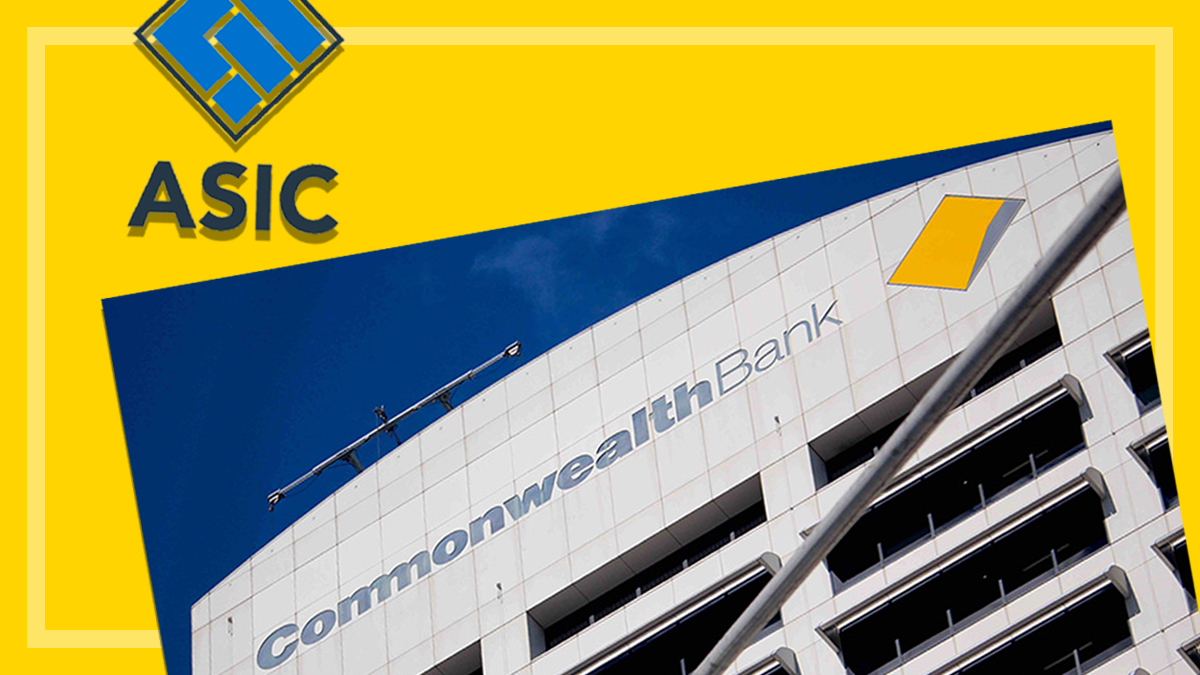
The Australian Securities and Investments Commission (ASIC) has kept hidden a report into systemic issues relating to the Commonwealth Bank of Australia, saying releasing the documents may harm the “business interests” of the bank.
Earlier this year, CHOICE submitted a Freedom of Information (FOI) request for any Systemic Issues Reports into “Commonwealth Bank’s conduct and cooperation or lack thereof, in ongoing or previous AFCA cases or investigations”.
The Australian Financial Complaints Authority (AFCA) is the body responsible for handling customer complaints with banks and other financial institutions.
We submitted our FOI request after speaking to a number of customers who had ongoing AFCA complaints about CBA, and who alleged the bank had failed to produce timely or complete documents to the complaints handling process.
In August 2025, AFCA identified “systemic issues” relating to CBA and referred the matter to ASIC in a “Systemic Issues Report”. This was followed by an investigation which concluded in October that year.
In response to questions about complaint issues relating to CBA, AFCA tells us that, under its rules, all parties to a complaint, including financial firms, are required to comply with requests for information during the complaints process.
“AFCA may take appropriate steps if information is not provided or is incomplete… Misconduct or breaches that affect more than one consumer may be investigated and reported to the relevant regulator by our Systemic Issues team,” a spokesperson says.
AFCA is not subject to the Freedom of Information Act, but Systemic Issues Reports are routinely sent to ASIC, the statutory body that oversees them.
ASIC told CHOICE it had identified 13 documents relating to our FOI request for Systemic Issues Reports, but in late March decided to block access to eight documents, including the report itself, after hearing submissions from the bank as to why they should be kept secret. ASIC is required by law to consult with the bank.
ASIC justified the move to deny access primarily on two grounds, the first being that any disclosure may cause harm to the legitimate business interests of CBA
Five documents, which were emails between AFCA and ASIC were released to us in a redacted format, but access to the remaining eight documents were denied.
ASIC justified the move to deny access primarily on two grounds, the first being that any disclosure may cause harm to the legitimate business interests of CBA.
“The release of the material would or could reasonably be expected to unreasonably affect CBA in respect of its lawful business, commercial or financial affairs,” the ASIC FOI officer says.
The second reason given was that any disclosure would make CBA less likely to provide information to ASIC in the future.
“It is also my view that persons or entities who provide information would or could reasonably be expected to be less transparent with the quantity or quality of information they provide to ASIC if they were aware that such information could be disclosed,” the ASIC FOI officer went on to say.
CHOICE sent questions to ASIC asking why it was the regulator’s role to protect the commercial interests of CBA shareholders, especially following systemic issues being identified. We also asked why the regulator was fearful the bank may cease to provide information to ASIC in the future and whether the bank refusing ASIC information requests would be in breach of the law.
ASIC says decisions relating to FOI requests are made by a specialist team and in accordance with obligations under the act.
“Under FOI laws, information concerning the business affairs of an organisation that would or could reasonably be expected to unreasonably affect that organisation, or could prejudice the future supply of information to the Commonwealth or an agency, are conditionally exempt,” an ASIC spokesperson says.
CHOICE sent questions to ASIC asking why it was the regulator’s role to protect the commercial interests of CBA shareholders
We also sent questions to CBA. The bank says they are committed to working with customers to resolve concerns fairly and as quickly as possible.
“This includes matters that are referred to AFCA for independent review. CBA has detailed processes and procedures in place to support the provision of documents in a timely manner to assist the AFCA process,” a spokesperson says.
“When customers raise complaints with CBA, a significant proportion of these are closed within a day, and the vast majority of complaints are resolved within 30 days,” they add.
Clinton Free, a professor of accounting, governance and regulation at the University of Sydney Business School says it is “disappointing” to see the regulator not coming down on the side of public accountability.
“Their role is to regulate the banks. Public trust in institutions, including banks is at alarming record lows, this sort of obfuscation and lack of accountability contributes to that,” he said.
“Information about Australia’s largest bank and how they treat their customers and handle complaints should be in the public domain. Yes, the regulator faces a challenging line to walk, but it would seem on face value that this is in line with the public interest.”
Information about Australia’s largest bank and how they treat their customers and handle complaints should be in the public domain
Clinton Free, University of Sydney
Free adds that banks face a long road to rebuilding trust following the Royal Commission and that the regulator also has a role to play in restoring public faith in its own ability to hold banks to account.
“The Royal Commission gave rise to this view that banks avoid meaningful consequences and that did damage to regulators. I would have thought it would be in the regulators’ interest to not just act, but be seen to be transparent,” he says.
Do you know more about this story? Contact CHOICE Investigative Journalist Jarni Blakkarly at [email protected]
Jarni Blakkarly is an award-winning Investigative Journalist at CHOICE. Jarni has worked for news organisations such as SBS, Reuters, Al Jazeera English, ABC 730, Radio National, BBC World Service and Deutsche Welle.
Jarni won the Walkley Foundation's young journalist of the year student category award in 2016 and was the recipient of a Melbourne Press Club Michael Gordon fellowship in 2022. In 2023 he was a highly commended finalist in the Quill Awards and a winner at the 2024 Excellence in Civil Liberties journalism awards. In 2024 he was elected to serve on the Federal Council (National Media Section) of the MEAA. Jarni has a Bachelor of Communications (Journalism) from the Royal Melbourne Institute of Technology (RMIT).
Jarni Blakkarly is an award-winning Investigative Journalist at CHOICE. Jarni has worked for news organisations such as SBS, Reuters, Al Jazeera English, ABC 730, Radio National, BBC World Service and Deutsche Welle.
Jarni won the Walkley Foundation's young journalist of the year student category award in 2016 and was the recipient of a Melbourne Press Club Michael Gordon fellowship in 2022. In 2023 he was a highly commended finalist in the Quill Awards and a winner at the 2024 Excellence in Civil Liberties journalism awards. In 2024 he was elected to serve on the Federal Council (National Media Section) of the MEAA. Jarni has a Bachelor of Communications (Journalism) from the Royal Melbourne Institute of Technology (RMIT).
For more than 60 years, CHOICE has been fighting the good fight for Australian consumers.
In the past year alone we've uncovered systemic issues with sunscreens, investigated shonky supermarket pricing, fought for stronger scam protections and helped make complex energy pricing fairer and clearer.
CHOICE is here to provide unbiased advice and independent testing in our world-class labs. We buy the products we test, just like you do, and our expert reviews are influence free. We’re here to help you choose smarter. Hopefully you’ll also save some money along the way.
Thanks to CHOICE, you’ll never be alone when a business treats you unfairly. You can support our work by joining or donating to our cause.