Many pillows claim to have impressive features and benefits and some of these are backed up by experts
But CHOICE testing has found some claims made by pillow manufacturers, such as those regarding firmness, to be unreliable
We recommend feeling before you buy and checking our reviews to get a good idea of whether a pillow will actually work for you
We test a lot of pillows in our expert labs and one thing we’ve noticed is that these essential slumber aids can come labelled with more promises to help you sleep than sheep counted while trying to fall asleep.
From perfect firmness and temperature, to “space technology” and “anti-gravity” foam to give your head “a feeling of weightlessness”, claims commonly found on pillow packaging range from ordinary to over the top.
They’re obviously designed to get your attention (and your cash), but which promises can you trust and are any of them actually worth paying for? We investigate.
CHOICE regularly tests pillows, rating these bedroom staples on how much comfort and support they provide, as well as how they hold up over time. For expert advice on your next pillow, check out our latest review and buying guide.
The bare minimum any of us expect from a pillow is for it to be able to support our head for hours at a time.
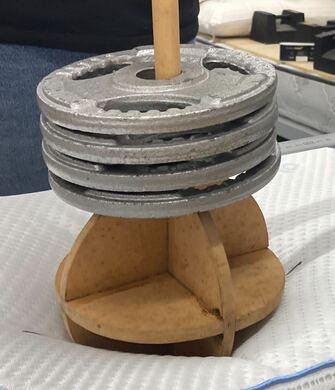
We use weights to test how firm a pillow really is.
Our wide range of personal preferences and sleeping styles has led to many pillows claiming to offer different levels of support and density, labelling themselves as soft, medium or firm.
But CHOICE experts have found these firmness claims don’t always stack up in the real world.
“There are no clear standards on what counts as ‘firm’ or ‘soft,’” says our pillow tester Matthew Tung. “Pillow companies might have their own definitions of firmness and how to measure it.”
This means that buying a pillow purely based on its firmness claim could leave you disappointed.
Inconsistencies are laid bare in our “sink test”, which measures how far a 5kg weight sinks into a pillow to get an idea of how well it might support your head.
In one recent round of tests, the weight sank further into some pillows claiming to offer “medium” firmness than it did into those marketed as “soft”.
In another, a pillow marketed as the “world’s softest” wasn’t any more absorbent of our 5kg weight than other models.
Buying a pillow purely on its firmness claim could leave you disappointed
“Anyone looking to get a new pillow should actually go and feel it before they buy, to make sure it will give them the right level of support,” Tung says.
“Everyone has a different interpretation of what firm and soft feels like, but our sink test results give you a good point of reference to work with,” he adds.
“Compare the sink scores in our review to get an idea of how much support a pillow is actually going to offer.”
Can you trust it?
No – “Medium” pillows may offer less support than those marked as “soft”. Get hands-on experience with the pillow before buying or check our reviews to gauge firmness rather than relying on manufacturer claims alone.
Claim: Space tech
Some pillow makers feel the need to go the extra mile in attempts to firm up their claims to providing the right amount of support.
In recent tests, we’ve come across pillows from Tempur claiming to use “certified space technology”.
Tempur’s space tech pillows really are made from a material first developed for use in rockets. Credit: NASA
Tempur’s claims are actually valid – several of the company’s pillows are made with viscoelastic foam, a material invented by NASA for use in its rockets.
But their off-this-planet backstory doesn’t mean these pillows are guaranteed to give you a better night’s rest.
Their foam composition means they’ll mould to your head and neck, so they might leave you feeling uncomfortable if you’re someone who tends to toss and turn during the night.
What’s more, these pillows are among the most expensive we’ve seen on the market. Recent models have retailed for as much as $479, hundreds of dollars more than most other pillows we test.
So check our reviews and get a feel before you buy a Tempur pillow to make sure its space tech is for you.
Can you trust it?
Yes – Tempur pillows are made with material first developed for use in space, but that doesn’t necessarily make them a superior product – make sure their design suits you before buying one.
Tempur isn’t the only brand to try to use the mystique of space to sell pillows.
Sleeping Duck tells customers its pillows are made with “anti-gravity foam… designed to give your head a feeling of weightlessness throughout the night”.
While these pillows do score well in our sink and comfort tests, their performance isn’t exceptionally different to that of pillows made without “anti-gravity” materials.
Therefore, we’re sceptical of their claims. “This seems like more of a marketing gimmick than an actual solid claim,” says our tester Matthew Tung.
This seems like more of a marketing gimmick than an actual solid claim
Matthew Tung, CHOICE pillow tester
As part of his review process, Matthew measures how comfortable a pillow will be if you’re sleeping on your back and side.
See whether Sleeping Duck’s products will suit your snoozing style by checking our latest review.
Can you trust it?
Probably not – Sleeping Duck’s pillows do perform well, but we can’t verify their claims of having “anti-gravity” properties.
APA-endorsed pillows should meet claims regarding body support and posturing.
Other claims proclaiming better body support are more reliable.
The Australian Physiotherapy Association (APA) endorses pillows whose claims of providing levels and types of support beneficial for physical health have been confirmed by its members, who are qualified physiotherapists.
“We submit products to an appropriate physiotherapist for their review,” says APA member experience general manager Andrea Johnson.
“They provide their review against the claims that product is making and make a recommendation to the APA around whether the product is suitable for endorsement.”
Pillow manufacturers can then pay the APA a fee to be able to use its endorsement on their packaging.
You can expect APA-endorsed pillows to meet any claims around providing appropriate neck support, neck and spinal alignment and appropriate sleep posturing, Johnson explains.
Can you trust it?
Yes, but consider your own needs – APA approval only means that a pillow’s specific physiotherapeutic claims have been confirmed by a physiotherapist. These benefits may not suit you. If you have specific physiotherapeutic needs, we recommend consulting a physio yourself for more personalised advice.
Humans aren’t the only living organisms tempted by a nice soft pillow – dust mites and mould have been known to make a home for themselves among the layers of these bedroom staples.
Beyond the immediate ick factor, these unwanted sleeping buddies can trigger reactions for people with asthma and allergies. Certain materials used in the pillow itself can also bring about a reaction.
Pillows promising to be hypoallergenic should be made of materials less likely to cause an allergic reaction.
Meanwhile, those describing themselves as antimicrobial should have been treated with chemicals that stop microbes, such as mould (another risk for allergies and general health), from growing within.
Sensitive Choice pillows are likely to help if you’ve got asthma or allergies.
However, there’s no third-party regulating the use of these terms, so manufacturers can use them without having their claims tested first.
If you’re wondering whether a product making these claims can be trusted, the National Asthma Council of Australia (NACA), gives “Sensitive Choice” approval to pillows they have found likely to help people with asthma and allergies, while keeping away mould and mites.
“We have a product advisory panel made up of different medical experts and specialists,” explains NACA Sensitive Choice business development manager Adele Taylor.
“They have to see clear evidence that a product offers a potential benefit to someone with asthma and allergies before they’ll approve the product [as Sensitive Choice].”
Adele says the “really rigorous” process requires pillow brands to submit test results from independent labs backing up their hypoallergenic or antimicrobial claims.
They have to see clear evidence that a product offers a potential benefit to someone with asthma and allergies before they’ll approve [it]
Adele Taylor, Sensitive Choice business development manager
As with APA endorsements, these companies pay a fee to be able to display a product’s Sensitive Choice approval.
Sensitive Choice pillows should have a thicker outer layer to stop any inner fillings that could trigger allergies from slipping out, should not be made of latex and must be washable, among other criteria.
Any chemicals used in antimicrobial treatments should also not trigger any allergies or reactions.
Can you trust them?
Yes, but look for third-party approval – Sensitive Choice-approved pillows have been reviewed and found to help people with asthma or allergies.
A lot of pillows promise to give you somewhere cool to rest your head throughout the night.
These companies claim to use built-in gel pads, specially designed surfaces or materials that “draw away body heat”.
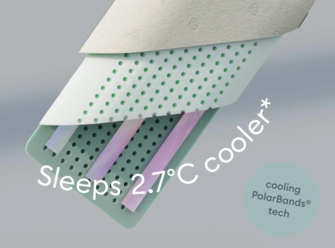
Some pillows make firm promises about their cooling capabilities. Image: Koala
Some brands like Koala even put a firm figure on their cooling powers, promising their carefully crafted designs make their products exactly 2.7°C cooler than normal.
Our tester Matthew says he does notice that some materials used by pillow-makers in the outer covers of their products do make a difference to surface temperature.
“We don’t measure how much pillows hold or change temperature, but certain pillows with a “summer” side that you can rest your head on to enjoy a cooler sleep certainly do feel cooler to the touch,” he says.
Can you trust it?
Possibly— we don’t test pillow cooling claims, but we do test those of mattresses and are seeing these products starting to live up to their promises of delivering a cooler sleep. If a pillow proclaims to have cooling properties, check to see if the manufacturer has provided any information backing up that claim, such as its choice of materials.
Many products are keen to trumpet their organic credentials or tell you they’ve been produced in an ethically and environmentally friendly way.
Want to make sure your pillow isn’t made with products that are bad for you or the environment? Look for CertiPUR-US® or Oeko-Tex Standard 100 certifications.
These globally recognised markers confirm pillows aren’t made with any foams or textiles containing materials that can be harmful to human health.
If a pillow claims to be organic, check to see if it’s signed up to the Global Organic Textile or Latex Standards.
These separate schemes (one for latex products, the other for textile goods) certify that components have been grown and processed in an ethically and environmentally sustainable way.
Can you trust them?
Yes, as long as they’ve been third-party certified under schemes such as those listed above.
Cut through the fluff
Our findings highlight that while some pillow promises are backed up by third-party experts, others appear to be nothing more than insubstantial marketing jargon.
Liam Kennedy is a Journalist with the Editorial and investigations team. He answers consumers' most burning questions, from which scams to be aware of and how to save money, to whether new services and products are worth using and how the latest developments in consumer news could affect them.
Prior to CHOICE, Liam worked in production in daily news radio and podcasting.
Liam has a Bachelor of Communication (Journalism) and a Bachelor of Arts in International Studies from the University of Technology Sydney. LinkedIn
Liam Kennedy is a Journalist with the Editorial and investigations team. He answers consumers' most burning questions, from which scams to be aware of and how to save money, to whether new services and products are worth using and how the latest developments in consumer news could affect them.
Prior to CHOICE, Liam worked in production in daily news radio and podcasting.
Liam has a Bachelor of Communication (Journalism) and a Bachelor of Arts in International Studies from the University of Technology Sydney. LinkedIn
For more than 60 years, CHOICE has been fighting the good fight for Australian consumers.
In the past year alone we've uncovered systemic issues with sunscreens, investigated shonky supermarket pricing, fought for stronger scam protections and helped make complex energy pricing fairer and clearer.
CHOICE is here to provide unbiased advice and independent testing in our world-class labs. We buy the products we test, just like you do, and our expert reviews are influence free. We’re here to help you choose smarter. Hopefully you’ll also save some money along the way.
Thanks to CHOICE, you’ll never be alone when a business treats you unfairly. You can support our work by joining or donating to our cause.