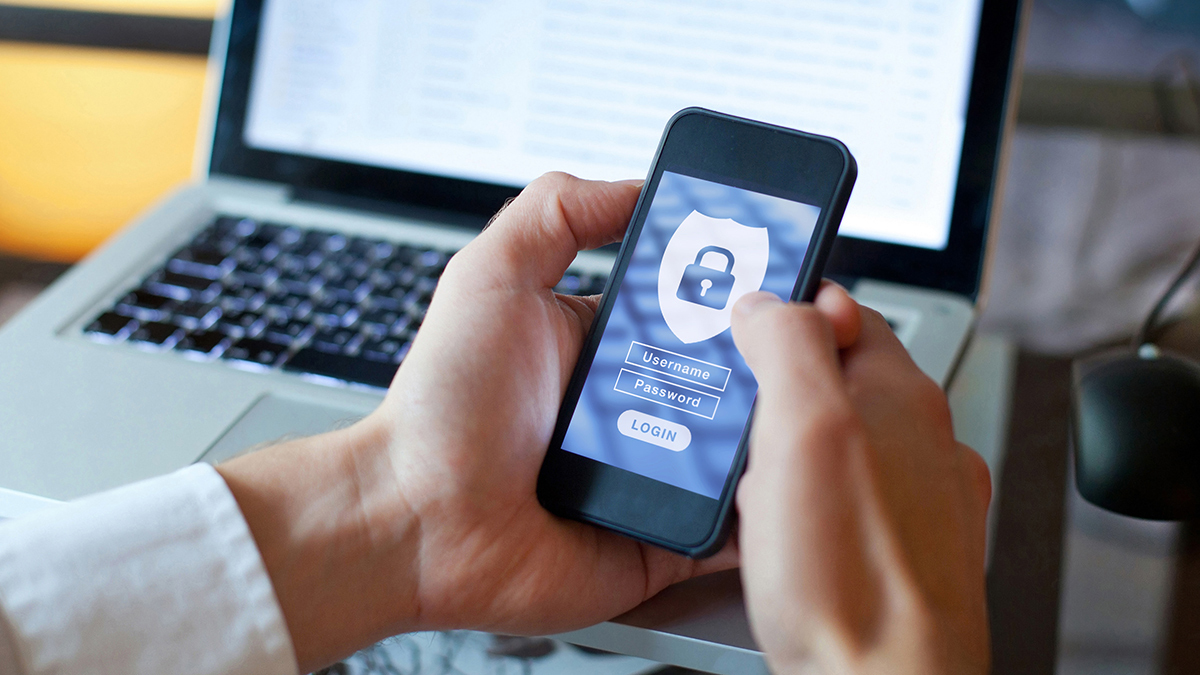
Australians don't presently have a universally accepted form of digital identification
The proposed "Digital ID" will function like a more powerful MyGovID
The personal data you supply to get your Digital ID will be encrypted, making it difficult for any third parties – including the digital identity provider – to view or share it
Most adult Australians already have
one form of digital identification.
That’s the myGovID they use to interact
with the ATO, Centrelink and Medicare.
They may even have other forms of digital
identification, such as one of the digital
driver’s licences that have proved popular
with NSW motorists.
Or just possibly
an Australia Post “Digital iD”, which lets
you confirm you are who you say you
are when dealing with organisations
ranging from Airtasker to the Australian
Electoral Commission. But what Australians don’t presently
have is a universally accepted form of
digital identification.
The current arrangements
There are two significant issues with
identification verification in Australia.
Firstly, there’s no “general purpose”
form of digital identification. For
instance, you can’t use your myGovID
when you’re trying to verify your
identity with a bank, utility company
or internet service provider.
The second problem, which arises
from the first, is that private businesses
often require Australians to hand over a treasure trove of sensitive personal
data to verify their identity.
There are probably scans of your
passport, driver’s licence, birth
certificate and utility bills currently
stored in many databases. And
even multinational corporations
with the resources and incentive to
invest in cutting-edge cybersecurity won’t necessarily be able to stop
cyber criminals from accessing
those scans.
Australia’s proposed “Digital ID” will
function like a more powerful myGovID.
In fact, many Australians will presumably
use an (enhanced) myGovID as their
Digital ID. Strictly speaking, the federal
government is not so much minting a
new form of digital identification out
of thin air as trying to make the existing digital identification system
more efficient. Chiefly by corralling
existing digital identities into a single,
user-friendly process.
There will likely be a range of Digital ID providers, including some
businesses. Companies such as
Mastercard are already involved in the
“Trusted Digital Identity Framework”
(TDIF), the federal government’s
accreditation framework for digital ID
services, and may become accredited
participants in the Australian government’s Digital ID system.
You’ll still have to go through the
usual, time-consuming process of
verifying your identity when applying
for a Digital ID. But once you have it,
identity verification should become
much less convoluted.
It’s an easy way of verifying who you are online against existing government-held identity documents without having to hand over any physical information
Minister for Finance Katy Gallagher
Instead of needing to locate then
scan or photograph 100 points of
identification, you’ll simply receive a one-time PIN via your Digital
ID app, which you’ll supply to
businesses, government agencies
and other organisations that need to confirm your
identity (much like how you type in a one-time PIN during a
two-factor authentication
log-in process).
Malicious actors
could breach the cyber
defences of one or
more Digital ID providers, but it’s widely believed
Digital ID will reduce risks for
individuals and organisations. After
all, the status quo allows cyber criminals
to target the often unencrypted
personal data of Australians that many
organisations already possess.
The personal data you supply to get
your Digital ID will be encrypted, making
it difficult for any third parties –
including the digital identity provider –
to view or share it. That should reduce
the incidence of online scams that cost Australians billions of dollars annually.
Also, given a range of public and private
sector organisations will supply
Digital IDs, there won’t be a central
database cyber criminals can target.
The Minister for Finance, Katy
Gallagher, who is overseeing
the introduction of Digital
ID, has said, “It’s like the online version of showing
someone your passport
or your driver’s licence
to prove who you are, but it’s not giving them
your licence to hold on to, or to scan and store
on an unknown server or photocopy.
“Digital ID is not a card,
it’s not a unique number, nor a new
form of ID. It’s just an easy way of
verifying who you are online against
existing government-held identity
documents without having to hand
over any physical information.”
A Digital ID timeline
You can find out more at system which will be accessible across digitalidentity.gov.au, but the current schedule is as follows.
2021–2023
Both Coalition and Labor federal governments consult extensively on Digital ID. CHOICE made a submission to the Finance Department in late 2023 arguing Australians would “benefit from a trusted, accessible and robust national Digital ID system” and that such a system should result in consumers being “better protected from threats of scams, identity theft, and data misuse”. However, we also emphasised the need to ensure the proposed Digital ID system is well-designed, well-implemented and well-regulated.
Mid–2024
All going to plan, the Digital ID will be introduced to federal parliament. As the Finance Department’s website explains, “The legislation when passed will move Digital ID to a nationally regulated system which will be accessible across both the public and private sectors and will include strong privacy provisions. It will establish the ACCC as the initial regulator.”
Late 2024
If the legislation passes through federal parliament, it’s hoped Digital ID can be rolled out quickly. The plan is to phase in Digital ID in the following manner:
phase one will legislate for Digital ID, establish a regulator, and expand use of Digital ID across government and the private sector
phase two will allow state and territory Digital IDs to be used to access Commonwealth services
phase three sees myGovID used in the private sector – such as opening a new bank account, or verifying a telco contract or real estate lease
phase four will allow accredited privately provided Digital IDs to be used when accessing some government services.
The case against Digital ID
“General purpose” forms of digital
identification have been introduced in
nations such as Singapore, seemingly with little or no political opposition. But
Australians have a history of distrusting
their federal governments.
In the pre-internet age, the Hawke
Labor government abandoned plans
to introduce a national identification
card – the Australia Card – in the
face of opposition from other political
parties and a sizeable proportion of
the electorate. Likewise, around 10%
of Australians opted out of My Health
Record, a digital health record
platform, in 2019.
Digital ID was an initiative of the
Morrison Coalition government but
one embraced by the Albanese Labor government. Both businesses and
consumer advocacy groups broadly
support Digital ID.
Sceptics argue that political conditions can change and future governments may not behave as ethically as their predecessors
There doesn’t appear to be much
concern about either side of politics
using the Digital ID for nefarious purposes in the short term, even
among opponents of Digital ID. But
sceptics argue that political conditions
can change and future
governments may not behave as
ethically as their predecessors.
A United Australia Party YouTube ad
that doesn’t explicitly mention Digital ID
but does warn of the possibility of
Australia introducing a social credit
scheme currently has more than 2.6 million views. The United Australia Party
presently holds one Senate seat.
One
Nation, which is also opposed to Digital
ID, holds two. One Nation Senator
Malcolm Roberts has warned, “The
Digital Identity sets out to link all government data related to a person.
Future iterations of the Digital Identity
propose to pair this data against private sector information, such as purchasing
records, to create a rich digital view of a citizen.
“While Australia lacks
the corresponding technological
infrastructure to utilise a Digital Identity
to its sinister potential (such as China’s
spying street lights and billboards), this
Bill – whether intentional or accidental –
acts as the foundation for a China-style
Social Credit System.”
Australians don’t presently have a universally accepted form of digital identification. The proposed Digital ID would function like a more powerful MyGovID.
Expert commentary
Victor Dominello was formerly NSW’s
Minister for Customer Service and
Digital Government. Dominello is a
Liberal but has been assisting two
federal Labor ministers – Finance
Minister Katy Gallagher and Minister
for Government Services Bill Shorten
– as they seek to get the Digital ID Bill
through federal parliament then
rolled out, ideally during the second
half of 2024.
Rafi Alam is a senior policy adviser on
CHOICE’s consumer data team and
has previously worked for organisations
such as GetUp!.
Both Alam and Dominello are pro-Digital ID. But Alam insists Digital ID
must have the appropriate safeguards
to mitigate the risks of “exclusion and
discrimination, data monetisation, and
catastrophic data breaches”.
Dominello agrees safeguards must
be put in place but believes it’s high
time for Australia to embrace Digital
ID. “Digital ID will be a digital identity
architecture that gives individuals far
more control of their personal information than they currently have,”
he says. “And let’s not forget Australians
are currently being scammed out of
billions online every year.”
The devil is always in the detail … How will things work with for-profit businesses providing Digital IDs? Will they be able to charge?
CHOICE senior campaigns and policy adviser Rafi Alam
Alam expects some political
opposition to emerge but believes
the Digital ID Bill will likely pass and
that Digital IDs will be rolled out
shortly after that.
“There’s broad agreement across
the political spectrum that Digital ID
will be far superior to the current
arrangements,” he notes. “But the devil
is always in the detail. There are still
sticking points that need to be
resolved. For instance, CHOICE
believes that Australians
should be able to get a
Digital ID at no cost.
“They
can do that if they use a
beefed-up version of
their myGovID as their
Digital ID. But how will
things work with for-profit
businesses providing Digital
IDs? Will they be able to
charge? These are the types of
issues that will need to be settled soon.”
If Digital ID is introduced, it will
inevitably generate other political
debates. For instance, there are already
calls for Digital ID to be used for age verification purposes on certain
websites. Australia’s Minister for Communications, Michelle Rowland, has
indicated she’s open to using Digital ID
to prevent “young people from having
unfettered access to pornography”.
What if you throw a Digital ID party and nobody comes?
There are no plans to compel
Australians to use Digital IDs. One of
the built-in safeguards of the system
is that Australians should continue to
be able to confirm their identity
without recourse to a Digital ID. So,
both Dominello and Alam worry that
the real challenge Digital ID could face is widespread ignorance
or indifference rather than fierce resistance.
Dominello is characteristically bullish.
After pointing out the
popularity of other forms of digital identification –
around three-quarters of NSW drivers now possess
the digital driver’s licence he introduced in 2019 – Dominello says,
“Look at how commuters have
embraced smart cards. Does anyone
miss having to buy bus or train tickets?
Digital ID is opt-in. But given how much
friction it eliminates, I assume most
people will opt in.”
Alam worries some Australians may struggle to opt in. “Consumer
advocates are concerned there’s so
little public awareness around Digital ID
and would welcome a public education
campaign,” he says.
Even small differences in how digital ID is rolled out seem to result in significant differences in adoption
CHOICE senior campaigns and policy adviser Rafi Alam
“In the coming months, more media and public attention will be paid to Digital ID. But even then, certain demographics, such as the elderly or those living in remote communities, might face challenges getting a Digital ID.”
Alam also points out that adoption
rates can and do vary between nations.
“Digital IDs have been around for years
in Europe. The Belgians have taken to
digital ID, the French not so much. The
societies aren’t that different, but even
small differences in how digital ID is
rolled out seem to result in significant
differences in adoption.”
Dominello accepts some
demographics are likely to be late
adopters of Digital ID but is comfortable
with a “build it and they will come”
approach.
“My experience in state
politics was that if you deliver a good
product that protects people’s privacy
and security, it will be embraced,” he says. “It
won’t have universal appeal and there
will likely be some teething issues. But
I’m confident most Australians will
choose the option that makes
connecting the internet and power
easier when moving to a new home.”
Nigel Bowen is an experienced print journalist and freelance technology writer who was acting editor of CHOICE Computer magazine from 2023–2024.
He has a Bachelor of Arts and a Master of Arts with Honours in Mass Communications from Macquarie University and prior to CHOICE he spent many years as a print journalist before shifting his focus to freelancing as a digital content creator.
One thing he's passionate about is investigating how the fourth industrial revolution is playing out and transforming the way we all work and live.
You can find him on LinkedIn and Substack.
Nigel Bowen is an experienced print journalist and freelance technology writer who was acting editor of CHOICE Computer magazine from 2023–2024.
He has a Bachelor of Arts and a Master of Arts with Honours in Mass Communications from Macquarie University and prior to CHOICE he spent many years as a print journalist before shifting his focus to freelancing as a digital content creator.
One thing he's passionate about is investigating how the fourth industrial revolution is playing out and transforming the way we all work and live.
You can find him on LinkedIn and Substack.
For more than 60 years, CHOICE has been fighting the good fight for Australian consumers.
In the past year alone we've uncovered systemic issues with sunscreens, investigated shonky supermarket pricing, fought for stronger scam protections and helped make complex energy pricing fairer and clearer.
CHOICE is here to provide unbiased advice and independent testing in our world-class labs. We buy the products we test, just like you do, and our expert reviews are influence free. We’re here to help you choose smarter. Hopefully you’ll also save some money along the way.
Thanks to CHOICE, you’ll never be alone when a business treats you unfairly. You can support our work by joining or donating to our cause.