Australia’s residential solar industry is big, and getting bigger. We now lead the world in per capita household solar, with more than 4.4 million homes and businesses now equipped with rooftop solar photovoltaic (PV) systems.
And with the federal government’s Cheaper Home Batteries Program offering generous discounts since last July, batteries are booming too, with more than 400,000 already installed.
The current solar gold rush has attracted a swath of new operators keen to cash in and spruik dodgy ads
There’s never been a better time to get solar – or to be more vigilant about which installer you choose. Because while there are plenty of solid accredited suppliers out there, the current solar gold rush has attracted a swath of new operators keen to cash in and spruik dodgy ads to lure customers.
Getting several quotes and choosing the right installer ensures you get a fair price, quality components and installation, and great after-sales support. Vitally, that means your system can generate as much free solar as possible and reduce your power bills for decades to come.
Just one of the wild AI ads we’ve seen on social media spruiking solar deals. Photo: NSW Solar Program Facebook.
Here’s our easy expert guide to getting it right, spotting suss deals, and your consumer rights should things go awry.
Getting solar is an expensive investment, but the good news is that the solar industry has more accreditation than ever to protect consumers and maintain standards.
The trick is knowing what accreditation to ask for and where you can check it.
When you’re sourcing installation quotes, it’s likely you’ll be dealing with:
the company’s sales representative
the company’s system designer (who puts the panels, inverters and battery design together)
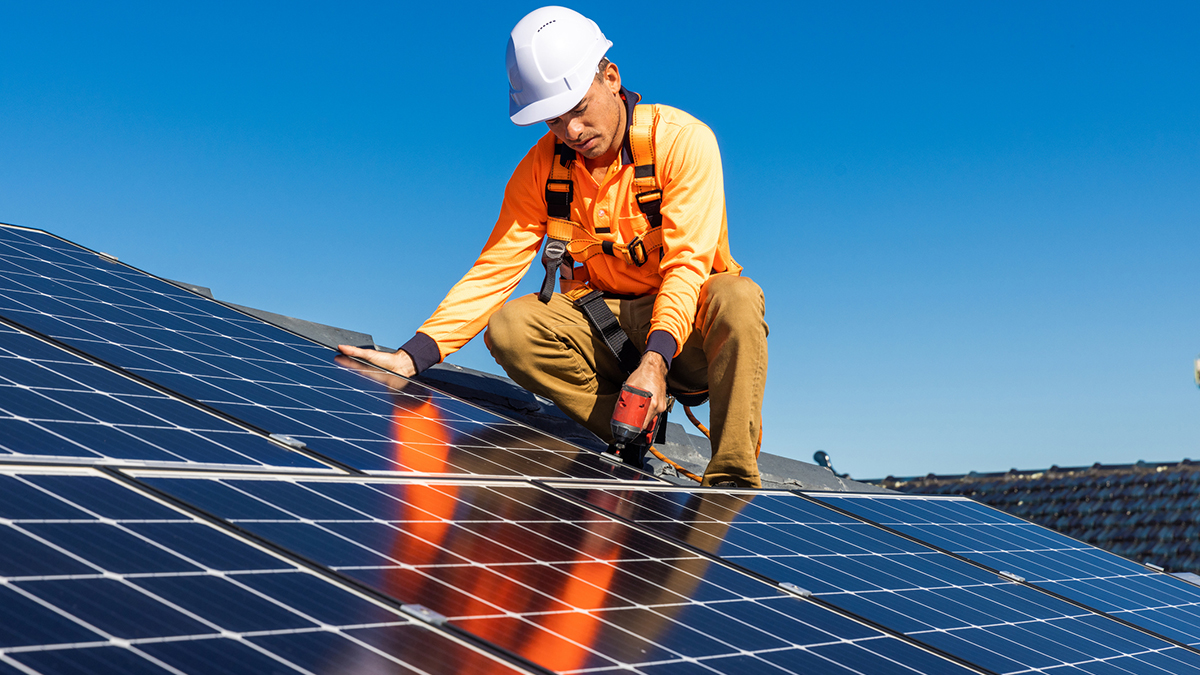
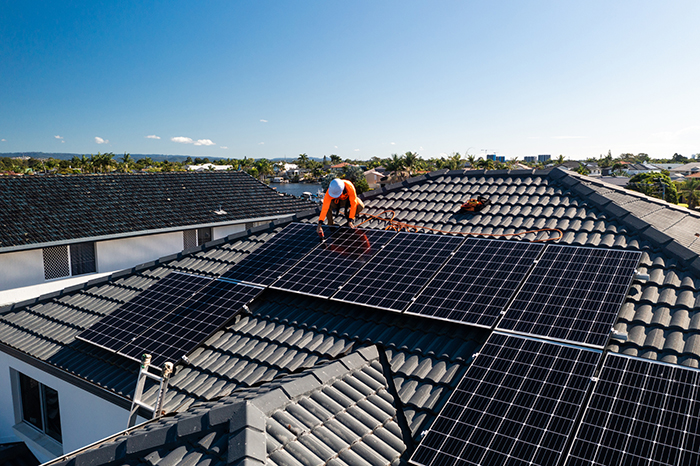
the installer (who actually gets on the roof and puts the system in place)
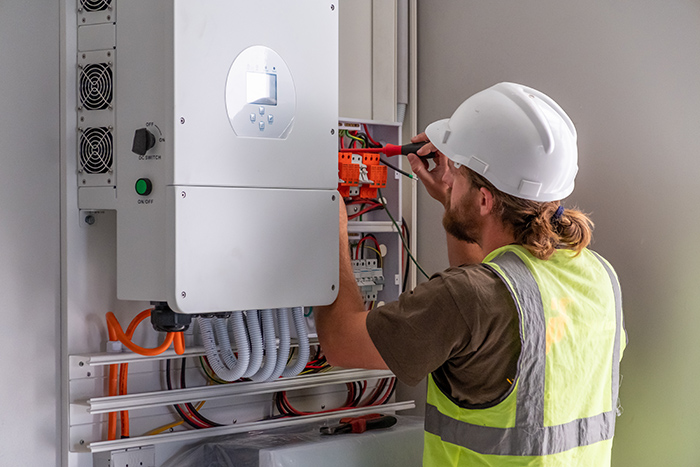
a qualified electrician, who must sign off on the system and provide a certificate of compliance.
In some cases, one person (for example, a local electrician who specialises in solar installations) can cover all four roles. It’s also not unusual for larger retailers to secure the sale and contract, and then subcontract out the installation.
Solar Accreditation Australia (SAA)
Installers must be accredited by the Solar Accreditation Australia (SAA) to operate legally.
You can search for installers by name or accreditation number on the SAA website to ensure they are currently accredited.
Installers must be accredited by the Solar Accreditation Australia to operate legally
New Energy Tech Consumer Code (NETCC)
To further protect consumers, the Australian Competition & Consumer Commission (ACCC) created the NETCC program in 2023 as a way for businesses to demonstrate responsible practices relating to sales and marketing, installation and warranty support.
Unlike SAA accreditation, it’s a voluntary industry code of conduct designed to give consumers extra peace of mind. NETCC-approved sellers commit to a high standard of quality in:
advertising, marketing and sales
quotations, contracts and payment options
delivery, installation and activation of the system
compliance with all relevant laws and standards
user information
customer service
warranty and complaints.
Visit the NETCC website to find approved sellers in your area.
It’s essential to check your installer is properly accredited before signing on.
Solar components accreditation
The Clean Energy Council (CEC) is the accreditation body for solar system components, and is funded by industry. They maintain a register of approved components including panels, inverters and batteries that meet Australian standards.
It’s highly unlikely that a reputable installer would be using unapproved components, but if in doubt, you should check that the components for the system quoted are clearly specified by make, size and model, and are CEC-approved.
Remember: No accreditation, no rebate
It’s a condition of the federal government’s solar panel rebate and home battery rebate that all components, the designer and your installer are all properly accredited as above. If they’re not, you will be ineligible for these rebates.
Before committing to a company, here’s a handy list of key questions you should ask them.
It may seem arduous and awkward, but it’s a lot better than not asking and ending up with an expensive dud deal. Besides, reputable companies will happily help you with your queries.
Here’s what you should check:
Are they SAA-accredited?
Are they NETCC-approved, as above?
How long have they been installing solar for?
Does the company have a local office and phone number?
Can they visit your home to do the quote? This is essential to review your home’s system needs, roof condition, any hidden issues and safety measures required (i.e. fire barriers or bollards for home batteries).
What solar component brands do they stock? It’s worth researching the brands separately.
Will the work be done by their own staff, or do they subcontract the installation to other companies or independent contractors? Are they also accredited?
Is any additional work required, like switchboard or meter upgrades? Older houses may need these in order to get solar.
What after-sales support do they offer and for how long?
When can they start the job and how long will it take? Some companies can have hefty waiting lists.
Can they refer you to previous customers so that you can ask about their service pre- and post-installation?
Installing solar is expensive so don’t be afraid to ask installers a lot of questions.
Research them online
In addition to asking questions, it’s helpful to do some cyber-sleuthing on the company and the brands they install. Key things to look for include:
What do independent online reviews say? Keep in mind, some may not be legit but it’s still worth checking.
How old is the company’s ABN? Check the Australian Business Register site – if it’s only been registered since April 2025, when the battery rebate was first announced, that could be a red flag.
What do reviews say about their brands’ components? SolarQuotes has a comprehensive list of solar component reviews.
Use our Solar Estimator tool and get free installer quotes
To give you a head start with quotes from vetted installers, we’ve created the CHOICE Solar Estimator with our solar partners, SolarQuotes. They are Australia’s most visited solar website and have been in the business since 2009.
The tool is free to use, and will help you estimate your solar needs for your home, including solar battery storage. Plus if you want, this free service can connect you with three vetted installers in your local area for high-quality, obligation-free quotes.
.
Why we've partnered with SolarQuotes

We've partnered with SolarQuotes to help you find and buy the right solar, battery, heat pump and EV charger. While we make money if you use SolarQuotes to find an installer, this doesn't influence our ratings. 100% of the money we make goes directly back into our nonprofit mission.
3. Get multiple quotes and check them carefully
As with any major investment, we recommend sourcing at least three quotes for your installation. Again this might sound time-consuming, but it’s certainly worth the effort.
Getting multiple quotes provides a wider range of products and prices to choose from, and gives you more ammo to negotiate a better deal if need be.
We recommend getting at least three quotes – never, ever just get one.
Additionally, talking to various installers is also great for getting intel on different system set-ups, like the best spots to position batteries, inverters and cabling (which can get ugly pretty quick), plus any other troubleshooting.
What to look for in a solar quote
A printed formal document featuring the company’s name and key details (don’t accept hand-written quotes or receipts).
An itemised list of all costs, labour and parts, including GST.
The proposed system design with all components (panels, inverter and battery) specified by quantity, brand, model number and warranty.
Clarity on substitutions for components if unavailable (beware of last minute downgrading, or upselling to more expensive ones!).
Any additional work required on the premises.
An estimated timetable for supplying and installing the system.
Applicable government rebates (officially known as Small-scale Technology Certificates, or STCs) and their resulting discounts
The actual installer should be named on the quote – are they a sub-contractor or in-house? The latter is preferred.
With demand for solar running red-hot right now, some companies are trying everything to get your attention and business.
We expose these shonky tactics more fully in our article on the red flags to watch out for, but here’s a topline summary of the warning signs to look out for. Be wary of any company that:
Uses pushy sales techniques such as cold-calling or going door-to-door, and insists you sign up on the spot.
Spruiks offers saying “limited time only”, “your suburb is now eligible” or “government rebates are ending now” (they do decrease over time, but they won’t end for years).
Advertises “free solar”, “no net cost” or “no-interest finance” offers.
Makes exaggerated claims such as “no more energy bills” or unrealistic investment payback times.
Provides a lazy quote for a one-size-fits-all system (it should be customised to your home).
Offers deals well under the usual market rate – you’ll end up with a poor-quality system.
Offers a free “eligibility check” – it’s just a lead generator to get your info.
Baits you with good-quality components and then swaps them for cheaper ones.
Tries to upsell you to more expensive components.
Only sells little-known brands untested in Australian conditions – these may be OK but do exercise caution.
When it comes to solar, there are three different types of warranty you need to know about:
Product warranty
This is the typical type of product warranty that offers repair or replacement if there are any critical manufacturing faults with the panels, inverter or storage battery.
These average 20–30 years for solar panels, 10 for batteries and 5–10 for inverters depending on the product. As always, a longer warranty is a good indication of the manufacturer’s confidence in their product.
Commonly included with solar panels and batteries, a performance warranty is a guarantee that as long as the equipment is functioning and undamaged, it will still deliver a guaranteed minimum performance for a certain time period.
Most solar panels have 25-year performance warranties, while battery manufacturers often offer 10 years.
Workmanship warranty
This covers the provider’s workmanship in installing the system, including mounting racks, wiring and connections.
Hopefully your installation goes smoothly and this is something you never need to resort to, but if your solar does go sideways, it’s important you know that your rights and protections under the Australian Consumer Law.
Cooling-off periods
Signed a deal on your doorstep but now you’re regretting it? When you sign a contract that has arisen from an unsolicited sale, a 10-day cooling-off period applies in which you can exit the deal.
Some suppliers may offer a 10-day cooling-off period in their terms, regardless of whether it was an unsolicited sale or not. Be sure to check.
The Australian Consumer Law (ACL) offers protection for you if there are any problems with your solar system, whether that’s with the service provided by the installer, or the components of the system.
Service
The provision and installation of the solar PV system is a service by the solar company, and as such, according to the ACL it must be:
performed with proper care and skill
fit for a particular purpose or achieve the result you expected
delivered within a reasonable time, or by the end date in a contract.
The components of the system (including the panels, panel support racks, inverter, and electrical components) are covered by the ACL, just like any other product or appliance that you buy. Under the ACL, the components must be:
of acceptable quality
fit for purpose.
If the product fails to meet either of these conditions, you should be able to claim a repair, refund or replacement, depending on the nature of the problem.
Chris Barnes is a Senior Project Officer. He manages the product reviews that are done outside of CHOICE with external labs or data sources. This includes solar panels, electric heaters, air purifiers and detergents. Chris also manages our testing services through our commercial arm, Test Research, and he is CHOICE's NATA authorised representative for our lab's formal accreditations. Chris is involved with the standards committee for air conditioners. And he works with government and industry in areas such as product safety and regulation. In over 20 years at CHOICE, Chris has managed lab teams for a wide range of products, including children's products, kitchen appliances, laundry appliances, garden power tools and more. Chris has a Science degree from the University of Sydney. LinkedIn
Chris Barnes is a Senior Project Officer. He manages the product reviews that are done outside of CHOICE with external labs or data sources. This includes solar panels, electric heaters, air purifiers and detergents. Chris also manages our testing services through our commercial arm, Test Research, and he is CHOICE's NATA authorised representative for our lab's formal accreditations. Chris is involved with the standards committee for air conditioners. And he works with government and industry in areas such as product safety and regulation. In over 20 years at CHOICE, Chris has managed lab teams for a wide range of products, including children's products, kitchen appliances, laundry appliances, garden power tools and more. Chris has a Science degree from the University of Sydney. LinkedIn
For more than 60 years, CHOICE has been fighting the good fight for Australian consumers.
In the past year alone we've uncovered systemic issues with sunscreens, investigated shonky supermarket pricing, fought for stronger scam protections and helped make complex energy pricing fairer and clearer.
CHOICE is here to provide unbiased advice and independent testing in our world-class labs. We buy the products we test, just like you do, and our expert reviews are influence free. We’re here to help you choose smarter. Hopefully you’ll also save some money along the way.
Thanks to CHOICE, you’ll never be alone when a business treats you unfairly. You can support our work by joining or donating to our cause.