02.Lack of government support
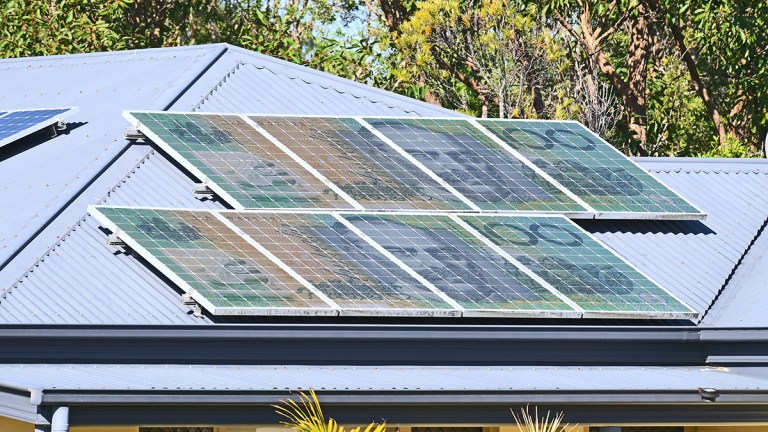
In recent years, many grid-connected households and community buildings have installed solar PV cells, thanks to generous federal government rebates. Yet despite the popularity of the rebates and recent growth in the industry, Australia generates less than 1% of the world’s solar electricity. This compares poorly to cloudy Germany, the world’s largest producer and user of solar PV systems, which has about 49% of the global market, largely due to supportive government policies. The bulk of the rest of the world’s solar electricity generation is in Japan, the US, Spain and other parts of Europe.
Gross feed-in tariffs
The rapid growth of solar installations and manufacturing in these countries has been attributed largely to gross feed-in tariffs, where the owner of a solar system is paid for all the renewable energy it generates, including the electricity they use themselves. Industry players in Australia have called on federal and state governments to introduce a similar gross national feed-in tariff. However, state and territory governments, which are responsible for setting electricity prices, have decided to go it alone and are gradually introducing disparate and mostly very limited feed-in schemes.
While the federal government points to its $500m Renewable Energy Fund – which includes a $100m solar research institute – and $150m Energy Innovation Fund as evidence of its commitment to solar and other green energy, solar industry players do not believe current policy is creating the necessary incentives. Our few large solar farms have all had to rely on one-off government grants. “There’s no long-term driver for that market,” says Muriel Watt, Chair of the Australian PV Association. Large-scale commercial building installations and solar farms miss out on government support, such as rebates and feed-in tariffs, as these only apply to small-scale solar systems.
BP Solar's relocation
BP Solar’s recent decision to relocate its Sydney solar cell manufacturing plant to Asia has marked, at least for now, the end of Australia’s solar cell manufacturing industry. BP Solar’s Australian spokesman, Chandran Vigneswaran, says the decision was prompted by the need to increase efficiency by locating its manufacturing close to the supply of silicon, which is primarily in Asia. It was not due to lack of demand for solar in Australia. He says federal government rebates had driven growth in recent years, but the solar industry is not reaching its potential – BP Solar has a vision of one million Australian solar homes by 2020. “We’ve been calling for one national gross feed-in tariff,” he says. “It’s hard for the industry to scale up without investment certainty.”