01.Introduction
We review 14 "warm white" CFLs plus one LED lamp, with our latest test revealing that one of the cheapest lamps on the market is the best overall performer.
Our new batch of compact fluorescent lamps (CFLs) and LEDs has now been on test for more than 2000 hours. That’s a little over a year of use, assuming five hours use per day.
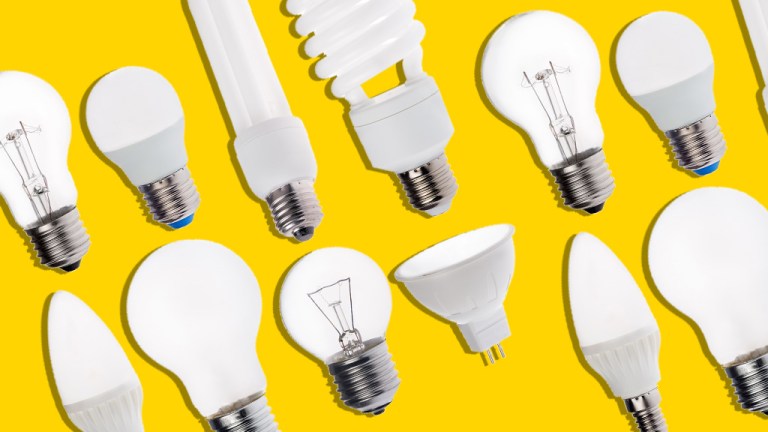
It doesn’t seem that long ago that compact fluorescent lamps (CFLs) took over from the traditional incandescent lightbulb, helped of course by government energy efficiency regulations that largely relegated incandescents to history.
But already there’s an alternative technology looking to take CFLs’ place.
Long-life lamps
CFLs are energy-efficient and long lasting, but they aren’t without their problems:
- They can be slow to warm up to full brightness
- They are generally bigger than equivalent incandescents so they don’t suit all light fittings
- And last but far from least, they contain mercury.
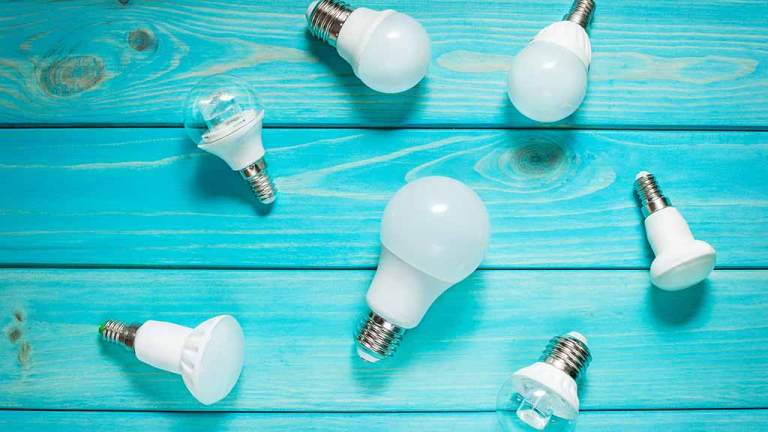
Enter the light-emitting diode, or LED. They’ve been commonly available for years in bicycle lights, torches, garden lights and other applications, and are also available as downlights. They're very energy-efficient, can be very bright and don't contain mercury.
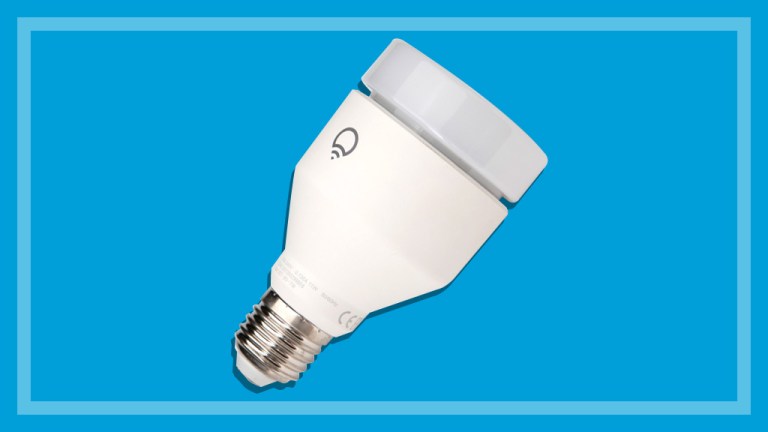
Most LED general lighting service lamps now available are relatively low-light output – comparable to a 25W or 40W incandescent – but brighter 60W equivalent models are beginning to appear. We’ve included one in this test: the Philips Master LEDbulb.
For more information about Saving energy, see Energy and water.
CHOICE's experts independently test a wide range of products and services to bring you unbiased reviews, product comparison tools and buying advice that is trusted by 140,000+ members.
Get access to all
CHOICE benefits.
$1.91
/week
*Billed quarterly
Purchase this
single report.
$5
How does CHOICE test compact fluorescent lamps?

See
more videos like this.
Models tested
-
Black and Gold BG15W-1ES
-
Coles Mini Compact Spiral Lamp V04492/ EEMSES-15
-
GE FLE15GLS/T3/827/E27
-
Lightstar GLS 25605
-
Lightstar GLS 25606
-
Megaman Compact Classic GSU115i-ES-27K
-
Megaman GK715d
-
Nelson Dimmable MELSD15BC
-
Nelson Little Greenie Energy Saver MELTG15ES
-
Osram Duluxstar Twist 13W/827
-
Osram Micro Twist 14W/865 E27
-
Philips MASTER LEDlamp MV dimmable 12W
-
SPARSAM Low Energy Lamp 30149453
-
Sylvania Mini-Lynx Twister 615223
-
Woolworths Essentials FE-11SB-14W
Previously tested models (results here)
-
Envirolux Lucci 8000hr
-
GE FLE15HLX/827/B22/T2
-
GE FLE15TBX/827/E27/T3
-
Lightstar CFL3
-
Megaman Zenia Tubular WL1514
-
Mirabella EEMSES-15
-
Mirabella EEU-15
-
Nelson Aladdin Mini MELQAL15BCS
-
Nelson Aladdin Mini MELQAL15ESS
-
Osram Dulux EL Longlife 15W/827
-
Osram Duluxstar Minitwist 13W/827
-
Philips Ambiance AMB14WWWES
-
Philips Genie GENIE14WWWES
-
Philips Tornado TND12WWWBC
-
Woolworths Essentials N3UN15
The drawbacks of CFLs
The environmental benefit of the phase-out of inefficient lighting has
been widely publicised, but CFLs aren’t without impact — they use more
energy to produce and contain mercury, which could spell problems if it’s not recycled. So what’s our overall verdict?
A life cycle analysis of CFLs published in The Environmental Engineer concluded
that CFLs are the better choice for the environment, mainly because
they use electricity much more efficiently. As for the mercury they
release at the end of their life, the analysis found that the production
of incandescent lamps contributes five times more mercury from burning
coal for electricity. This was even the case in Tasmania, where
hydroelectricity dominates, although involving much smaller quantities.
Environment
groups are generally supportive of the initiative overall. “CFLs are
not completely green in every way, but on balance they have a much lower
impact than incandescents,” according to the Australian Conservation
Foundation.
Incandescent lamps
Since November 2009, incandescent bulbs (apart from a few specialised sizes and types) have not been available for sale in Australia as part of the government’s drive to reduce energy consumption and lessen the impact of electricity production on the environment and economy. They have been replaced by CFLs in most domestic lighting applications.
Early CFLs, which CHOICE first tested back in 2000, cost up to $20 or more and were slow to warm up to full brightness. Now, they're cheaper to buy – typically about $5-$10 per lamp – and run; they're also faster to warm up and have fewer failures.
Incandescents are still available in very small sizes, but will be phased out as CFLs and LEDs in these sizes become available.
Note: most people probably still refer to CFLs and incandescents as "light bulbs", and think of a "lamp" as the light fitting on their bedside table. In fact, as pointed out by CHOICE members in the comments, "lamp" is the technically correct term for what we used to call light bulbs, and the report uses this term accordingly.
Did you know?
- Up to 90% of the energy an incandescent (standard) lamp uses is wasted, mainly on heat.
- Lighting represents about 12% of Australia’s domestic greenhouse gas emissions.
- Globally, electric lighting generates emissions equal to 70% of those from all passenger vehicles.
Phase-out of incandescent bulbs
The federal government’s incandescent light bulb phase-out program applies Minimum Energy Performance Standards (MEPS) to lighting products. Products that don’t meet MEPS will be restricted from sale.
-
Tungsten filament incandescent general lighting service (GLS) light bulbs (the typical pear-shaped bulbs used in most domestic light fittings) don’t meet MEPS and have not been available in stores since November 2009.
-
Since October 2010, MEPS have applied to >40W candle, fancy round and decorative lamps, mains voltage halogen non-reflectors and extra-low voltage (ELV) halogen reflectors.
-
From October 2012, MEPS will apply to mains voltage reflector lamps, including halogen (PAR, ER, R, etc), and >25W candle fancy round and decorative lamps.
Depending on when efficient alternatives become available, pilot lamps 25W and below will also be subject to MEPS.
How do they work?
Incandescent bulbs work by passing an electric current through a metal filament, making it white-hot so it gives off light. They’re simple and cheap to manufacture but inefficient to run; most of the electrical energy is converted into heat rather than light.
CFLs pass a current through a mixture of gases in a tube, causing the gases to emit UV radiation, which makes the phosphor coating on the inside of the tube glow (or fluoresce). This process is much more energy-efficient; it uses only about 20%-25% of the electricity needed to light an equivalently bright incandescent bulb.
Want more?
Get access to our independent testing reports and save yourself time and money.