What to look for in a portable cot
They're handy when you're travelling or visiting friends and family, but what do you need to know before buying a portacot for your bub?
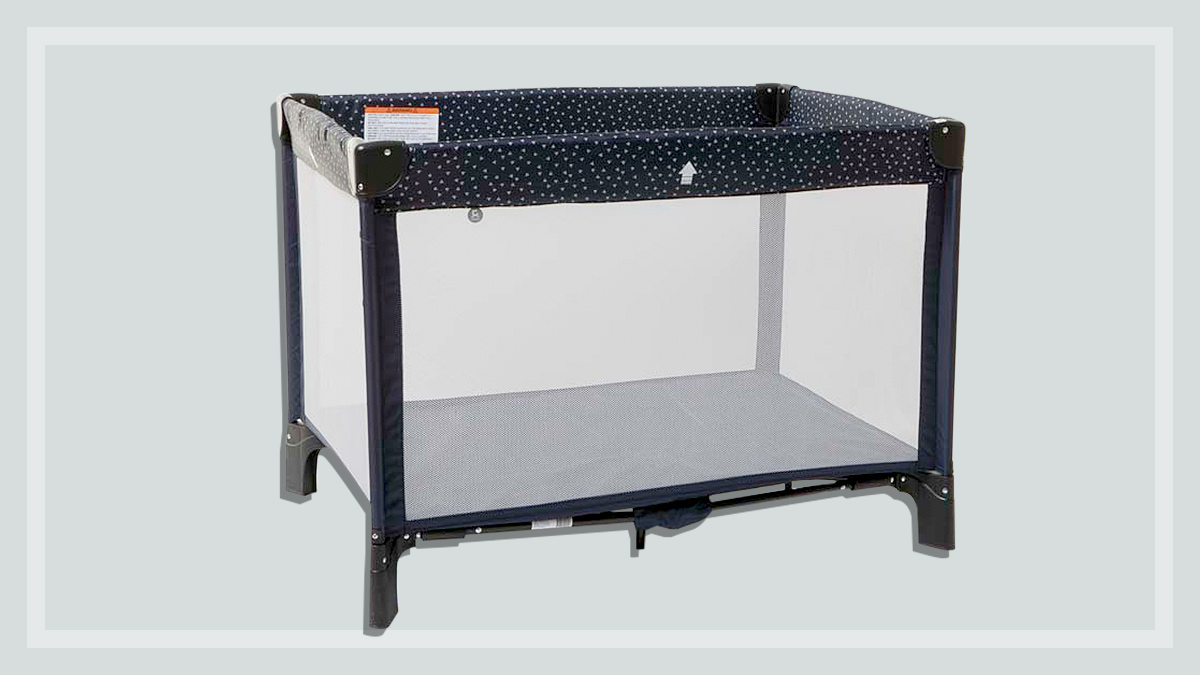
Babies sleep a lot, and there are times they won’t have access to their regular household cot. If you’re visiting friends or family overnight, or taking a trip away, you’ll need somewhere comfortable and safe for them to sleep – which is where portable cots (also interchangeably called portacots or travel cots) come in.
On this page:
What to look for in a portable cot
Portable cots that carry a risk of suffocating or trapping the head of the child are considered especially dangerous and should be avoided. Others carry a risk of injury but not death, such as limb entrapment, and could be considered if you’re planning on buying a portable cot.
Look for portacot models that score 60% or over, as these carry only minor safety risks that don’t endanger the life of the child.
It’s important to read each safety failure carefully, as some risks can be avoided or minimised when proper precautions are taken. For example, some portable cots carry safety risks when used in bassinet mode, but in cot mode they’re safe.
You can find a full description of the risks of each portable cot in the ‘Bad points’ section of our portable cot reviews.
Here are some general things to look out for when buying a portable cot.
Good ventilation
Each side should be mostly made from a breathable mesh material that extends all the way to the floor of the cot.
Weight limit
Don’t use a portable cot if your child weighs more than 15kg.
Well designed
Inside surfaces should be free of bumps, ledges and protruding parts so children can’t hit their heads, get their clothing snagged or use them as a foothold to climb out of the cot.
No gaps
The mattress should be firm enough and fit snugly without gaps on any side and should not be easily moved or lifted out of place by the child.
Sturdy
The rails should have two locking mechanisms to prevent accidental collapse and closure. The cot floor shouldn’t sag. Press down on the base to check this. If you’re using a portable cot that doesn’t have a sturdy, rigid base, make sure you always use it on a flat floor and not an uneven surface that could distort the mattress shape.
Safety requirements
Check that the portable cot you buy is certified to the Australian/New Zealand Standard, AS/NZS 2195 – either the 1999 or, preferably, the 2010 version.
Easy to put up and take down
The easier it is to put up and down, the better. You don’t want to be struggling when you’re sleep-deprived and have a tired, crying baby on your hands. There are an increasing number of lighter cots that take less time to pack and unpack, but they tend to be on the pricier side.
Not too heavy
Despite ‘porta’ being in the name, many portacots are still quite heavy, with some clocking in at over 14kg. Make sure you’re able to lift and carry it comfortably.
Compact
Check what size the portacot is when it’s packed down. You’ll want to store it away until your next adventure, so choose one that’ll fit the bill (or, more to the point, your cupboard).
What are small travel cots?
Small travel cots are very lightweight, easy to fold and compact for transport.
Some are similar in style to most other portable cots but are lighter and more compact (they should weigh no more than 6kg). Others are small folding shelters with a mattress.
They can be very handy when you’re travelling, going camping or on a picnic, but aren’t recommended for use all the time.
When we’ve tested small travel cots in the past, we didn’t find any we could fully recommend as each failed at least one important test of the standard.
How much do portable cots cost?
The portacots in our most recent test range in price from $59 up to $599. Our lab testing has found that a higher price tag isn’t always an indicator of better performance, so it pays to do your research – especially when safety is a key factor. That being said, we don’t currently recommend any portable cots that cost under $100.
When testing portable cots, we check to see whether models pass the most important safety tests of the voluntary Australian Standard, AS/NZS 2195:2010, which goes above mandatory requirements. Tests include having breathable mesh on all sides, and no suffocation or strangulation hazards.
To find out which specific oven portable cots we recommend based on our test results, and to make sure you buy the best, click on the ‘Recommended’ box in the filters section of our portable cot reviews.
Some portacots that pass key tests still have some minor failures and therefore don’t earn a recommended label, but are still worth considering.
If a portable cot says it meets Australian standards, is it safe?
Portable cots sold in Australia must meet a mandatory standard based on sections of the Australian/New Zealand standard AS/NZS 2195:1999.
The standard includes requirements for ensuring the folding mechanism is secure, that there are no gaps that could trap a child’s head, that the mattress is safe and the cot has adequate safety warnings.
In our accredited labs, our experts still commonly find cots that fail some of the mandatory safety criteria. A more recent 2010 version of the standard includes an important test that looks for adequate breathable zones (in case your baby manages to roll face-first against the edge).
The older standard doesn’t include this crucial consideration. We test against the safer 2010 standard, and this mainly involves checking that every wall of the cot is made from a mesh material that allows for air flow. We also use an accepted test for mattress firmness.
CHOICE would like to see portable cots comply with the full voluntary 2010 standard, which makes reference to breathability of materials. If your portable cot is not certified to the 2010 standard, it may not be made of breathable materials and could carry a risk of suffocation.
What’s the difference between a portacot and a regular cot?
Portable cots are specifically designed to be used for a baby when a regular cot isn’t available. They’re made of four fabric or mesh sides, with a removable mattress, and fold up for transportation.
Can you use a portacot all the time?
No. While a portable cot is handy when you’re travelling or away from home, a standard cot is a much better bet for every day.
- They’re more durable than portable cots and can accommodate larger babies, so you’ll get more use out of them.
- An average two-year-old will be slightly larger than the recommended size for most portable cots, whereas a regular cot (especially one with a bed-conversion kit) can be used until your child is three or four years old.
- Standard cots are higher off the ground than a portable cot, so you don’t have to bend so far to pick up your baby. After lugging a heavy baby in and out of a low-lying portacot your back will thank you when you return to your standard cot!
Chris Barnes is a Senior Project Officer. He manages the product reviews that are done outside of CHOICE with external labs or data sources. This includes solar panels, electric heaters, air purifiers and detergents. Chris also manages our testing services through our commercial arm, Test Research, and he is CHOICE's NATA authorised representative for our lab's formal accreditations. Chris is involved with the standards committee for air conditioners. And he works with government and industry in areas such as product safety and regulation. In over 20 years at CHOICE, Chris has managed lab teams for a wide range of products, including children's products, kitchen appliances, laundry appliances, garden power tools and more. Chris has a Science degree from the University of Sydney. LinkedIn
Chris Barnes is a Senior Project Officer. He manages the product reviews that are done outside of CHOICE with external labs or data sources. This includes solar panels, electric heaters, air purifiers and detergents. Chris also manages our testing services through our commercial arm, Test Research, and he is CHOICE's NATA authorised representative for our lab's formal accreditations. Chris is involved with the standards committee for air conditioners. And he works with government and industry in areas such as product safety and regulation. In over 20 years at CHOICE, Chris has managed lab teams for a wide range of products, including children's products, kitchen appliances, laundry appliances, garden power tools and more. Chris has a Science degree from the University of Sydney. LinkedIn