Finding a good dry cleaner can be a hit-and-miss affair. Even if you use one with a reliable track record, accidents can happen. But it can be difficult to establish who’s to blame and exactly what your rights are when your favourite jacket comes back to you with shrunken sleeves and tarnished buttons.
When a garment is destroyed, consumers usually blame the dry cleaner. The dry cleaner in turn may choose to compensate, or deny fault.
According to Australian Consumer Law, a dry cleaner is required to provide service with acceptable care, skill and technical knowledge and take all necessary steps to avoid loss or damage. But when things go wrong it may not always be their fault.
Incorrect care instructions could be the cause. If the instructions on the label have been followed and the garment has been damaged, you could spare the dry cleaner your angry rant and take the item back to the retailer you bought it from.
What’s tricky is figuring out who’s at fault. If the compensation claim is more than several hundred dollars and the dry cleaner refuses to accept responsibility, you can take it further by contacting the Drycleaning Institute of Australia (DIA) which provides advice and a mediation service for members.
Brian Tonkin, CEO of the DIA, advises that in his experience, the fault is approximately one-third each for the drycleaner, the manufacturer and the consumer.
Labelling laws
There are mandatory standards for care labelling, enforceable by the Australian Consumer and Competition Commission (ACCC). In theory, fines of up to $1.1 million apply for companies that fail to comply. Under the laws, all clothing suppliers – manufacturers, importers, wholesalers, distributors and retailers – must ensure their care labelling is:
legible
accurate
permanently attached to the garment
written in English
accessible at the point of sale
appropriate and adequate for the care of the garment so that when followed the article is not damaged.
Cleaning labels
Without specific care instructions on what’s allowed and what should not be done to the garment, the risk of damage is high, especially for fabrics that contain elastane or plasticisers (typically used in garments to provide stretch and recovery characteristics).
Dry cleaning labels may wrongly specify that a particular chemical should be used to clean the garment.
P or “dry clean only” means the garment can be dry cleaned with the solvent perchloroethylene (perc), hydrocarbon solvents green earth and white spirit. Dry cleaning the wrong garment with perc can cause dyes to run and beads to melt, says Tonkin.
F means dry cleaning should only be carried out with hydrocarbon solvents green earth and white spirit (no perc).
W means item may be treated in water by a professional wet cleaning process.
Plain circle including a cross means do not dry clean.
Stain removal: washing vs dry cleaning
Consumers often ask our laundry lab experts about stain removal and fabric care – what will come out in the wash and what needs dry cleaning? So we conducted a pilot stain test by setting red wine, blue ballpoint pen and curry stains on a business shirt. The care label stated the shirt was both wet and dry cleanable. The result: only the red wine was removable with a normal machine wash. We sent another shirt with the same stains to a local dry cleaner to see if they could do better; sure enough, all the stains were removed.
Tips for dry cleaning
Prevention is better than cure when it comes to ensuring your garments survive a trip to the dry cleaners. Here are some tips to help you minimise the risk of damage:
Find an experienced dry cleaner – good fabric understanding comes from years of handling different types.
Use a specialist dry cleaner for beadings, sequins and other garment decorations, and take notes of the discussion about the best way to clean your garment.
Check the dry clean symbol on the care label. A “P” or “F” indicates which solvent should or may be used.
Check your garments thoroughly before handing them over to your dry cleaner.
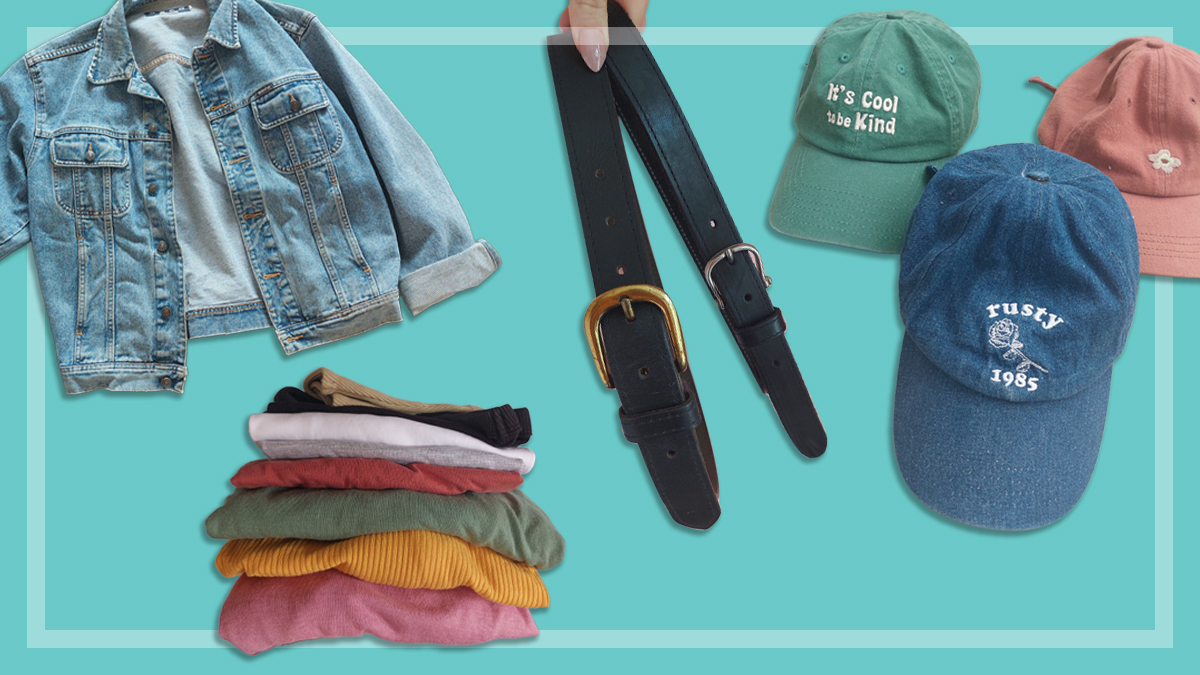
Remove belts and any other detachable adornments. Identify the nature and position of stains, loose stitching or fasteners.
Photograph expensive formal or designer wear and advise your dry cleaner. Many dry cleaners also have counter cameras to identify the number of garments handed back to the customer.
Point out concealed buttons, as a heat press may leave a shiny imprint on the fabric if they go unnoticed by the dry cleaner.
Find out if the dry cleaner is a member of the Drycleaning Institute of Australia. If the dry cleaner you complain about is a member, the DIA will advise you of its investigations and your options.
Keep dry-cleaning dockets and original purchase receipts for your expensive garments and textiles as proof for any damages claim.
Dry cleaning FAQs
What redress do I have if my clothes are damaged and the dry cleaner said they followed the care instructions on the label?
You can try one or several of the following options:
Ask the dry cleaner for compensation if the care instructions were not followed.
Complain to the DIA – members have access to a USA-based testing authority using 75 years experience and high definition imagery to determine fault.
Take the damaged garment back to the retailer you bought it from and demand a refund under your statutory rights outlined in Australian Consumer Law.
If this fails, you may lodge a complaint with the ACCC and/or take your complaints to a consumer or small claims court in your state.
Can I make a claim for damage if I bought my garments or textiles second-hand?
Yes. Second-hand garments and textiles are excluded from the mandatory care labelling standard, but you may be able to make a claim for the damage of your garment. The catch is you may need to produce a receipt – which is not always possible when buying second-hand items. See the DIA’s
Fair Claims Guide to find out the replacement value of your item.
Why doesn't the dry cleaner return my garments after I've been compensated for the damage they caused?
It’s the dry cleaner’s responsibility to remove the damaged garment from circulation as it’s no longer serviceable.
Why is there such a wide range of pricing among dry cleaners?
Pricing depends on location, competition and quality of service. Shop rentals mean a shopping mall dry cleaner is likely to charge more than one located on the street. Your local chemist or tailor may also double as a commissioned agent for dry cleaners.
Why are men's clothes cheaper than women's to dry clean?
Men’s shirts are all quite similar in size and fabric composition and new shirt-pressing equipment has been designed for them. Women’s shirts – often smaller and with more detailing – are not suitable for high-volume shirt presses.
Are dry cleaning chemicals environmentally friendly?
When released into the air, perchloroethylene (perc) can contribute to smog when it reacts with other volatile organic compounds (VOC). In Australia, dry cleaners must use an approved transporter to remove perc waste and take it to an Environment Protection Agency-licensed facility.
Hydrocarbon solvents are less aggressive than perc, but also contain VOCs that contribute to smog.
Liquid silicone – the same base ingredient found in everyday shampoos, soaps and lotions – is more environmentally friendly than perc and other hydrocarbons, and is odourless and non-toxic. GreenEarth, is a patented silicone-based dry cleaning solution. is not a VOC and degrades within days to silica and trace amounts of water and carbon dioxide.
Dry cleaning gone wrong: case studies
CHOICE readers share their dry cleaning disasters.
Ruined wedding dress -– Cassie Beattie
I bought a wedding dress off eBay, it was a stunning dress, but it was second-hand. I had to have the dress altered and after that I took it to a dry cleaner in North Adelaide who are wedding dress specialists. I dropped the dress off on the Monday. I was told I could pick it up the following Thursday. I pointed out that the bead work was all over the dress not just the bodice, and I also asked them to be very careful with it because our wedding was just four weeks away.
I returned on the Thursday to be told it wasn’t done yet, come back next Tuesday. I go back next Tuesday and it turns out my dress had been severely damaged in the cleaning process, resulting in my beautiful dress being ruined. A lot of the beading had gotten caught, causing it all to pull.
The worst part of the whole experience was the staff. I was told if I produced a copy of my receipt for the dress they would give me the insurance claim forms. That the process takes between six and 10 weeks and there was nothing else they could do.
I stormed out of the shop and burst into tears. I had to find an alternative dress. I was lucky I was able to find another dress, it was nothing like the original but was still fine. When we returned from our honeymoon there were three demand notices from the dry cleaner for payment and a threat of legal action. I was appalled, and I called them and told them so. Eventually it took a letter from our lawyer threatening a lawsuit before they stopped sending me demand notices.
My insurance claim was also knocked back because it was not a “real” receipt – because I had purchased it on eBay. I took the case to the state government organisation and I received the money I had paid for the dress back but no apology.
Melted curtains – Jenny Macqueen
I sent two sets of velour-backed curtains ($800+) to the dry cleaner with small discoloration spots and spoke to the dry cleaner about what we thought the spots actually were. It was decided that they were ‘probably’ mould forming from a period of wet weather. I suggested to him that if he had any doubts about doing the job, please tell me. He didn’t and suggested that dry cleaning would kill the spores if it was mould forming, so I went ahead.
I got the curtains back, hung them, and to my horror, he had melted the backs, even melted foreign material into the curtains. I rang immediately and he acted as if he didn’t know that he had damaged the curtains. He virtually told me I was not telling the truth.
I went through the normal channels, and reported the whole story to the tribunal. They contacted him and he wouldn’t pay for his damage, so we went to court where I was awarded $500 – short of the replacement value by $300.
He was not a member of the Drycleaning Institute of Australia so I had to go to court to get any compensation for his shoddy work, but still came away with less than it cost me to replace the curtains.
The curtains were two years old but in as-new condition. They certainly were not in as-new condition when they were returned. In fact, with the light behind them, they looked as if a handful of mud had been thrown at the back of each curtain. It was a long and messy business, where I was the loser for shoddy workmanship.
Stretched jacket – Adele De Rossi
About four years ago I bought a jacket. It was a very warm jacket, fluffy on the inside and suede-like on the outside. It was around $89.00, I picked it up on sale. It fitted me very well – it was not a fitted jacket, it was made to wear over winter clothing. The tag said ‘Dry clean only’ so I ended up taking it to the dry cleaners, thinking I’d clean it so I could wear it fresh and clean for the new winter season coming up.
When I picked it up from the cleaners I thought it looked bigger, but dismissed it. When I got home I tried on the jacket and it was about 20cm longer in the sleeves and 40cm extra around the waist and 20cm longer in length, I was in shock! I took it back to the dry cleaner and asked what happened to my jacket. They did not care and blamed me, as she said they did what should be done and said it was not their fault. They added that cheaper clothing should not be dry-cleaned.
Chameleon blouse – Siobhan Stewart
This involves a very expensive Nicolla Finetti blouse made of two shades of sheer aqua silk with a shiny silk neckline with detailed stitching. I wore the blouse once and someone spilt a beer down the front of it. I took it to the dry cleaners two days later and pointed out the water mark. I collected the garment a week later and, after paying for it and heading back to work, I noticed that the top had changed colour to a brown and green and the stitched neckline had shrunk and puckered. I immediately returned to the dry cleaners to report the damage.
The dry cleaner took absolutely no responsibility and told me that they had followed the cleaning instructions listed on the label, and that I would need to take it back to the shop to complain that the label was incorrect. As you can imagine, the shop also refused to take responsibility and told me that I needed to take it further with the dry cleaner. In the end I just gave up and never gave that dry cleaner any further business.
Not without my trousers – Sally Parker
I had a pair of light-coloured trousers dry cleaned at an expensive dry cleaner. Upon collection, I was informed that the machine had sprayed a fine black substance on my trousers which they couldn’t get out. They asked me to nominate a value and they sent me a cheque for $80 to replace the trousers, and they refused to allow me to take my trousers home. Even after an argument they would not give me my trousers back.
Deflated doona – Sue Burton
I’ve been going to a particular dry cleaner in Rozelle (NSW) for the last 20 years. I have trusted them completely with the most delicate and precious items, including a wardrobe of old clothes that had belonged to my mother, including a simple and now fragile wedding dress from 1941. They refused some things, and did a good job with the others.
Recently, I took my quilt [to the dry cleaners] – a top quality, German, 100% goose-down quilt, which is probably about 30 years old but still very fluffy and warm. The covering fabric was heavily stained. The stains would have been about 10 years old, but I discovered them only recently. The person who served me told me they probably wouldn’t be able to remove the stains. I said I understood that, but if they would do their best, perhaps they could at least freshen it up. After the dry cleaning, it was completely flat, lumpy and useless. The down was completely ruined.
My complaint was that I had been given no warning that this might happen; had I been warned, I would not have asked them to do it. I had trusted them for so many years, with good reason, and had no idea that there was a risk of damage.
I took the doona back and made a complaint but the owner of the shop said he’s been cleaning doonas for about 30 years and all he did was wash it, and that the damage could have been caused by dust mites. I made it clear that I was upset about was the lack of warning. He said if we warned every customer of every risk, we’d have to have a lawyer on hand all the time.
Shrunken woollens – Judy Bahar
At the end of winter I took my entire woollen clothing collection of two pairs of slacks and six jumpers to my usual, friendly dry cleaner. When I went to pick them up I noticed straight away that they were shrunk by several sizes. When I pointed it out, he said – still friendly – to leave them with him, he’ll check with his laundryman if there was a problem with the solvent. When I came back he informed me that there was nothing wrong with the solvent and there was nothing wrong with the articles, they were the same size as when I brought them in.
I asked if I could try them on there in the shop, which he agreed to. I struggled into a couple of them. He said they were fine. When I said they were very tight, he said I must have put on weight. I said that is quite possible, just as I must have also grown a considerable amount in the previous two weeks as the sleeves of the jumpers were halfway between my wrists and elbows and my slacks reached just below my calves. He told me he’d fix them.
When I returned, the items were somewhat larger than before, but still not the original size. So while I waited he steamed, stretched, steamed, stretched, steamed and stretched until he said no more can be done. The items were still small. I asked whether the insurance would pay for the accident, at which stage he became very unhappy with me. I was apparently a most difficult, most unreasonable customer and he didn’t want to see me any more.
For more than 60 years, CHOICE has been fighting the good fight for Australian consumers.
In the past year alone we've uncovered systemic issues with sunscreens, investigated shonky supermarket pricing, fought for stronger scam protections and helped make complex energy pricing fairer and clearer.
CHOICE is here to provide unbiased advice and independent testing in our world-class labs. We buy the products we test, just like you do, and our expert reviews are influence free. We’re here to help you choose smarter. Hopefully you’ll also save some money along the way.
Thanks to CHOICE, you’ll never be alone when a business treats you unfairly. You can support our work by joining or donating to our cause.