How to buy the right pram or stroller for your baby
Everything you need to know about safety, ease of use and quality before you put your little one on wheels.
A pram or a stroller is perhaps one of the most important tools in your parenting arsenal, so it’s important to get your choice right. Otherwise, you could be sweating up a storm just trying to get from A to B. We’ve put together a list of useful features and important safety tips to get you on the road and keep your baby safe.
On this page:
In a nutshell, the best stroller will be one that:
- has a seat that fits your child comfortably and safely
- is the right height and weight for you to push and lift
- has all the right safety features.
Types of prams and strollers
The terms ‘pram’ and ‘stroller’ tend to be used fairly loosely and can be used for the same product. ‘Stroller’ often refers to a model with an upright seat, while ‘pram’ refers to one with a bassinet or flat sleeping surface, but these days most models allow both positions. Here are some other terms you might come across.
- Layback stroller: The baby can sit up, or lay down for a sleep – good for newborns.
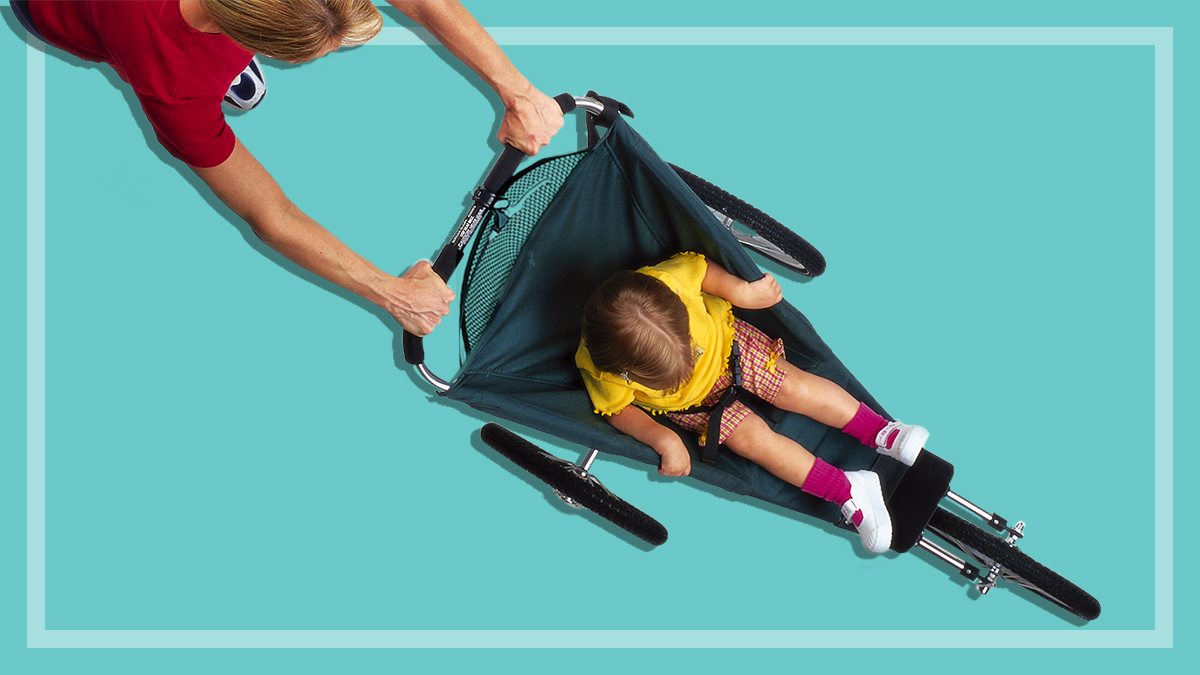
- Jogger stroller: Three-wheeled strollers are sometimes referred to as jogger strollers or have ‘jogger’ in their name, but not all are actually suitable for jogging and running. If you want to regularly jog with your stroller, consider getting a genuine jogging stroller specifically designed for that purpose. These usually have large, fixed wheels that roll easily for fast movement.
- Double stroller: For multiple bubs (see our double stroller reviews and buying guide).
- Convertible bike stroller: A combination of bike (actually tricycle) and stroller.
- Umbrella stroller: A lightweight travel stroller. It may have minimal storage space but is easier to fold and take with you on public transport or at the airport.
Three-wheeler strollers vs four-wheeler strollers
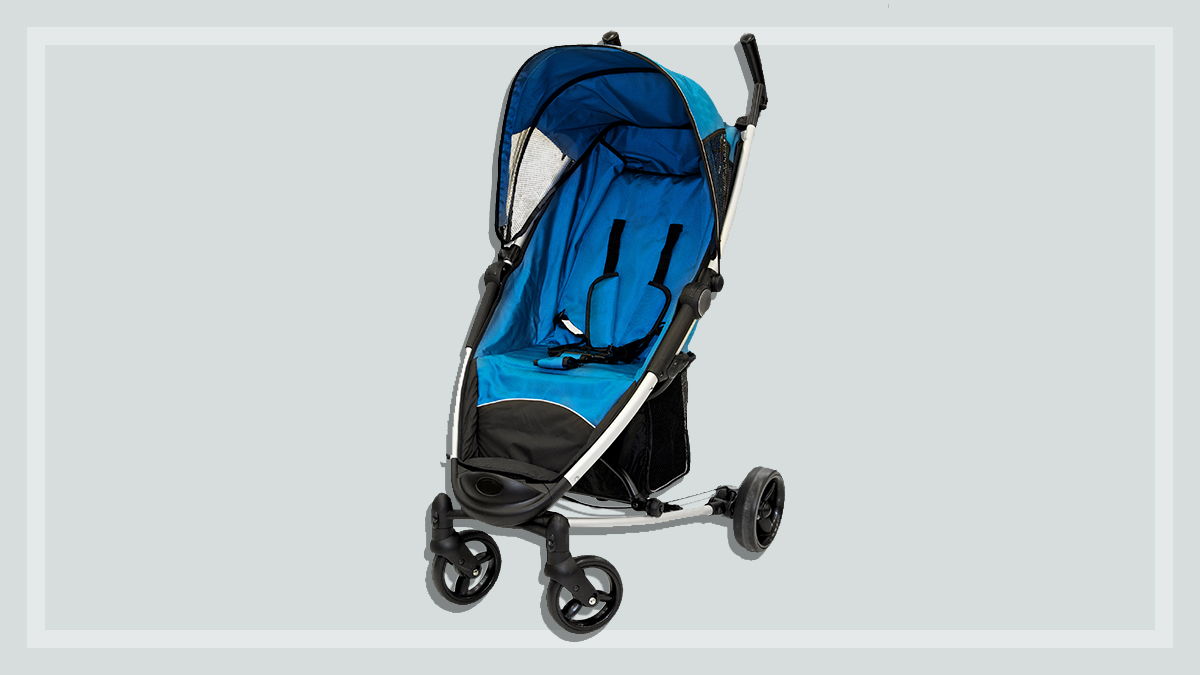
Three-wheelers
- Often wider, longer and heavier than four-wheelers.
- Usually easier to push around due to larger wheels (which are often on bearings so they pivot easily) and inflatable tyres that help absorb the bumps.
- Easier to manoeuvre, but also more likely to roll away if left unattended.
- Can be more prone to tipping sideways, particularly when turning corners or mounting a kerb.
Four-wheelers
- Umbrella versions are more compact and fold into a smaller package, so they can be a better option for public transport.
- Some have two small wheels at the front and two large wheels at the rear, which provide the stability of a four-wheeler with the manoeuvrability of a three-wheeler.
Which type of stroller is safest?
In principle there shouldn’t be a safety difference between three-wheelers and four-wheelers. But some years ago, CHOICE polled parents to identify any safety problems they’d encountered with their three or four-wheel prams or strollers, and found four-wheelers came out on top. More three-wheeler owners reported problems with their strollers such as tipping dangerously or toppling over with a child inside, or rolling away unexpectedly.
It’s now mandatory for strollers to have a wrist strap, so as long as you use that, the stroller shouldn’t ever get away from you. But tipping over can still be a problem. Our tests show some models of both types can be prone to tipping backward – three-wheelers may be more likely to tip sideways than four-wheelers, especially when turning or going over kerbs.
Pram safety checklist
- Look for certification to Safety Standard AS/NZS 2088, preferably the 2013 and 2022 versions which are the latest and safest versions designed to eliminate the formation of a loop between the shoulder and waist straps which can be a strangulation hazard.
- Check for sharp or protruding parts or ones that could pose a choking risk, and gaps that could trap fingers or limbs.
- Is there a child-resistant mechanism for locking and unlocking the frame?
- Is the stroller stable enough not to tip easily?
Features to look for
Newborn-suitable
Many prams are suitable from birth and can be used until the child weighs around 15–20kg (depending on the stroller). Some come with bassinet attachments which are then swapped out for seats as your baby grows, while others have a reclining seat that can lay flat to safely carry your newborn and then be adjusted over time. (Strollers that are unsuitable for newborns will not lie flat – generally these are suitable from six months.)
Wheels
Swivelling front wheels are easier to manoeuvre, but it’s useful if they can be locked for travelling at higher speeds or over rough terrain. Large wheels tend to be better on kerbs and stairs, while inflatable wheels can puncture but generally give a comfier ride. Before purchasing, give the wheels a tug to see that they don’t come off.
Size
Try folding and unfolding the stroller in the shop to see if you can carry it comfortably when it’s folded. Measure the stroller to make sure it fits into your car boot without needing to remove the wheels. If you have a newborn, make sure the pram you buy is suitable for them size-wise – not all are.
Brakes
Get an idea of how well the brake locks work by applying the brakes while you try to push the handle. It’s handy if rear brakes are linked, so the left and right brakes can be locked with a single action. Some prams also have front brakes – particularly handy on a reversible pram or stroller, as it means you can always lock the brakes nearest you (at the back) whichever way it’s facing. Locks you can activate and release with your feet prevent you from bending, but make sure your feet fit under them easily.
Straps
Give them a tug to check they’re secure and the seat doesn’t come away from the frame.
Five-point harness
Two shoulder straps (preferably attached to the backrest at shoulder level – padded ones are softer), a waist strap and a crotch strap, with adjustable length as your baby grows. The straps should be easy to adjust and the buckles easy to use (for you, but not your child).
Reversible handle
It’s good to have the option of choosing which way your baby faces in the pram – although the brakes may only be on one set of wheels, making it harder to put them on if you’re at the wrong end. Check in the store how easy it is to reverse the handle.
Adjustable backrest
Some strollers have an upright backrest that can also move to at least one semi-reclined position, while some can be fully reclined (best for sleeping). A three-position adjustment makes the stroller more versatile.
Footrest
A footrest reduces the chance of injury from your child’s feet touching the ground or getting caught in the front wheel.
Front bar
A detachable bar your child can hold onto. They’re usually not secure, so it’s not safe to use them to lift the stroller.
Travel systems
Some strollers or prams are compatible with car seat capsules: simply clip them into the stroller frame using the correct adaptors so you don’t have to wake bub up when shifting between pram, car and back. Not all are suitable for newborns, so check before you buy. It’s also not advisable to leave a baby asleep for long in a car seat, as they aren’t designed for this purpose.
Folding mechanism
A stroller needs to be simple for the carer to fold and unfold with mechanisms that are inaccessible to a baby. At the same time, the unlock mechanism used to fold it can’t be too easy to operate. You don’t want it to collapse with your baby still inside or potentially crush fingers.
Self-folding
We’ve only ever seen one such stroller – the 4Moms Origami stroller (which is no longer available for sale). It folded and unfolded at the push of a button. When we tested it, we found it could potentially be operated by a child standing near the stroller and could be a crushing hazard for a child still in the seat (as reported by some parents in online reviews) or for an adult or child who gets their hand in the way of the folding stroller.
Stroller/pram bags
If you travel a lot or are low on space and want to pack your stroller or pram away, some enterprising companies have invented stroller travel bags. They do a good job of keeping the pram neat and tidy, but they can be cumbersome and more trouble than they’re worth.
Other features to look for
- Canopy.
- Rain cover for wet weather.
- Storage, which is handy for carrying things like nappies, baby food, clothes and your handbag. Check the size and weight limit, as well as how accessible it is.
- Adjustable height handles are useful for particularly short or tall people.
Which stroller is right for you?
There’s probably no perfect stroller, so you need to consider what you’re most likely to be doing, and which would work best in your situation. Where are you going to be using it most? What are the footpaths around your area like?
- For shopping, you need a stroller or pram that’s not too wide or bulky (or it won’t get around small aisles), and a decent size basket is handy.
- If you’re going to do a lot of jogging or walking, inflatable tyres make for a more comfortable ride.
- If you’ll be catching public transport, something light and easily foldable is important.
- If you’re going to walk in the park or over uneven surfaces, big wheels make the ride over rough ground easier and more comfortable.
How much do strollers cost?
The price of a pram or stroller can vary widely, and different attachments such as a newborn bassinet or additional car seat can also add to the cost. The models in our most recent prams and strollers test range in price from $65 through to $2799, while the models in our double strollers test cost between $199 and $2798.
CHOICE tip: Our test results show that even some models over $1000 can fail our safety tests, so it pays to do your research.
Tricycles: a stroller substitute?
‘Convertible’ tricycles can be used by a carer to transport a baby before converting to a regular tricycle. As of February 2019 these types do fall under the mandatory standard if designed for children younger than 24 months. They must have appropriate warning labels, a wrist (tether) strap and back brakes, for instance. The new 2022 version of Safety Standard AS/NZS 2088 also includes convertible tricycles in its definition.
With extended handles, high backrests, sunshades and harnesses, some tricycles look similar to strollers. But we don’t recommend you use one as a replacement. Tricycles are not as easy to manoeuvre as most prams and strollers and generally aren’t designed with the same standard of durability in mind.
Are second-hand strollers safe?
A durable stroller can last many years (and several children) and with the rising cost of living, it makes sense to consider buying or accepting a used, second-hand stroller.
However, even if a stroller has been used without incident, injury could still occur. Always check to make sure the stroller:
- comes with full instructions
- has working parts (such as brakes and wheels) and can be unfolded and folded properly
- has not been in an accident
- has warning/safety labels and features intact
- complies with mandatory Australian safety standards.
Any business selling you a stroller must ensure it complies with mandatory safety standards, but the rule doesn’t address strollers sold by individuals (such as through online marketplaces) or ones you give or receive as gifts from family or friends. Avoid using any products that don’t comply.
Kim Gilmour is a Senior project officer. She manages a range of product tests such as coffee machines, stick vacuums, bassinets, high chairs and ovens, which are all tested in our in-house labs.
Kim’s work gives people access to robust, independent advice and helps consumers make informed decisions about their purchases. Her work also helps to keep manufacturers in check, by regularly exposing product flaws which can result in better and safer products.
Prior to CHOICE, Kim spent 16 years working as a technology journalist in Sydney and London. With several years as a senior researcher/writer at our UK sister organisation, Which?
Kim has authored how-to technology books such as Spotify for Dummies and Digital Photography for the Older and Wiser.
Kim has a Bachelor of Arts in Communication (Journalism) from Charles Sturt University. LinkedIn
Kim Gilmour is a Senior project officer. She manages a range of product tests such as coffee machines, stick vacuums, bassinets, high chairs and ovens, which are all tested in our in-house labs.
Kim’s work gives people access to robust, independent advice and helps consumers make informed decisions about their purchases. Her work also helps to keep manufacturers in check, by regularly exposing product flaws which can result in better and safer products.
Prior to CHOICE, Kim spent 16 years working as a technology journalist in Sydney and London. With several years as a senior researcher/writer at our UK sister organisation, Which?
Kim has authored how-to technology books such as Spotify for Dummies and Digital Photography for the Older and Wiser.
Kim has a Bachelor of Arts in Communication (Journalism) from Charles Sturt University. LinkedIn