01.Introduction
CHOICE looked at a range of home safety devices, including cupboard and drawer locks, door stoppers and latches, door handle covers, oven door latches, toilet seat locks and more.
When you have a child, you can begin to see potential danger everywhere. Poisons, electrical sockets, climbable furniture; the ordinary home seems suddenly full of dangers for the inquisitive and mobile toddler.
All of the products we looked at are potentially useful, but you probably won’t need most of them; a few key devices together with some common sense and good safety habits will ensure your home is safe enough.
In the end, there’s no substitute for keeping an eye on your kids and teaching them about safety.
Before you begin thinking about what sort of cupboard lock to buy, there are more basic safety steps to consider.
Basic home safety
Safety switch
Also known as a Residual Current Device (RCD), a safety switch is a must for any home, with or without children. It helps prevent electrocution by tripping the switch when it detects an imbalanced current, such as when a person has accidentally touched the live circuit. They are mandated for homes in some but not all states. You should protect each power circuit with one, and preferably lighting circuits too.
Smoke alarms
Again, a must for every home and a legal requirement in most cases. Mains-powered alarms are preferable, and photoelectric alarms are the best type for homes, as shown by our tests and as recommended by most fire authorities. As well as smoke alarms, consider other fire safety equipment such as a fire blanket and extinguisher, and have an escape plan.
First aid kit
A good home first aid kit need not be expensive and will cover most household injuries. Antiseptic cream and insect bite treatment are particularly important for kids. Burn gel may also be useful, though cold running water should be the first treatment. Read the first aid instructions so you know what to do; it’s worth learning CPR and other first aid skills such as how to treat burns, cuts and insect or spider bites. In the event of a serious accident, an ambulance may be only a phone call away, but having basic first aid skills on hand can be vital.
Window and door glass
Any glass within easy reach should be safety glass, which is tempered to resist breaking and, if broken, shatters into small chunks rather than jagged pieces. Modern windows and doors are usually made with safety glass; old glass should be replaced with safety glass, or treated with a safety film. Window and glass door panes should be securely fitted to resist coming loose on impact, such as being drummed on by a toddler.
House and garden
Pool fence
Pools and spas must be adequately fenced to prevent children gaining unsupervised access. Even with laws in place since the early 1990s, children still find their way into pools with often tragic results. Don’t leave pool gates open and always make sure there’s a competent adult to supervise kids in the pool. Choice tests have found some pool fences don’t meet the standard.
Windows and balconies
Flyscreens are not enough to prevent a child falling from a window. An external security grille will prevent falls, but these aren’t practical or desirable in many cases. A lock that allows the window to be locked partly open to let the breeze in, but stop a child climbing out, is a good option. For balconies, the railing or wall should be high enough in most cases, but you should cover in any gaps a child might squeeze through. Mesh on the railings might be worth considering. A a heavy planter box might be an option for blocking gaps but also make sure it (or any other object) can’t be easily used to climb the railing. In any case, young children shouldn’t have unsupervised access to a balcony.
Stairs
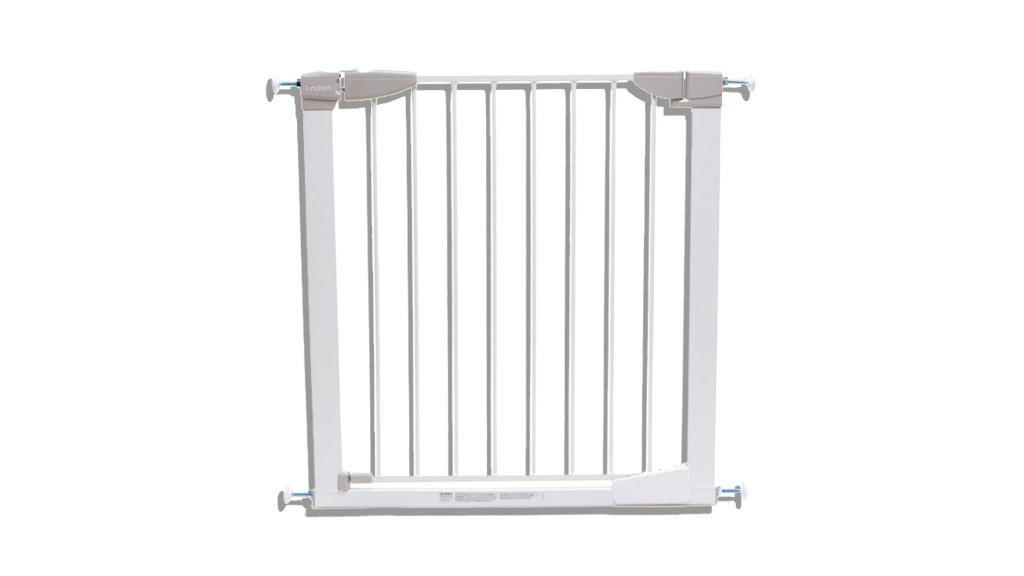
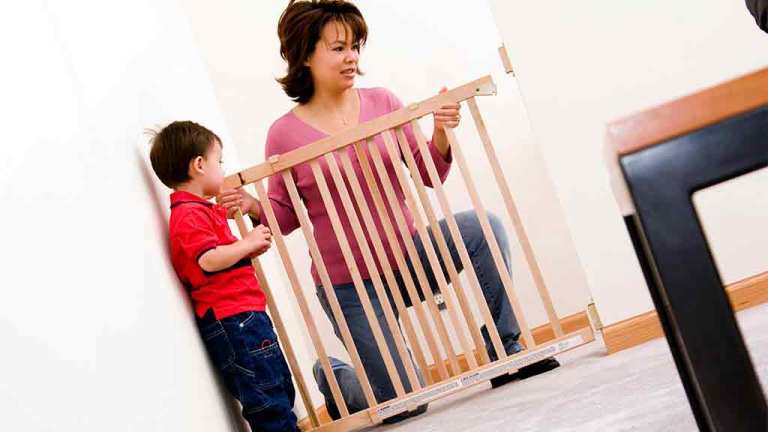
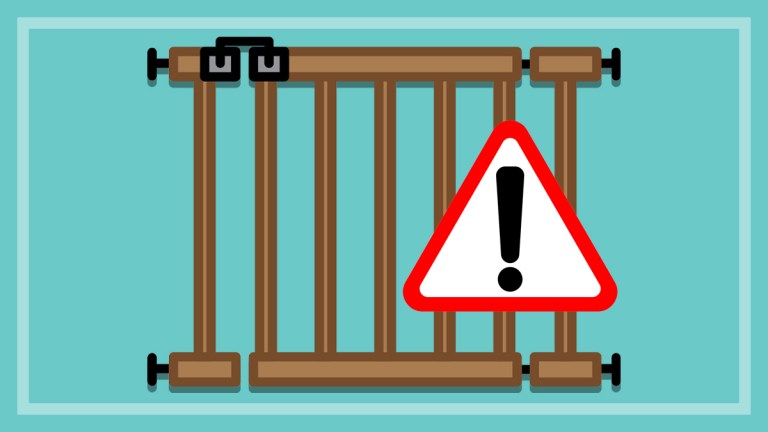
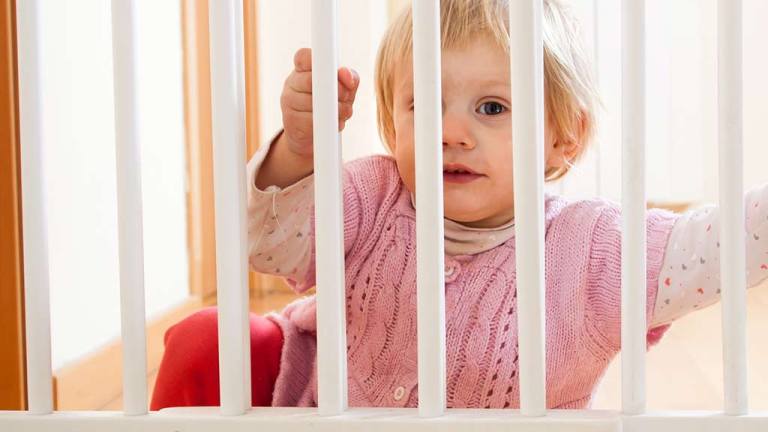
Safety gates or barriers are a must for any home with stairs or fireplaces. Banisters too should have no large gaps that a child could squeeze through.
Household chemicals and medication
Cleaning fluids, polishes, insecticides and rat baits are all hazards and – as their labels usually state – should be kept out of reach of children. When there are kids in the house, store chemicals in high cupboards where they aren’t just out of reach, but out of sight too. Likewise, medication should be kept out of reach or in locked cupboards. Keep chemicals and medication in their labeled containers – never in an old drink bottle or other container that might be attractive to a youngster.
Sharps
Knives are an obvious hazard for inquisitive youngsters, but so are the serrated edges on cling film boxes. These and any other sharp items should be stored out of reach, just like household chemicals. It’s worth considering putting a lock on the cutlery drawer. Crockery is also best stored out of reach as it can shatter if played with roughly.
Dishwasher
Knives, glassware and other potential hazards are often left in the dishwasher until it’s full; in the meantime they may be accessible to toddlers so make sure the door is kept firmly shut. Don’t leave detergent in the dishwasher door dispenser; only put it in when about to turn the dishwasher on.
Power cords
These can be a tripping, strangulation and electrical hazard. Keep them hidden behind furniture or under rugs. Don’t let a cord dangle over a bench or table edge, where a child might grab it and pull the appliance down.
Curtains and blinds
Blind cords are a strangulation hazard. Looped cords are especially dangerous; use split cords and a cord winder or cleat to stow them out of reach. Newly installed blinds must have the cords restrained to the wall or window architrave.
Bathrooms
Non-slip mats in and out of the bath are worth considering (for adults as well as children).
Garden sheds
Usually contain hazards such as tools, nails and screws and weed killer; a lockable door is the best solution here.