How to buy the best lights for your bike
Light up your ride with a quality set of bike lights.
Last updated: 15 Aug 2019
Even if you’re strictly a sunny day cyclist, chances are sooner or later you’ll get caught riding home in the dark or in bad weather, so a good set of bike lights is essential. You wouldn’t drive a car at night without the headlights on, and the same goes for riding blind on a bicycle – no matter how eye-catchingly stylish you look on your pushie, most drivers simply can’t see you unless you’re lit up.
On this page:
What to look for when buying bike lights
When it comes to choosing the right bike lights, your visibility on the road is essential, but durability, size, ease of fitting and removing, and battery replacement are also important.
Here are a few other things to consider:
- USB rechargeable batteries eliminate the need to charge or replace removable batteries. They generally have a shorter battery life, but lights are easier to remove and charge regularly.
- Bike lights with multiple LEDs are usually brightest, but a single LED can still be very bright if it has a good reflector.
- Check the light is clearly visible from the side or at an angle.
- Ensure that the light mounting brackets fit your bike.
- If batteries are required they should be easily obtainable ones, such as AA or AAA batteries.
- Helmet-mounted lights aren’t ideal when sharing a path or road with other users. They are more suitable for mountain bike riding in the dark.
- Test the lights in-store before buying them.
See and be seen
The more visible you are, the safer you’ll be on the road. As a general rule:
- check your lights regularly. If they’re looking dim, it’s time to replace or recharge
- carry a backup set of lights
- wear light-coloured or reflective clothing (or a reflective strip or vest)
- mount your lights at handlebar height, so you’re more visible.
Lights too bright
High-powered LED lights are great if you’re riding on an unlit path, however, their bright beam can blind other riders and drivers. If you want to use a high-powered light for riding on lit roads, ensure it’s pointed at the ground a few metres in front of the front wheel. Another option is to mount a second light that’s less bright to switch to when riding on a lit road or track.
To flash or not to flash?
Most lights have a number of flashing speeds as well as a constant beam mode. A flashing light makes you more visible on roads, as drivers can mistake constant beams for street and traffic lights. Constant beam is best for finding your way on unlit paths. Flashing mode will use less battery power than constant beam.
Consider the speed of your flash. On a slow setting you’ll travel further between each flash, which could give motorists an inaccurate judgement of your location. A faster setting can create a strobe effect, again distorting motorists’ judgement.
Bike lights and the law
When you ride your bicycle at night or in low-visibility conditions, such as fog or heavy rain, the Australian Road Rules (the basis for state and territory laws) require that you have:
- a white light at the front
- a red light at rear
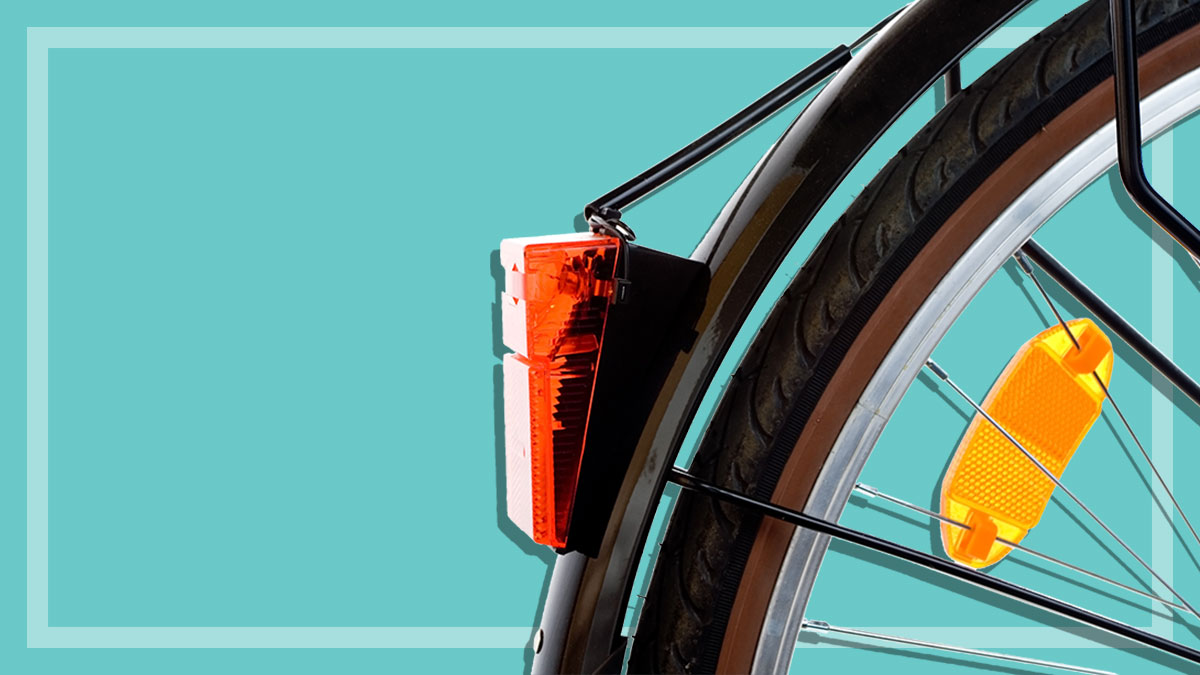
- a red rear reflector.
The lights, whether steady or flashing, must be visible for at least 200m. Ideally, they should also be visible 50m from the side. The red rear reflector should be able to be seen 50m from the rear when light is projected onto it by a vehicle’s headlight at low beam.
Don’t worry, you won’t need to test these things yourself; pretty much all bike lights on the market have this level of visibility.
How much do bike lights cost?
In the past we’ve tested bike lights that ranged in price from $25 up to $150.
Matthew Steen is the Director of Reviews and Testing, which conducts all the testing for CHOICE. He has had a long and storied history in the consumer movement.
Matthew is driven to work at CHOICE for its constitutional mission and its dedication to making Australia more fair, safe and just.
Matthew represents CHOICE as a council member on the Standards Australia Council. He is also responsible for CHOICE lowering its environmental footprint.
Find Matthew on LinkedIn.
Matthew Steen is the Director of Reviews and Testing, which conducts all the testing for CHOICE. He has had a long and storied history in the consumer movement.
Matthew is driven to work at CHOICE for its constitutional mission and its dedication to making Australia more fair, safe and just.
Matthew represents CHOICE as a council member on the Standards Australia Council. He is also responsible for CHOICE lowering its environmental footprint.
Find Matthew on LinkedIn.