Laptops, phones and other tech products often feature in EOFY and clearance sales happening this time of year
If you’re buying any of these to use for work, you can claim a deduction on your tax
CHOICE regularly tests many tech favourites, so check our reviews before you buy
Bought any tech in the last year that you use for work? Or maybe you’ve got your eye on a new device that’ll come in handy on the job?
As we approach the end of the financial year (EOFY), more than a few of us will be dreading the chore of doing our taxes.
But filing returns is a chance to reduce the amount we owe in tax and maybe even get a refund, thanks to the opportunity to deduct expenses related to our job.
Millions of Australians claim work-related tax deductions every year and many also claim costs they incur working from home.
Filing tax returns is a chance to reduce the amount we owe in tax and maybe even get a refund
With lots of us looking around for expenses to claim, plenty of retailers will soon be cutting prices on tech and other products we might use for work in order to boost their margins and clear stock before a new financial year.
Here, we look at some of the common work items you’ll see marked down in this year’s EOFY and clearance sales and explain how you may be able to claim these, along with work-from-home costs, as tax deductions.
Unfortunately, tax deductions aren’t exactly free money and don’t equate to a dollar-for-dollar reimbursement in your tax refund.
Instead, they help reduce your taxable income, which is the figure the Australian Taxation Office (ATO) uses to determine how much tax you owe for the year.
More deductions leads to less taxable income, which can mean you’ll owe less tax.
Costs you’ve had to pay to do your job count as deductions, but must meet the ATO’s three golden rules:
You must have spent your own money on something that directly relates to you earning an income.
You can’t have been reimbursed by someone else.
You must have a record of your spending, such as a receipt.
The good news is, if you buy an item for work (and not for running a business) and it costs $300 or less, you can claim the full amount as a single deduction in one tax return.
If you buy something that costs more, such as a laptop, you won’t be able to claim it all in one go.
Instead you’ll have to claim a proportion of the cost each year as the item depreciates in value over its lifetime.
The ATO has guides on how you can do this using one of its two recommended formulas, or you can use its depreciation and capital allowances tool, but in any case, you’ll have to keep track of the product’s original value and its effective life.
If you buy something that costs more than $300, such as a laptop, you won’t be able to claim it all in one go
The tax office sets guidelines for how long various items are meant to last that you can use in your calculations (two years for a laptop, for example).
It’s important to note that the amount you can claim can be affected by whether you also use an item for personal reasons or to run your own business.
This rule applies whether the expense is less than $300 and you’re claiming it all in one year, or if it’s more and you’re deducting depreciation over several years.
For more info on how to work this out, see the ATO’s guide to deductions or consult a tax professional.
For straightforward work expenses, the myDeductions tool in the ATO app is also a useful resource for keeping track of costs you incur throughout the year that you might want to claim later.
The EOFY sales are a good chance to buy work goods you can claim back on tax.
What you can’t claim
The tax office often sees people trying to slip through outlandish claims in order to reduce their tax and says it’ll be paying close attention to work-related and working-from-home deductions this coming tax season.
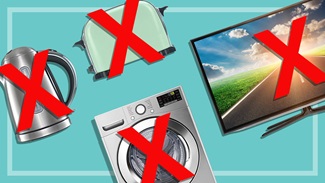
It’s previously uncovered attempts to claim air fryers, TVs and $10,000 in luxury clothing and accessories by people for whom these purchases had little to do with work.
While few of us could claim we need these products to do our jobs, sometimes you do need to splash out on the latest entertainment or kitchen appliances – even if it won’t be a tax deductible purchase.
These work-from-home essentials are a regular fixture among EOFY bargain stock and grabbing one before the end of June could help end your tax year with a decent deduction.
“Retailers tend to have good EOFY deals, but most manufacturers also offer good prices if you buy directly from their websites,” says CHOICE tech expert Peter Zaluzny.
“For example, brands such as Lenovo, Dell and HP typically have some sort of EOFY sale.”
Once you’ve found a retailer offering good deals, think about what you’ll be using your device for and consider older models on clearance before throwing your cash at the latest releases.
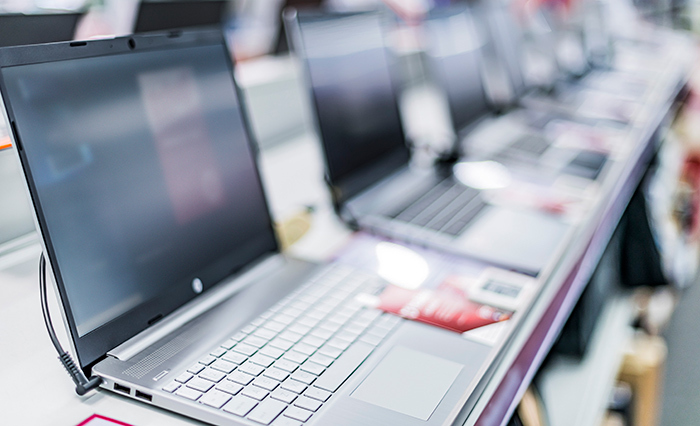
Laptop retailers will have sales, but also check manufacturer websites for discounts.
“You can save a bit of money by opting for a slightly older laptop released in the last couple of years,” Peter says. “You probably won’t notice much of a difference between a slightly older model and a newly released one if you’re just emailing, browsing and streaming video.”
But Peter warns against letting your search for a bargain draw you too far into a brand’s back-catalogue. “Windows 10 laptops will no longer receive essential security updates as of October this year,” he warns.
“If you’re looking at an older or second-hand laptop, make sure it either comes with Windows 11 or is Windows 11 compatible.”
If you’ve managed to score a model you can use for work for less than $300, you can claim it as an immediate deduction.
Therefore, it’s likely you’ll only be able to claim the depreciation of the device this financial year, but this could be more than $300 if you’ve bought a high-end device.
Buying a new phone you’ll mostly use for work? You can claim a percentage of the cost at tax time in accordance with the method outlined previously (depending on the percentage you use it for work versus personal use).
Our tech experts expect discounts on at least some phone models this EOFY.
Here, as with laptops, going too far back in time comes with pitfalls.
Some older phones that have been refurbished after being used overseas may not always work in Australia, so make sure any model you buy can run off the networks servicing your area. This guide from WhistleOut shows you how to do this.
Once you’ve found a suitable phone, it’s important to consider if it’ll meet your requirements for battery life, camera quality and providing other functions, such as serving as a Wi-Fi hotspot for other devices.
If you’re setting up to work from home, you’ll of course want all your gadgets working quickly and reliably.
If you’re struggling with slow internet speeds, an old router might be the culprit – our guide to the latest Wi-Fi technology will help you confirm if this is the case and to understand what you should be buying to get the speed you deserve.
But even the best equipment has its limitations – for example, most routers have a range of around 50 metres in line of sight – obstructions like walls and furniture can shorten this.
If you want a stronger signal at the edge of your Wi-Fi range, an extender or mesh network is what you’re looking for. See our latest review of wireless mesh networks to understand what could work best in your home.
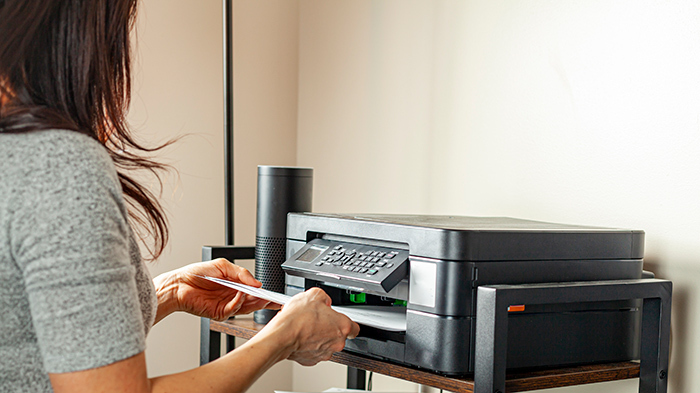
These office mainstays often feature in EOFY markdowns, and having one on deck can come in handy, depending on your work.
But printers are also notorious for their high running costs – especially the cheaper models, some of which we’ve found consume colossal quantities of costly ink.
Buying a printer at EOFY? Beware of the cheapest models.
Therefore, while the cheapest printers might be tempting, beware of inefficient models and think about how much printing you’ll actually be doing.
If you regularly run off documents at home, an ink-efficient model with a higher purchase price may work better for you, as it’ll keep your ongoing costs lower.
But if you only print from time to time, a cheaper printer could suffice, as you won’t be buying new cartridges very often.
To get a read on which models deliver the best print quality and how much each will cost you annually in ink, see our printer reviews.
If you work from home, you can also claim any extra costs resulting from you spending more time in your house.
The ATO allows you to claim a flat rate of 70 cents per hour that you worked from home, to cover the extra use of things like electricity and gas, as well as internet data, stationery and computer consumables, such as printer ink and paper.
Alternatively, you can calculate the actual cost you’ve incurred (in case it’s more than 70 cents per hour or you want to factor in depreciating assets), but this will require lots of number-crunching and record-keeping.
If you’re making these sorts of deductions, you’ll need records of how many hours you worked from home and evidence you paid for the extra strain on your home facilities.
Liam Kennedy is a Journalist with the Editorial and investigations team. He answers consumers' most burning questions, from which scams to be aware of and how to save money, to whether new services and products are worth using and how the latest developments in consumer news could affect them.
Prior to CHOICE, Liam worked in production in daily news radio and podcasting.
Liam has a Bachelor of Communication (Journalism) and a Bachelor of Arts in International Studies from the University of Technology Sydney. LinkedIn
Liam Kennedy is a Journalist with the Editorial and investigations team. He answers consumers' most burning questions, from which scams to be aware of and how to save money, to whether new services and products are worth using and how the latest developments in consumer news could affect them.
Prior to CHOICE, Liam worked in production in daily news radio and podcasting.
Liam has a Bachelor of Communication (Journalism) and a Bachelor of Arts in International Studies from the University of Technology Sydney. LinkedIn
For more than 60 years, CHOICE has been fighting the good fight for Australian consumers.
In the past year alone we've uncovered systemic issues with sunscreens, investigated shonky supermarket pricing, fought for stronger scam protections and helped make complex energy pricing fairer and clearer.
CHOICE is here to provide unbiased advice and independent testing in our world-class labs. We buy the products we test, just like you do, and our expert reviews are influence free. We’re here to help you choose smarter. Hopefully you’ll also save some money along the way.
Thanks to CHOICE, you’ll never be alone when a business treats you unfairly. You can support our work by joining or donating to our cause.