If you’re renovating a kitchen or looking to upgrade your cooking appliances, induction cooktops are likely on your radar.
Praised for their superior cooking performance, sleek designs and efficiency, they generally outperform other cooktop types in CHOICE testing.
But deciding whether an induction cooktop is right for you really comes down to your priorities and budget.
Before making the switch, here’s some important questions to consider to help you decide whether induction cooking suits your lifestyle, budget and needs.
1. Are you short on time?
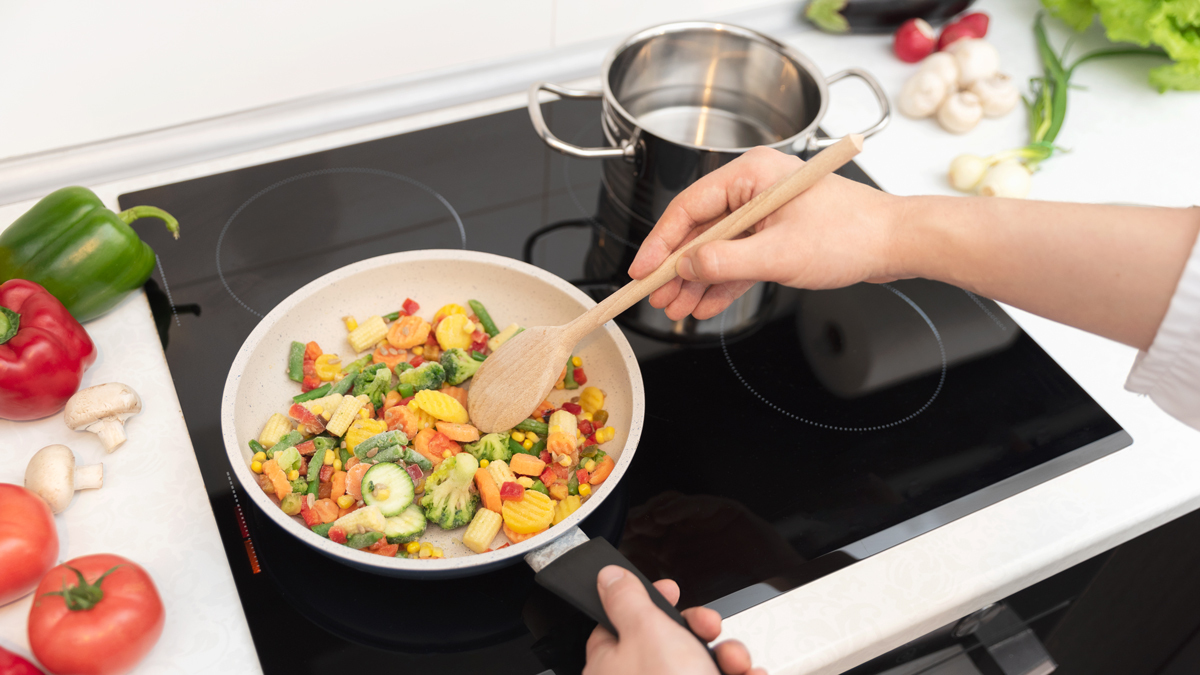
One of the biggest benefits of induction cooktops is how energy efficient they are, delivering fast heat and precise temperatures. With induction cooking, heat is transferred directly to the base of the pan with about 85% efficiency.
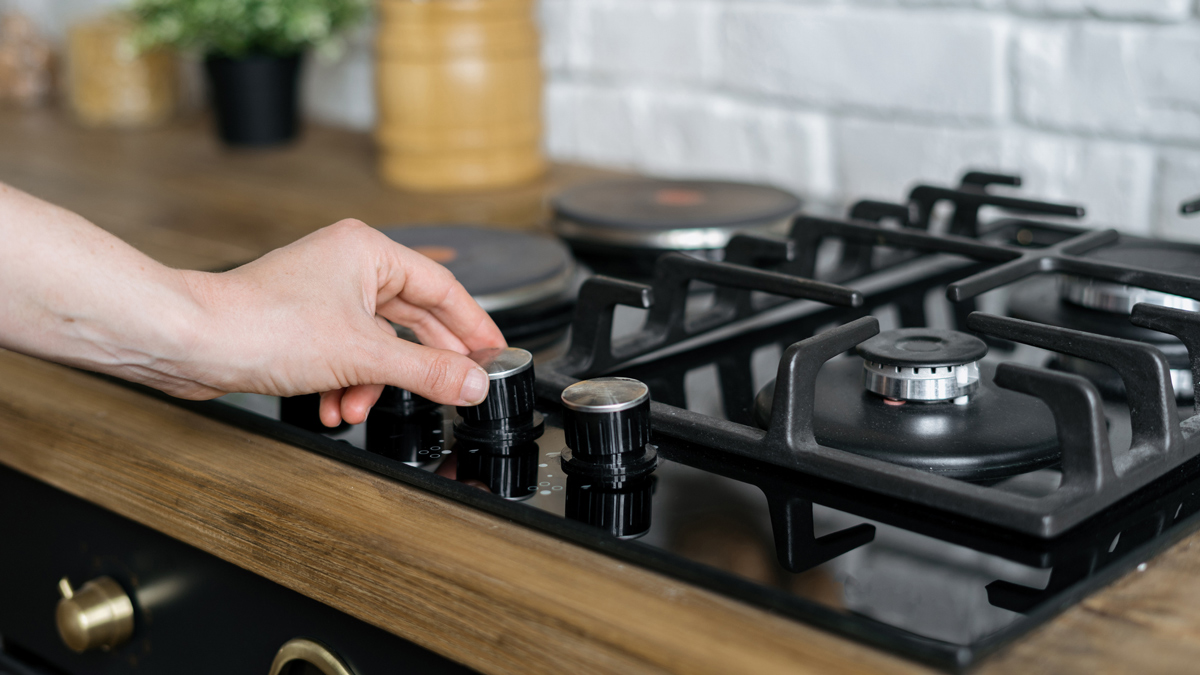
In comparison, cooktops that transfer energy via gas-powered heating elements operate at an efficiency of 32%.
So if you hate waiting for the saucepan of water to boil on a busy weeknight, an induction cooktop can get the job done in about 2–3 minutes, whereas a gas cooktop will take 4 minutes or longer.
It might not seem like much, but when you’re trying to get the family fed as quickly as possible, a few minutes can make a difference!
Precise temperature control is great for cooking tasks like simmering and searing, and means that an induction cooktop is very responsive when you turn the temperature up or down.
2. What kind of cookware do you own?
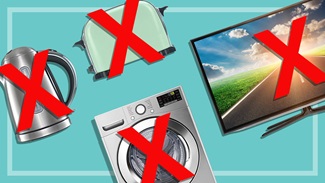
Induction cooktops require magnetic cookware, so if your current set isn’t compatible, you’ll need to invest in new pots and pans.
You can check your existing cookware by placing a magnet on the base. If it sticks well, it will be good to use on induction.
As induction cooktops only transfer heat when there’s a pot sitting on the burner, the glass surface stays cooler than gas or ceramic cooktops, which reduces the risk of burns. Plus there’s no open flame that could burn little fingers or scorch clothing or anything else that comes into contact with it.
Many induction cooktops have safety features like child lock or automatic shut-off, which turns off the cooking zone if no cookware is detected.
Induction cooktops are also a better option than gas cooktops for your health, due to the contaminants produced by gas burning.
“Gas cooktops contribute 12% of the childhood asthma burden, which is equivalent to tobacco smoke in the home,” says Asthma Australia CEO Michele Goldman.
CHOICE kitchen expert Fiona Mair says induction cooktops are generally very easy to use; however, features such as touch controls and rapid heating temperature changes may take some getting used to as they can be different to other types of cooktop.
There’s also added features such as Wi-Fi connectivity that you may or may not find useful. Expect some trial and error as you adapt your cooking habits.
Expect some trial and error as you adapt your cooking habits
“Some induction cooktops are easier to use than others, so do your research before you buy. Some don’t have clear labelling of controls or their cooking zones aren’t as obvious as gas or other electric cooktops,” says Fiona.
If you’re having problems, it could be that your cookware is the wrong size for the cooking zones.
“For maximum heating efficiency, it’s important that the cooking zone sizes match the base sizes of your cookware,” Fiona says.
“When we test induction cooktops in our CHOICE kitchen lab, we give each model a score for ‘ease of use’ – looking at factors such as how easy it is to use the controls, the size, type and positioning of cooking zones as well as ease of cleaning.”
Sleek, modern and efficient: is it time you got inducted?
5. Do you hate cleaning and love a sleek, modern aesthetic?
With their minimalist, streamlined designs, induction cooktops have a great modern look that suits contemporary kitchens.
If you’re tired of cleaning the clunky, rusty burners and pesky ridges on your gas cooktop or the grime that builds up around knobs on your ceramic cooktop, induction cooking could be the answer.
Before you invest in induction, you’ll have to check that your home has the right wattage: they usually need a dedicated circuit, typically 20 amps or greater.
“Most induction cooktops require a 32-amp connection due to the higher power demand,” says Fiona.
If the power connection needs changing, it will have to be hard-wired by a licensed electrician and installation can be costly. You might also need an extra circuit, which will cost even more.
And then there are the space considerations. If you’re buying an induction cooktop that’s a different size than the cooktop you’re replacing, you’ll need to have your existing cabinetry altered.
On the down-low
The good news is that low-current induction cooktops are increasingly available. They’re suitable for a 20-amp plug connection, so they can operate on a single-phase standard household electricity supply.
“To date, we’ve tested a total of 10 low-current induction cooktops,” says Fiona.
“They’re suitable for homes where rewiring isn’t possible or if you’re trying to avoid the cost of rewiring.
“However, their lower power capacity means cooking settings may be restricted when using multiple zones simultaneously.”
7. What’s your budget?
Prices for induction cooktops have become more competitive as more and more models are released, however the cost may still be higher than basic gas or ceramic models.
The models in our latest induction cooktop review range in price from $799 for an Ikea cooktop to more than $5000 for a Miele, so there are options to suit most budgets.
In comparison, the ceramic cooktops in our test range in price from $389 to $2099, while the gas cooktops we’ve tested start at $299 and run as high as $3599.
Fiona says that paying more will generally give you greater flexibility with your cooking.
Paying more will generally give you greater flexibility with your cooking
“Pricier models may have flexible induction zones that consist of either four or six cooking zones which can be combined into two or three cooking zones.
“This gives you more flexibility with cookware shapes and sizes, meaning you can use larger or differently shaped cookware, such as roasting pans or rectangular grill plates.” says Fiona.
“A cooktop with full-surface induction which gives you the ability to place the cookware anywhere on the cooktop, but you’ll pay more for it.”
You could also make potential savings over the long term by switching from gas to induction, particularly if you have your own solar panels and battery, as induction cooktops run solely on electricity.
Know the products to avoid before you shop. Get our free guide and buy smarter.
Pru Engel is the Audience and Engagement editor at CHOICE. Her job is to ensure as many Australians as possible know about the great work we do at CHOICE.
She works closely with our testers and experts to find the gems of information in our data and research that will resonate with Australian consumers and help them make the best decisions, whether they're purchasing an air fryer, looking for a new mattress or trying to find the cheapest car insurance. She also helps to drive meaningful change for consumers by collaborating with our Campaigns team on content covering issues such as grocery pricing, product safety and scams.
Prior to CHOICE, Pru worked as an editor at many of Australia's leading food and lifestyle titles.
Pru has a Bachelor of Arts in Communication (Journalism) from the University of Technology, Sydney.
LinkedIn
Pru Engel is the Audience and Engagement editor at CHOICE. Her job is to ensure as many Australians as possible know about the great work we do at CHOICE.
She works closely with our testers and experts to find the gems of information in our data and research that will resonate with Australian consumers and help them make the best decisions, whether they're purchasing an air fryer, looking for a new mattress or trying to find the cheapest car insurance. She also helps to drive meaningful change for consumers by collaborating with our Campaigns team on content covering issues such as grocery pricing, product safety and scams.
Prior to CHOICE, Pru worked as an editor at many of Australia's leading food and lifestyle titles.
Pru has a Bachelor of Arts in Communication (Journalism) from the University of Technology, Sydney.
LinkedIn
For more than 60 years, CHOICE has been fighting the good fight for Australian consumers.
In the past year alone we've uncovered systemic issues with sunscreens, investigated shonky supermarket pricing, fought for stronger scam protections and helped make complex energy pricing fairer and clearer.
CHOICE is here to provide unbiased advice and independent testing in our world-class labs. We buy the products we test, just like you do, and our expert reviews are influence free. We’re here to help you choose smarter. Hopefully you’ll also save some money along the way.
Thanks to CHOICE, you’ll never be alone when a business treats you unfairly. You can support our work by joining or donating to our cause.