Some fast food restaurants offer a range of vegetarian and vegan meal options, while other chains offer few or no options
Don’t assume the plant-based options are healthy – they’re often as kilojoule, fat and salt-laden as the standard menu items
If you’re vegetarian or vegan, be mindful of cheese traps – both as a poor alternative protein source and the possibility that it may contain animal rennet
Almost 2.5 million Australians have a diet that’s all or almost all vegetarian, and it’s estimated that around half a million are vegan.
It’s relatively simple to eat healthy vegetarian or vegan food at home, but what are your chances when eating out?
The continued rise in popularity and prevalence of plant-based meats and cheeses has certainly given vegetarians and vegans more options in fast food restaurants – most notably in pizza chains.
But don’t make the mistake of assuming the vegie meal will be the healthiest option on the menu – or even that it’ll be suitable for both vegetarians and vegans. And some of the big name chains still don’t give vegos a look-in.
We look at the online menus of the top 10 most visited fast food restaurants in Australia, according to Roy Morgan, to see which offer the most vegetarian and vegan meal options.
We also check out how healthy they are compared to regular menu items and suggest how to avoid less healthy vegie fast food.
Most options
Grill’d
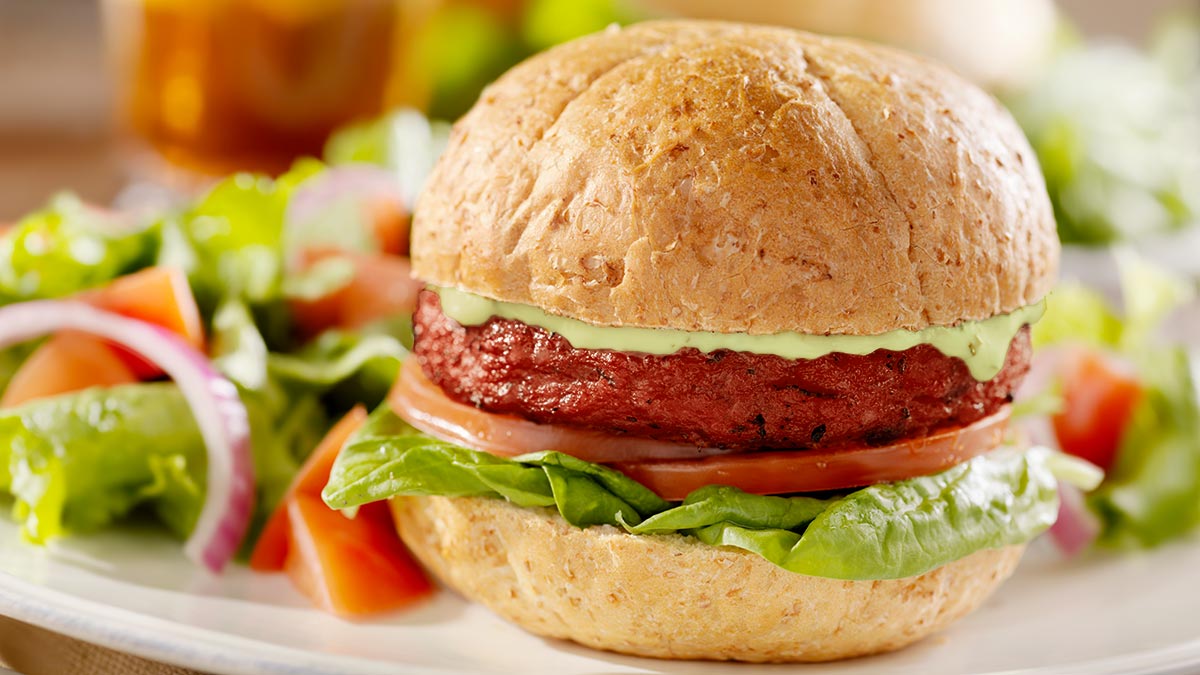
Grill’d offers a choice of alternative proteins for its burgers such as the “meat tasting, plant-based Beyond Meat pattie”, a pea protein plant-based patty and a more traditional Garden Goodness vegie patty – all of which are vegan.
It has nine vegetarian burgers as standard on the menu, but clearly states that you can build your own, which opens up the options for vegetarians and vegans.
While it offers plenty of fresh salad ingredients with each burger, each burger contributes a decent chunk of kilojoules and sodium towards your daily intake. You can opt out of mustards, mayos, sauces and cheeses if you want to lessen the load.
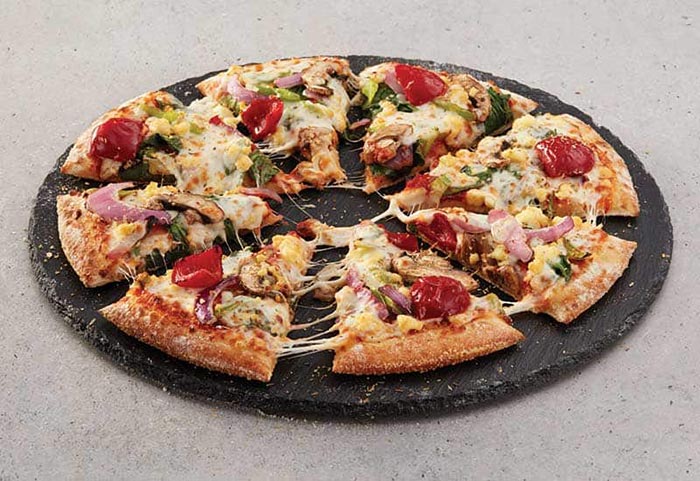
Vegorama with a classic crust has half the kilojoules of some other Domino’s pizzas.
Domino’s
Domino’s offer vegetarian and vegan options on its menu with multiple choices in both. The healthiest of the vegie options still make a sizeable contribution to your intake of kilojoules, saturated fat and sodium, so limit the number of slices you eat and opt for veg-laden rather than cheese-heavy toppings.
You can reduce your kilojoule intake by more than half and saturated fat intake by about 70% by eating a slice of Vegorama with a classic base (traditional range) instead of The Big Cheese (New Yorker range), for example.
Subway
Subway’s menu lists a vegetarian Mediterranean panini and three vegetarian fillings in the form of a sub, wrap or salad – Smashed Falafel, Veggie Patty and Veggie Delite.
The latter two are both vegan as standard, but the Smashed Falafel is served with tzatziki which vegans would need to ask to leave off. Of course you can customise your sandwich or salad with any combination of ingredients – just avoid the Old English-style cheese as it contains animal rennet.
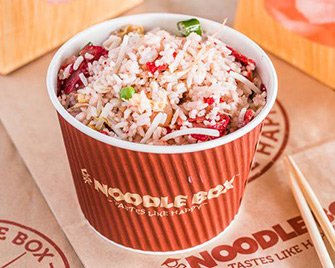
If you’re counting calories, be mindful of portion size when choosing Noodle Box Special Fried Rice.
Noodle Box
The Noodle Box menu indicates which meals have vegetarian-friendly sauces, and suggests swapping the protein for tofu in these meals to create vegetarian options.
All except one of these sauces (satay) are also vegan, so if you swap out the egg noodles for other noodle varieties (ho fun or vermicelli, for example) these meals are suitable for vegans too.
There’s no nutritional information other than kilojoules on the Noodle Box website to allow us to properly compare menu items, but if you’re counting calories, be mindful of portion size when choosing.
A regular special fried rice contains 73% more kilojoules than a small (5737kJ vs 3313kJ), for example, and is 66% of an average adult’s recommended daily intake.
Nando’s
Nando’s gives you the option to substitute a vegie patty or plant-based protein for the chicken in all of its burgers, wraps and salads, resulting in a dozen or so vegetarian options.
Three of the six salads are already vegetarian, but these – and many of the burgers and wraps – include cheese and/or dressings that contain dairy/egg, so if you’re vegan, you’ll need to ask for them to be left out.
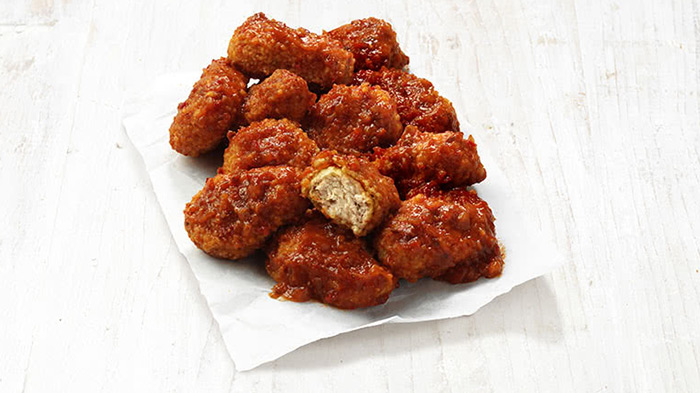
Pizza Hut’s plant-based chicken wings is one of several options on its vegan menu.
Pizza Hut
Pizza Hut’s vegetarian offerings include plant-based chicken wings (with a choice of five vegan sauces), one pasta and seven pizzas – four of which are vegan.
Like Domino’s, even the healthier options push the boundaries with kilojoules, saturated fat and sodium. So again, if you’re looking to make healthier choices, limit the number of slices you eat, avoid cheese-stuffed crusts and opt for toppings with more veg and less cheese.
You’ll be eating 25% less kilojoules if you choose the Vegan Deluxe pizza (original pan crust) over the double-cheese-topped Veggie Sensation (original pan crust), for example.
Some options
McDonald’s
McDonald’s core food menu lists two vegetarian options – McVeggie and McVeggie Deluxe burgers – neither of which are vegan.
The vegie patty contains potatoes, peas, corn, carrot, onion and cheese, and is served in a bun with lettuce, pickles and a sauce (the Deluxe has added tomato and a slice of cheese).
Both are lower in kilojoules and saturated fat than a Big Mac, but they contain a similar amount of sodium which is more than half the recommended daily intake.
Hungry Jack’s Rebel Whopper has a meat-free patty, but it has cheese with rennet. This version without cheese (pictured) is available for a limited time.
Hungry Jack’s
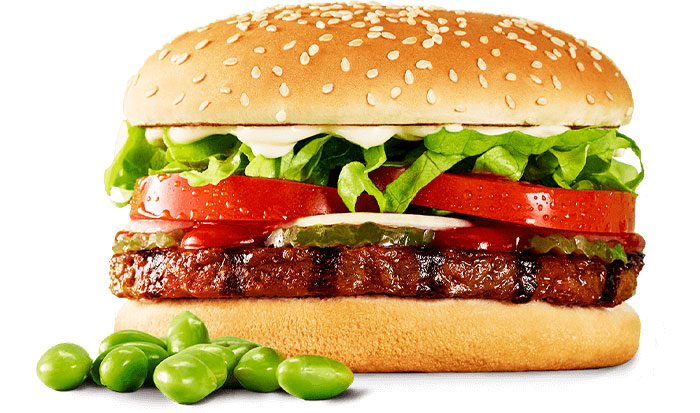
Hungry Jack’s advertises its Rebel Whoppers as “100% Whopper, 0% Beef”. But while the patty is meat-free, the cheese contains animal rennet, so the Rebel Whopper Cheese isn’t suitable for vegans or vegetarians.
This “patty made from plants” may present as fairly healthy, but the Rebel Whopper has as many kilojoules and as much saturated fat as a regular Whopper and 36% more sodium.
For a limited time only, Hungry Jack’s is also offering a Vegan Whopper Cheese, which is 100% vegan (including the cheese).
Fewest options
KFC and Red Rooster have no vegetarian (let alone vegan) primary offerings.
So unless you’re happy to cobble together a meal by ordering sides like fries, mashed potato, coleslaw, corn cobs, peas, dinner rolls and/or garlic bread, vegetarians are better off eating elsewhere.
Nutrition notes
The average Australian adult consumes about 8700kJ a day, with a suggested daily dietary target of no more than 24g saturated fat and 2000mg sodium.
But these targets vary depending on your gender, size and activity level, among other things, so requirements for many people will be much lower.
While we note that many chains offer the flexibility to customise menu items to suit dietary requirements – replace meat patty with plant-based patty, leave out cheese or mayonnaise, for example – we’ve focused on what’s clearly stated on the menu as being on offer.
Strictly speaking, foods that contain animal by-products such as gelatine, animal-derived rennet and animal fat are a no-no for vegetarians (see Types of vegetarian diets).
Cheese in particular is a potential minefield for herbivores as it commonly contains animal-derived rennet, and we came across several in fast food restaurants that vegetarians need to avoid:
the parmesan cheese at Pizza Hut
the Old English-style cheese at Subway
the cheese in certain Hungry Jack’s Whoppers (including the Rebel Whopper Cheese which has a vegan patty).
Cheese containing animal rennet might not be in menu items specifically flagged as ‘vegetarian’ – although the Rebel Whopper Cheese’s selling point is that it’s “100% whopper, 0% beef”, which would surely appeal to a vegetarian or vegan customer.
But it’s good to be mindful of this if you’re building a sandwich or pizza from scratch, or substituting or adding ingredients to menu items when ordering.
Fast food chains are often guilty of creating a vegetarian meal by simply replacing the meat protein component of the dish with cheese. The result can be tasty, but it also bumps up both the salt and saturated fat content of the meal.
Pizzas are prime examples. Eating just one slice can contribute a sizeable chunk to the maximum recommended intake of both salt and saturated fat, but chewing through two or more slices can break the nutritional bank – don’t even contemplate ordering the cheesy crusts!
Cheese can even play havoc with a salad, boosting the saltiness of a regular bowl of greens to less than desirable levels.
Protein sources such as lentils, chickpeas, beans, nuts and tofu are higher in fibre, antioxidants and other protective phytochemicals – without the sodium and saturated fat of cheese.
But while vegie offerings using protein-rich plant sources such as lentils, chickpeas or tempeh can be nutritious, highly processed versions such as commercial plant-based meat patties and nuggets can have more in common with their mainstream fast food counterparts than with the plants they’re derived from.
Accredited practising dietitian Kate Marsh has these top tips for choosing the healthiest vegetarian fast foods.
Be mindful of cheese overloads – steering clear of cheesy pizzas and salads and removing the cheese from burgers will help keep salt and saturated fat to a minimum.
Avoid deep-fried vegie foods (spring rolls, fried tofu, tempura vegies) – these can be as fatty as meat-based items.
Keep in mind that creamy sauces and dressings can also bump up the kilojoules, saturated fat and sodium.
Look for alternative protein sources on the menu, such as lentils, chickpeas, tofu, soy beans and other beans or nuts – not just dairy and vegies.
Add a vitamin C-rich food to your meals such as citrus fruit, tomatoes, a green salad, capsicum, salad sprouts or berries. Vitamin C improves the absorption of iron, so it’s particularly beneficial when you’re getting your iron from non-meat sources where it’s less readily available.
Wholegrains such as quinoa, barley, cracked wheat, brown rice and wholegrain breads add valuable nutrition to vegetarian meals.
Tailor your order to your own requirements. Often you can ask them to remove the meat (and cheese if you’re vegan), use wholegrain instead of white bread for extra fibre, hold the sauce, mayo or other dressings to further reduce fat and salt content, or even ask for extra veg or salad to get more vitamins and minerals.
Opt for the smallest serving size to help keep your kilojoule, saturated fat and sodium intake in check.
Text-only accessible version
Choosing healthy vegetarian fast food
Choose
Alternative protein sources (e.g. lentils, chickpeas, soybeans)
Rachel Clemons is an award-winning journalist who worked at CHOICE from 2004–2022.
During her time at CHOICE her core focus was on food and nutrition, from reviewing breakfast cereals and fast food to dispelling myths about the benefits of detox kits and gourmet salt or translating confusing food labels – with the occasional taste test thrown in for good measure.
Prior to CHOICE she lived overseas, working predominantly in hospitality when she wasn't travelling and eating her way through various cuisines. She holds a Master of Science in Nutrition from King's College London (where she also researched and wrote for CHOICE's UK sister organisation, Which?), and a Bachelor of Science, Health Sciences from the University of Adelaide.
In 2017 she won the Dietitians Association of Australia's Nutrition Journalism Award and she's currently on the Steering Committee as a Parent Member of Parents' Voice.
You can find her on Twitter and LinkedIn.
Rachel Clemons is an award-winning journalist who worked at CHOICE from 2004–2022.
During her time at CHOICE her core focus was on food and nutrition, from reviewing breakfast cereals and fast food to dispelling myths about the benefits of detox kits and gourmet salt or translating confusing food labels – with the occasional taste test thrown in for good measure.
Prior to CHOICE she lived overseas, working predominantly in hospitality when she wasn't travelling and eating her way through various cuisines. She holds a Master of Science in Nutrition from King's College London (where she also researched and wrote for CHOICE's UK sister organisation, Which?), and a Bachelor of Science, Health Sciences from the University of Adelaide.
In 2017 she won the Dietitians Association of Australia's Nutrition Journalism Award and she's currently on the Steering Committee as a Parent Member of Parents' Voice.
You can find her on Twitter and LinkedIn.
For more than 60 years, CHOICE has been fighting the good fight for Australian consumers.
In the past year alone we've uncovered systemic issues with sunscreens, investigated shonky supermarket pricing, fought for stronger scam protections and helped make complex energy pricing fairer and clearer.
CHOICE is here to provide unbiased advice and independent testing in our world-class labs. We buy the products we test, just like you do, and our expert reviews are influence free. We’re here to help you choose smarter. Hopefully you’ll also save some money along the way.
Thanks to CHOICE, you’ll never be alone when a business treats you unfairly. You can support our work by joining or donating to our cause.