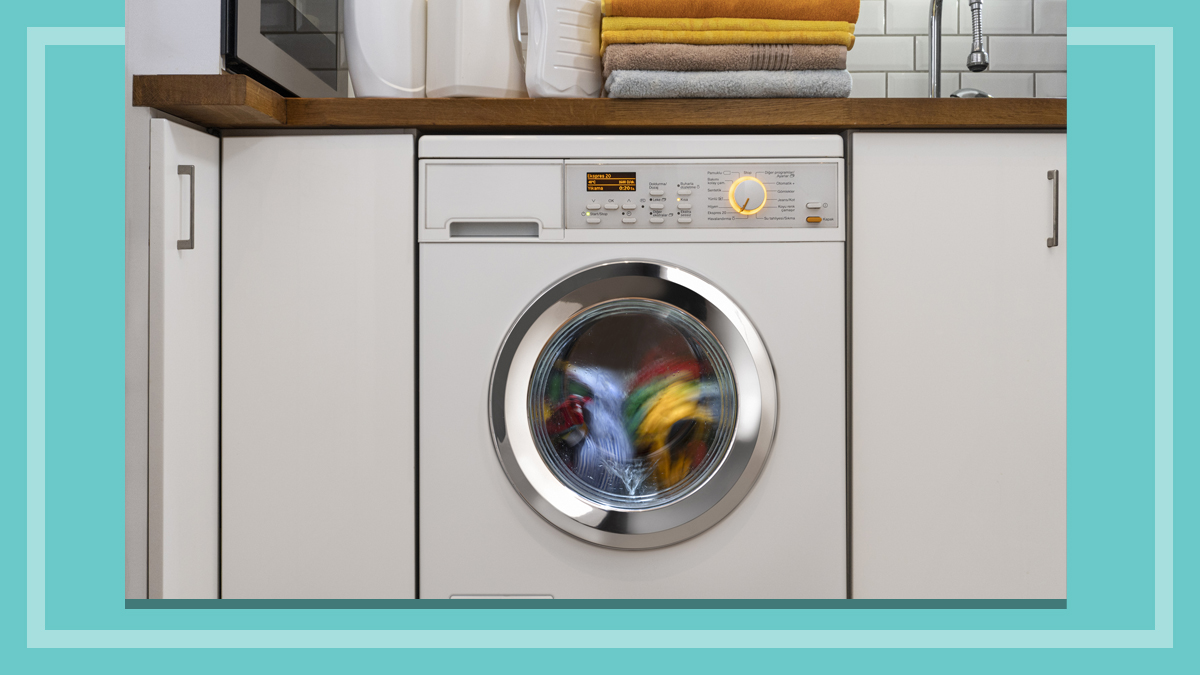
Washing machines are one of the hardest appliances to shop for. They’re a pain to transport, the market is flooded with complex jargon and enticing ‘innovations’ and, of course, there’s the decision-making stress that comes with any large, expensive purchase.
The good news is that a high quality washing machine will last a very long time, so choose wisely and you’ll have worry-free washing for many years to come.
Front loader or top loader?
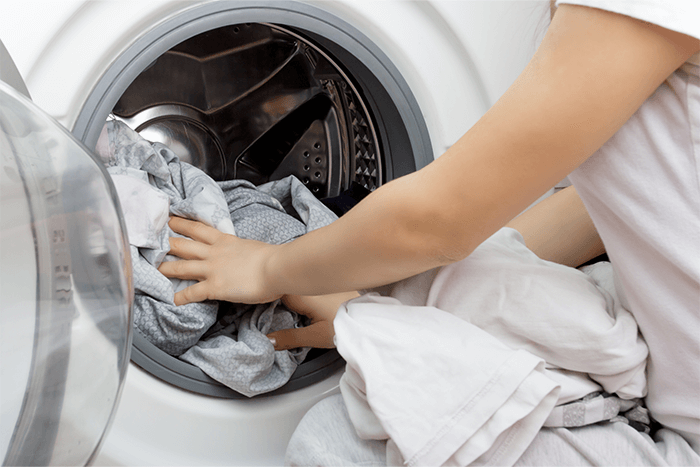
The first step in narrowing down your choice is to decide whether you’d prefer a front-loading washing machine or a top-loading washing machine. You might already have a preference based on your previous washer, laundry space, or even your mobility, but it’s always worth examining why one or the other might suit you best.
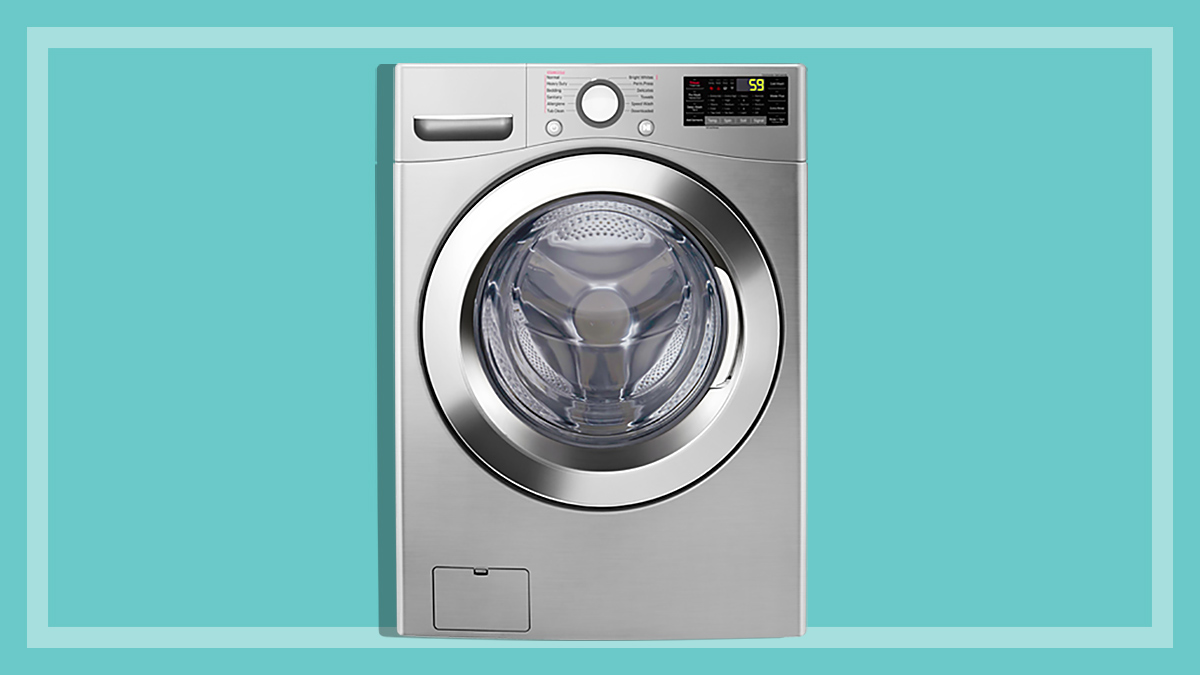
Front loader washing machines
Front-loading washing machines generally cost a little more than top loaders, but they perform better and use less water and energy. They work by gently turning your washing over and over in a tumbling action, picking it up and repeatedly dropping it into the wash water.
While it sounds harsh, they’re actually quite gentle on clothes. It also makes them better at handling unbalanced loads. However, the wash cycle often takes longer than a top loader because they use less water, though many front loaders have ‘fast wash’ cycles.
If you have solar hot water and wish to use it for washing, you need a washing machine with a hot water connection. Finding front loaders with a dual hot and cold water connection can be difficult as most have internal heaters.
Higher spin speeds, which means faster drying (and cheaper if you use a clothes dryer).
Best for small spaces – you can fit most under a bench or stack or wall mount a dryer on or above it.
Cons
Longer wash cycles – over three hours in some cases.
Difficult or impossible to retrieve keys, phones or other items left in pockets mid-cycle.
Generally more expensive to buy.
You often can’t add to the wash load after the cycle has started.
Heavy to move.
Some need special brackets if placed on a wooden floor.
Tend to have louder spin cycles.
Some may rinse poorly due to their low water usage.
Top loader washing machines
Top-loading washing machines are generally cheaper to buy, weigh less and wash a lot faster than front loaders, but they use a lot more water, are harsher on your clothes and as a rule don’t wash nearly as well.
Unlike front loaders (which use gravity to wash your clothes), top loaders use a lot of water to float your clothes, and either an agitator or impeller to move them about and wash them. Agitators remove dirt quickly, but can be rough on clothes, while impellers tend to tangle clothes more than agitators, which means they go off-balance more frequently.
Impellers also generally use more water and energy than agitators, making them more expensive to run, but they take up less room so you may get more capacity in a smaller appliance with an impeller.
Pros
Tend to be more reliable than front loaders.
Shorter cycle times.
Generally cheaper to buy
Lighter and easier to move.
Easy to add clothes once a cycle has started.
Easier to retrieve forgotten items like tissues, keys and phones from pockets mid-cycle.
Generally better rinse performance.
Cons
Generally harsher on clothes.
Use more water than front loaders.
Use more energy than front loaders when washing in warm water.
Use more washing detergent.
Cost more to run.
Washer dryer combos
As the name suggests, washer dryer combos combine both a front-loading washing machine and a clothes dryer in a single appliance. It seems like a great idea, but they can be expensive, more prone to breakdowns, and many of them take a very long time to dry a load of clothes.
Some of them even use more water to dry your clothes than to wash them (sometimes a lot more – up to 210 litres!).
While washer dryer combo technology is improving, you’re better off with standalone appliances unless laundry space is really tight, or you’ll only use the dryer as a last resort.
Capacities range from about 5kg to over 18kg, so you should have no problem finding the right sized machine for your household. While larger machines are great for big households or for washing bulky items like bedding, you may not need as big a washing machine as you think. Most of us only wash about 3.5kg of clothes (roughly a full laundry basket’s worth) at a time, regardless of the capacity of our machine.
You can measure how much you wash in a typical load by jumping on your bathroom scales, then picking up your full basket of laundry and jumping back on. Calculate the difference and use this figure as a starting point to work out what capacity washer you actually need.
Cycle time
Top loaders are generally faster than front loaders, partly because front loaders use less water. If you prefer a front loader, look for one with a ‘fast wash’ cycle – but this may not be suitable for very full or heavily soiled loads, no matter how much of a hurry you’re in to get the washing on the line. You should also factor in drying time. With a higher spin speed, front loaders extract more water so your drying time can be shorter, saving you money if you also use a dryer.
Where will the machine go? How much space will you need in order to open the door or lid, load and unload the machine, move around with your laundry basket and open and close any doors to the laundry space itself? Is access to a powerpoint or taps restricted at all? If your new washing machine needs a hot water inlet, is one available? Get the measuring tape out, write dimensions in a notebook (including the dimensions of your current machine) and have them with you when you shop.
If you’re tight on laundry space then you may find a front loader is a better option, as you can more easily stack or wall-mount your dryer above it, or the top surface can double as a work space. The majority of front loaders are also designed to fit in a standard kitchen cabinet space, so they can also be installed under a benchtop.
Noise
As a general rule, front loaders are louder and higher pitched than top loaders due to their faster spin speed. If your laundry is close to your living area this can be a big deal, so consider this in your decision – you can compare noise levels in our washing machine reviews.
Front loader washing machines tend to have more programs and higher temperature options.
Hot and/or cold water connections
Some machines need both hot and cold water to operate correctly, or may need a special connector or a sealing cap for the hot water inlet if you want to connect it to cold water only. A machine with a heater (front loaders only) can be particularly useful if you only have a cold water connection, as it still gives you the option of a warm wash should you need it.
For dual-connection models, many manufacturers recommend a lower maximum temperature than most hot water systems deliver – particularly solar hot water systems. You may need a tempering valve to reduce the temperature. Counter-intuitively, washers without hot water inlets will actually give you a greater range of temperature options as they’re not limited by your household hot water system’s 65°C maximum temperature.
Stains are often set by hot water, so a cold-water fill and slow heat up to optimum wash temperatures helps the stain removal process. Well designed dual-connection washers should fill with cold first then add the hot water.
Child locks
Some machines have a ‘child lock’ function – this could be on the door to the washer so it can’t be opened mid-cycle, or a program that can’t be changed during a cycle.
In a house with children it’s worth activating the door lock when the washer is inactive, although sometimes manufacturers recommend keeping front loaders partially open due to potential mould growth in the rim of the washer. If you’re worried about curious kids playing with the washer, you might want to look into a child safety gate for the laundry.
Ease of use
Consider the following when you’re comparing washer models instore.
Is the labelling on the controls clear?
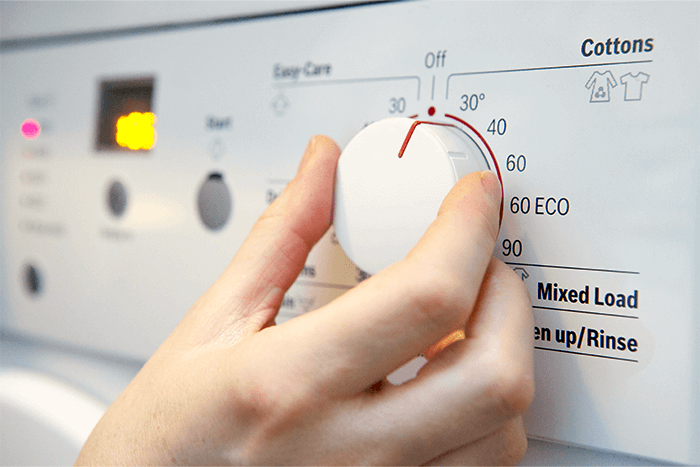
Is the program selection straightforward and intuitive to set?
Does it have the features you need?
Will you actually use all the fancy features of a high-end model?
Is the lint filter (top loaders only) easy to clean?
Are the detergent and fabric dispensers easy to use?
Modern washing machines come with a bewildering array of features and technology. While many of them will give you better washing performance, don’t pay extra for fancy features you’ll never use.
Auto-sensing water level
This feature can help you save water, energy and time as the machine automatically adjusts the water level according to the size of the load and/or fabric type. Some machines also claim to adjust the washing action to suit the load size. We’ve found these can be less effective than we expect. Check the ‘water label’ column (the manufacturer’s claim) against the ‘water used’ column in our washing machine test results to see how effective this is.
Delicates, or ‘hand wash’ programs
Some machines have an extra-gentle wash cycle for garments labelled as only suitable for hand-washing – including woollens, silk and cashmere.
Selectable spin speed
You can change the spin speed on some programs. Higher spin speeds extract more water from your clothes, reducing drying time (and saving you money if you use a dryer). Alternatively, you might want a lower speed for delicates or easily creased fabrics. The higher the spin speed, the more likely your clothes will be very stiff and the flatter the pile of your towels when they come out of the wash, requiring a quick shake or two to straighten them out a little before drying.
Extra rinse
An extra rinse can be useful if your wash hasn’t removed all the detergent, leaving white marks behind. Some washers have it as an extra run added to the end of a program, or as a simple single run (‘rinse and spin’) once the primary program is finished. Some can also do a spray-rinse only (‘water saving’), or a deep rinse. An extra rinse can be especially useful if you have sensitive skin and find your detergent is causing a reaction as it helps to minimise any residual product.
Fast wash
Designed for lightly soiled and/or small loads, a fast-wash option (also referred to as ‘fast’, ‘quick’ or ‘rapid’) reduces the length of the selected program or is a faster cycle in itself. Just how ‘fast’ it is can vary from machine to machine. Fast-wash programs are great if you’re in a hurry to get the washing done, but may not be suitable for large or heavily soiled loads.
Most of us only wash about 3.5kg of clothes (roughly a full laundry basket’s worth) at a time, regardless of the capacity of our machine.
Out-of-balance correction
This feature automatically detects and redistributes an out-of-balance load, which can interrupt a cycle mid-wash – either by spinning slowly before the full spin cycle, or by taking in more water, which is what many top loaders do. If you’re concerned about high water usage, opt for a machine without this feature, or go for a front loader.
Anti-crease
If you want less ironing in your life, a permanent press or ‘anti-crease’ cycle, designed for easily creased or pleated fabrics, can make your ironing easier. Anti-crease works in various ways, including: not draining the last rinse water (‘rinse hold’); not spinning after the last rinse water is drained (‘spin hold’ or ‘drip dry’); gradually reducing the rinse water temperature after a warm or hot wash; or, with some front loaders, continuing to tumble the clothes at the end of the program.
Internal water heater
Most front loaders have a heater that allows a connection to cold water only while still giving you the option of warm or hot washes. Top loaders generally don’t have a heater, so need a connection to both hot and cold water taps. A washing machine with an internal heater gives you more (and hotter) temperature options, and more flexibility in where to put your washing machine as you don’t need a hot tap, but means you can’t take advantage of free solar hot water if you have it.
Favourite program
Some washers have a feature that allows you to program your preferred wash option (‘favourite’ or ‘memory’) for future use at the touch of a button.
Wi-Fi connectivity
This allows you to monitor the progress of your wash and receive a notification when it’s finished, download additional wash programs, and manage your washing machine remotely via the manufacturer’s app. We’re not sure how useful this is – you still have to load and unload the clothes yourself.
Automatic detergent dosing
Many high-end washing machines can now handle the detergent dosing for you, measuring and dispensing either proprietary or your preferred brand of liquid detergent from an onboard tank or reservoir. This is great for reducing mess in the laundry and allows the machine to select the right detergent dosage for the wash at hand, but this feature does come at a cost, so if you’re not going to use it, don’t pay for it.
Lint filter
Top loaders, because they’re less gentle on clothes, can generate a lot of lint, so they incorporate lint filters to capture it. Many machines now have self-cleaning lint filter systems, while others use the traditional mesh trap in the wash drum that you have to clean manually. Front loaders typically don’t need lint filters because they’re gentler, but they will have a trap filter for those coins that fall into the washer. Our washer test results list the models that have lint filters.
All washing machines have to carry a label that shows their energy rating. This is written as a series of stars, plus a number that tells you the overall kilowatt hours per year (kWh/per year) it uses to run.
More stars means a more energy-efficient machine. However, you can only compare star ratings between machines of the same capacity. A bigger machine may well have more stars than a smaller one (because there are energy savings inherent in a larger load), but it will probably use more power overall in a year.
Washers with both hot and cold intakes and no internal heater (typically top loaders) will include an estimate of the energy your home’s hot water service will use to heat your wash water in this figure as well as the energy used by the washing machine itself, so you can more readily compare internal heater and non-internal heater washers.
To calculate the annual running costs of your machine, multiply your electricity rate (for example, 40c) by the washer’s kWh (for example, 600kWh). Using the example figures, the machine’s running cost is $180 for the year.
There are more ways you can save energy and water. Check out our energy-efficient washing article for tips and advice.
Australia’s best washing machine brand
So which brand of washing machine should you buy? We’ve identified the best of the bunch based on our test results and feedback from our members on satisfaction and reliability.
CHOICE has tested over 140 front- and top-loading washing machines over the past six years in our labs, covering much of the $700 million annual market in Australia. We see great washers, as well as some lemons.
Best front-loading washing machine brand for 2025: Miele
This year, Miele receives the Best Brand recommendation for front-loading washing machines.
Miele front loaders have performed consistently well, scoring an average of 74% for their CHOICE Expert Rating in our tests, and 7 out of the 10 models we’ve tested in the past six years score high enough to be recommended. CHOICE members also thought Miele was excellent in terms of its product reliability.
Best front-loading washing machine brand 2025 scores
Miele – 82%
LG – 80%
Bosch – 77%
Samsung – 73%
While Westinghouse front loaders performed well in our testing, their reliability score was low and we have not reviewed enough models for them to qualify for Best Brand.
To find out which specific models we recommend based on our test results, and to make sure you buy the best, you can filter the results by choosing ‘Recommended’ from the dropdown menu of our washing machine reviews.
What are CHOICE Best Brand recommendations?
The Best Brand recommendation for washing machines is based on our test results for washing machines over the past six years, as well as reliability information submitted by CHOICE members on their experiences with the brand.
We calculate a brand’s reliability score based on our survey of 1452 respondents who owned a washing machine in 2023.
The recommendation is given to companies with a clear lead over their competitors during the test period, and no more than two recommendations are given during each period.
Best Brand eligibility is tough – to be considered, we must have tested a minimum of five models, and a brand must have received a minimum of 50 responses to the CHOICE member survey. Additionally, brands must score a minimum of 60% and be above the average score for average test score and reliability for consideration.
How we calculate the best washing machine brand
The following criteria determines the Best Brand recommendation.
Average test score – 40%
Brand reliability – 50%
Recommended ratio – 10%
Average test score
This calculates the average score for all models tested in the CHOICE labs for each brand. Our testers assess dirt removal, rinse performance (how well the washer removes detergent), water efficiency, spin efficiency (how much water it removes from the load, meaning it takes less time to dry) and gentleness (how rough on your clothes the washing action is).
Brand reliability
Our CHOICE customer insights team surveyed several thousand members about whether they’ve run into any problems with their washing machine in the past 12 months.
Recommended ratio
This calculates the percentage of the washing machines that CHOICE recommends for each brand. The greater the number of models that earn a recommendation, the higher the recommended ratio score.
Recommended models
We recommend front loaders with a CHOICE Expert Rating of at least 70%, a score of at least 75% for dirt removal and no other score below 60%, and top loaders with a CHOICE Expert Rating of at least 70% and a score of at least 75% for dirt removal.
Previous Best Brand washing machine winners
Front loader washing machine
2024 – Miele
2023 – Miele
2022 – Miele
2021 – Miele
2019 – Miele and LG (joint winners)
2018 – Miele
Top loader washing machine
2024 – LG
2023 – LG
2022 – LG
2021 – LG
Text-only accessible version
Best front-loading washing machine brand 2025: Miele
Best top loader washing machine brand for 2025: LG
LG is the best top-loading washing machine brand for the past 12 months.
Although front- and top-loading washing machines have a common purpose – to get your clothes clean – they’re very different appliances, and perform very differently (front loaders consistently outperform top loaders in our test – they’re just a better design). Because of the different thresholds of performance, we evaluate them separately, both for CHOICE recommendations and for Best Brand.
LG top loaders on average outperform competitors by a strong margin in our testing, and over the past six years we have recommended 56% of models we’ve tested in our labs. In addition, LG was the only top loader brand to be eligible for the Best Brand title across all scores and requirements, earning a Best Brand score of 78% and a reliability score of 89%.
Most reliable washing machine brand image for 2023: Bosch
Australia’s most reliable washing machine brand
We sent out a survey to 1452 respondents who own a washing machine to find out which washer brands are the most reliable.
Our CHOICE survey team queried members about whether they’ve run into any problems with their washing machine in the past 12 months. We also take into account the age of the products so we can compare fairly between brands.
Text-only accessible version
Most reliable washing machine brand 2023: Bosch
Bosch: 90%.
LG: 88%.
Samsung: 87%.
Miele: 86%.
How do you find out which washing machine is the best?
If you’d like more info on how specific models perform, you can check out CHOICE’s washing machine reviews and product profiles. The testing process is scientific, detailed and rigorous, and you can use our online tools to compare machines and see which ones:
Matthew Steen is the Director of Reviews and Testing, which conducts all the testing for CHOICE. He has had a long and storied history in the consumer movement.
Matthew is driven to work at CHOICE for its constitutional mission and its dedication to making Australia more fair, safe and just.
Matthew represents CHOICE as a council member on the Standards Australia Council. He is also responsible for CHOICE lowering its environmental footprint.
Find Matthew on LinkedIn.
Matthew Steen is the Director of Reviews and Testing, which conducts all the testing for CHOICE. He has had a long and storied history in the consumer movement.
Matthew is driven to work at CHOICE for its constitutional mission and its dedication to making Australia more fair, safe and just.
Matthew represents CHOICE as a council member on the Standards Australia Council. He is also responsible for CHOICE lowering its environmental footprint.
Find Matthew on LinkedIn.
For more than 60 years, CHOICE has been fighting the good fight for Australian consumers.
In the past year alone we've uncovered systemic issues with sunscreens, investigated shonky supermarket pricing, fought for stronger scam protections and helped make complex energy pricing fairer and clearer.
CHOICE is here to provide unbiased advice and independent testing in our world-class labs. We buy the products we test, just like you do, and our expert reviews are influence free. We’re here to help you choose smarter. Hopefully you’ll also save some money along the way.
Thanks to CHOICE, you’ll never be alone when a business treats you unfairly. You can support our work by joining or donating to our cause.