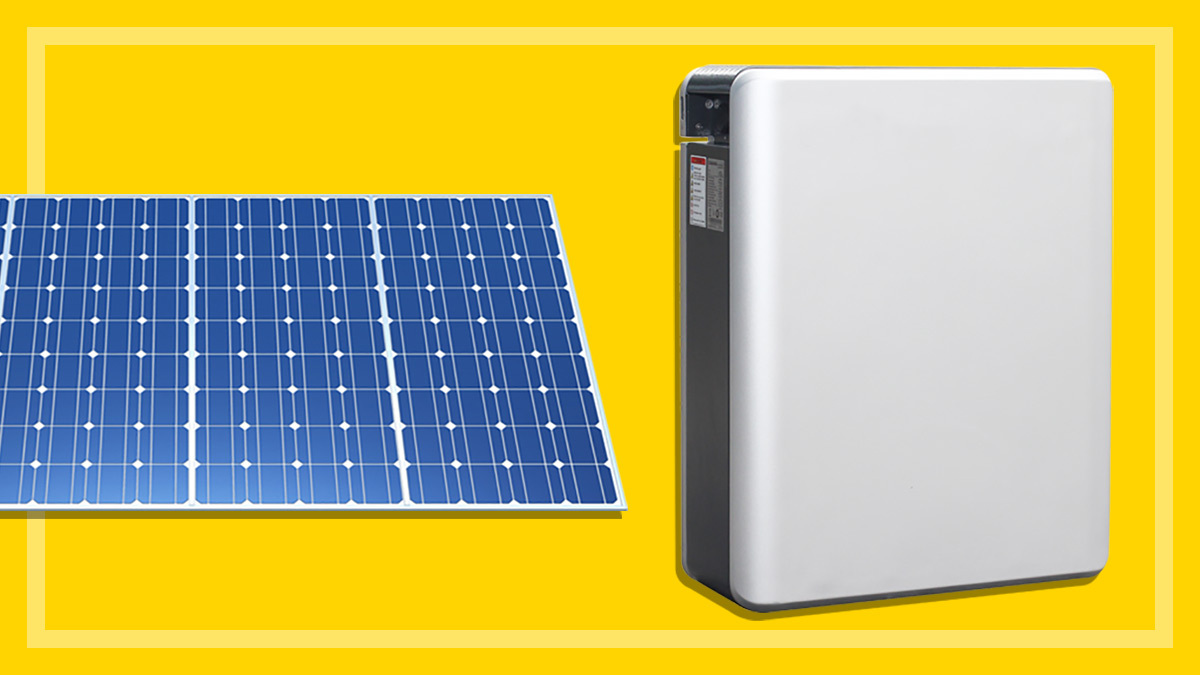
If you want to join the 20% of Australian households now generating
electricity on their rooftops, we’ll show you how long a 5kW rooftop solar
system could take to pay for itself through reduced power bills.
Calculating a payback period is complicated and looks at your electricity
consumption patterns, location, energy tariffs and solar feed-in tariffs
(FiTs), and the cost and quality of your system. Use our figures as a guide
only.
Despite government rebates and incentives being wound back, the price of a
5kW solar system has fallen by around 58% in the last six years. Subsidies
to stimulate the industry are no longer necessary and high energy prices
make the case for investing in solar stronger.
These are the average, quoted, out-of-pocket costs for standard installations (i.e. no special equipment or circumstances), including GST and the federal STC (small-scale technology certificate) rebates.
Commercial solar brokering service Solar Choice puts the average price across Australian capital cities for a 5kW system at $5250.
CHOICE tip: A 5kW system is one of the most popular sizes at the moment and will need about 25–35 m2 of sunny north or north-west facing roof area to accommodate 15 to 20 panels.
.
Why we've partnered with SolarQuotes

We've partnered with SolarQuotes to help you find and buy the right solar, battery, heat pump and EV charger. While we make money if you use SolarQuotes to find an installer, this doesn't influence our ratings. 100% of the money we make goes directly back into our nonprofit mission.
Payback times for a 5kW system in each capital city
Accurately predicting the time it takes for an investment in solar
PV to pay off isn’t straightforward, so we asked the independent Alternative Technology Association
(ATA) to calculate approximate payback times for a 5kW solar system in each
capital city.
They provided time frames for households with high daytime solar power
usage (50% exports) and for those with low daytime usage (75% exports).
In most cases, the results will be similar for the rest of the state except
where available sunshine differs.
Available sunshine hours make a big difference
Available sunshine hours affects
the payback times in two ways. As Dean Lombard from the ATA explains:
The more sunshine, the more solar generation which offsets grid electricity costs.
The higher the potential solar generation, the more STCs which brings the upfront, out-of-pocket costs for the system down.
Snapshot of payback rate for a 5kW system across capital cities
The following statements relate to households that export 75% of their
solar generation back to the grid, which is typical when people are not at
home most days of the week.
Adelaide’s plentiful sunshine, low system prices, good FiT rates and very
high electricity prices mean the payback period is short at around three
years.
Perth’s low out-of-pocket system costs mean a relatively short payback
period of about five years.
Brisbane and Sydney have similar payback periods of around five years.
Darwin’s high system costs (due to its remoteness) are offset by the very
high FiT of approximately 26c per kWh giving it a mid-range payback period
of approximately five to six years.
Canberra has low systems costs and low energy prices but also low FiTs. Its
payback period is approximately six years.
Melbourne has a payback period of around six years. It has mid-range system
prices and lower than average retail electricity prices, but fewer available
sunshine hours.
Hobart has relatively high electricity rates but less available sunshine
and thus lower generation and fewer rebates. This means it has the longest
payback period of around seven years.
Figuring out your household payback times – it’s complicated!
If you’ve already looked at prices for solar PV systems, you may have
noticed large variations between the advertised payback times for panels.
Some are much shorter than others, but tend to ignore plenty of potential
costs and changes. For example, no allowance may be made for the decline in
the panels’ output over time.
Payback times will vary depending upon:
available sunlight hours – this influences productivity of the system and the amount of rebates
electricity prices combined with FiTs
the cost and quality of the system
how much solar power is self consumed (the more the better)
positioning of the panels and issues with the site.
“Some in the PV industry are far too simplistic about these calculations – they’re being misleading,” says Damien Moyse, energy projects and policy
manager for the Alternative Technology Association.
“They’re experts in solar energy, but not necessarily in the calculations
around FiTs, self-consumption patterns, or the variable generation or
export amounts at different times of year.”
CHOICE tip: Payback times will differ with each
household and you should investigate with your own inputs.
The ATA has a free Solar and battery advice
tool if you’re thinking about installing a solar system. You enter your household type and location, and choose a
budget range. You’re then emailed a report showing the solar-only and solar
plus battery systems in your budget. The report lets you compare cost, bill
savings, environmental benefit, and payback period.
Financial incentives for solar owners
Previous government grant and rebate systems have been replaced by the
small-scale technology certificate (STC) scheme and FiTs.
1. Small-scale technology certificates (STCs)
Under the Federal Government’s
Small Scale Renewable Energy Scheme
, eligible households receive money for small-scale technology certificates
(STCs).
One certificate is equal to one megawatt hour of eligible renewable
electricity generated by the solar PV system over a deeming period. You can
claim the certificates your system can potentially earn over the next 13
years upfront. This period will decline by one year, each year, until the
scheme ends in 2030.
You can calculate the number of certificates a system may be eligible for
using the
Small Generation Unit STC calculator
. The price you get for each STC is likely be close to $36 as of June 2018.
2. Feed-in tariffs
This is the rate you’re paid for electricity that grid-connected panels
contribute to the local network. All FiTs in Australia are net feed-in
tariffs.
Feed-in tariffs pay for your surplus electricity fed into the grid. For
example, if your system produced 3000 kWh of solar electricity, and you
used 1000 kWh of that in your home while it was being generated (during the
day), the net FiT is paid for the 2000 kWh difference that is sent to the
grid.
Warning: Beware deceptively high FiTs. High FiT rates on your electricity deal mean more money for your exported
solar but it doesn’t always equate to a good deal if the deal also has high
electricity tariffs.
Want to get a faster payback time?
You can increase the savings from your solar system and lower the payback
time by increasing the amount of solar power that you
consume onsite
and avoiding importing expensive electricity from the grid.
FiTs for the solar
electricity you export are lower than the price per kWh we pay for
electricity imported from the grid.
The ATA used flat rate solar FiTs in the calculations however it’s worth
highlighting that Queensland, Victoria and New South Wales are introducing time-variant FiTs
(FiTs) where different prices are paid for exported solar at different
times of the day.
Until now, only flat rate FiTs have been on offer in those states. Minimum
prices are mandated in Victoria and Queensland, but only recommended in New
South Wales.
Dean Lombard says estimating the payback period of a solar system with
time-variant FiTs requires a more complex calculation based on the
electricity deal and the tariffs, specific information about a household’s
energy usage patterns and the design and orientation of their solar system.
The best time-variant solar FiTs so far is the one in Victoria, says
Lombard.
“The standard time-variant FiT in Victoria will shorten payback times
compared to the standard single-rate FiT because even its shoulder price
(10.3c per kWh) is higher than the flat tariff (9.9c per kWh), and its peak
price is really high (29c per kWh).”
But in Queensland and New South Wales, Lombard says time variant tariffs
may not be beneficial. It depends on orientation and time of consumption
because the differential between time periods is smaller and time-variant
rates are lower than the flat rate FiT.
ATA’s modelling shows that in Queensland, typical households would need
almost half of their grid feed-in to occur during the peak period of 3-7pm
to benefit.
New South Wales’ new recommended time-variant FiT is complex and the ATA
advises it can’t predict its impact on payback time without detailed,
household specific modelling.
Assumptions: how the ATA calculates
The calculations assume a system size of 5 kW.
System costs are fully installed out of pocket costs using average prices for each capital city (source: Residential Solar PV Price Index
).
Retail energy product used is AGL Savers market offer for all cities except Hobart, Perth, Darwin which have no retail choice. It includes a pay-on-time discount but no other discounts. (See table below.)
FiT rate is based on regulated rates or that applicable to the relevant retail offer. It aligns with typical mid level FiT rates in states with a range of FiT rates. (See table below.) They do not account for time-variant FiTs.
The electricity export rates assume households export either 50% or 75% of the electricity they produce, with 50% export plausible for households with considerable daytime energy usage (e.g. where people are generally home or appliances are set to operate during the day) and 75% exports typical for households with low daytime energy usage.
Annual generation for each location is calculated considering available sunlight for each area, as well as panel degradation and generation losses.
The annual increase in retail electricity price and FiT rate is assumed to be 2.5%.
The opportunity cost of money that could have been invested instead is 2.5%.
The payback times are approximate for typical households in capital cities. Individual payback times will vary depending on household energy usage patterns, energy prices or difficult installations and available sunshine hours. Allowances should be made for the differing decline in panels’ output over time and non-optimal placement and angle.
ATA’s assumed electricity and FiT rates
City
Electricity price
FiT
Adelaide
37c/kWh
16c/kWh
Brisbane
21c/kWh
11c/kWh
Canberra
19c/kWh
8c/kWh
Darwin
26c/kWh
26c/kWh
Hobart
26c/kWh
9c/kWh
Melbourne
21c/kWh
11c/kWh
Perth
26c/kWh
7c/kWh
Sydney
24c/kWh
11c/kWh
(As at June 2018)
FAQs
Dean Lombard, Senior Energy Analyst from the ATA answers some frequently asked questions.
Why do the payback times promised by installers end up being inaccurate?
Payback calculation is complex, with 15 or more variables and a number
of assumptions which may be different to your system and usage.
The most accurate calculations on what you will save on energy bills rely
on: your energy consumption data for the past 12 months; your seasonal
consumption during solar generation times; and generation data for
different-sized solar systems in your location.
Can suppliers be held to their payback times promises?
Suppliers should give you a range for the amount your electricity bill
will go down, but may have disclaimers on their websites or in their terms
and conditions saying you need to get specific financial advice for how it
will affect your property, and that these are just generic estimates.
Is bigger better?
Yes. We used to recommend that systems be carefully sized to maximise
self-consumption and minimise exports to the grid.
But the price of solar systems has come down so much in the last few years
– especially larger systems – and feed-in-tariffs have also come up a bit.
Now, in almost every situation we’ve encountered, oversized systems reach
economic payback as fast as or even faster than right-sized smaller
systems. This means that the best economic result usually comes from the
biggest system you can afford and fit on your roof, regardless of your
usage. Even on unoccupied buildings, solar systems generally pay themselves
off through feed-in-tariffs well before the end of their life.
Is there an environmental reason to export energy into the grid?
Yes. Solar generation you export to the grid is used by your neighbours,
substituting for electricity that would otherwise be generated from other
sources – usually coal or gas. This is another benefit of oversizing a
solar system: all that extra generation being exported to the grid
increases the proportion of emissions-free renewable energy in the mix.
There is an environmental cost to manufacturing the solar cells themselves,
but this is quite small compared to the capacity and lifespan of modern
solar cells, and is offset by the system’s generation within the first year
or two.
Are there any particularly good or bad brands out there?
A brand will have models that are good and others that aren’t. You can
tell a decent piece of equipment by the warranty a manufacturer is willing
to offer. Panels are really quite simple technology, so you should get a
25-year warranty with 80% level of output in the 25th year. The inverters
are more critical: if you have a poor inverter you may have losses through
the system, and you don’t want to replace your inverter early. A 10-year
warranty for an inverter should ensure you’ll get a decent-quality system.
Are prices going to come down even more?
A few years ago it seemed that solar system prices had come down as far
as they could but then they kept getting cheaper. The rate of price change
has slowed down but all indications are that prices should continue to
fall.
For more than 60 years, CHOICE has been fighting the good fight for Australian consumers.
In the past year alone we've uncovered systemic issues with sunscreens, investigated shonky supermarket pricing, fought for stronger scam protections and helped make complex energy pricing fairer and clearer.
CHOICE is here to provide unbiased advice and independent testing in our world-class labs. We buy the products we test, just like you do, and our expert reviews are influence free. We’re here to help you choose smarter. Hopefully you’ll also save some money along the way.
Thanks to CHOICE, you’ll never be alone when a business treats you unfairly. You can support our work by joining or donating to our cause.