How to start your own vegetable garden
Save money by growing your own fruit and vegetables at home.
Last updated: 5 Apr 2022
Starting an edible garden isn’t hard – it just requires time, good advice and common sense. And if you choose your plants wisely, growing even just a few of your own vegetables can help offset the relatively high cost of buying them from the grocer or supermarket.
On this page:
CHOICE member Matt De Britt estimates his mini-farm on the NSW Central Coast has saved him and his wife $1800 a year in fresh vegetables and eggs. And while not everyone has the kind of backyard space for a self-sustaining vegetable patch with a chook pen, you may be surprised at what you can do with the space you do have.
Cost-effective vegetables
When choosing what to grow, have a plan and research which plants will work for you and your area. It’s a good idea to start with seasonal planting – a gardening calendar will help you work out which vegetables and fruits grow in which months, and when to harvest depending on where you live. Succession planting, or staggering the sowing of your seeds, will ensure a continuous supply of vegetables (instead of them all coming in at once!).
Tips for choosing cost-effective fruit and vegetables
- Grow plants that give multiple crops and are high yielding. For example, a bean seed will give you many crops over a season, whereas planting a cauliflower will just give you one pick and can take four months to mature.
- Choose crops that grow quickly such as radishes, lettuces and spinach. It means you can turn over what you’re growing very quickly.
- Grow plants with long yields such as green leafy vegetables like perpetual spinach and silver beet. Heirloom varieties of fruit and vegetables also tend to have longer yields, maximising your harvest.
- Choose crops that aren’t too resource-intensive to grow (for example use a lot of water) and that are less susceptible to pests, such as an heirloom variety.
- Choose vegetables that you like to eat, that can be easily stored or preserved, and that are expensive to buy at the shop.
Some of our picks for the most cost-effective vegetables to grow are:
- Herbs last longer on the plant. Having them on hand is a great way to save on buying a fresh bunch every time you need just a small amount.
- Lettuce can be expensive to buy and it doesn’t take long for it to go bad. Cut-and-come-again varieties will save you from wasting food, as well as make your salads more nutritious and delicious. Sprouts are also easy to grow indoors.
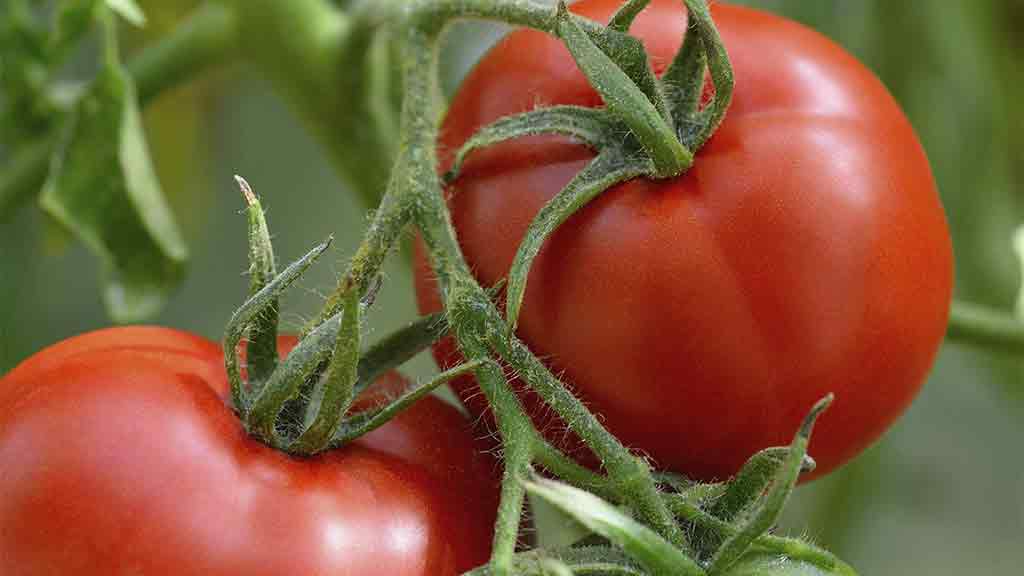
- Cherry heirloom tomatoes can be as much as $7 at the supermarket so growing your own is a good option. Cherry tomatoes also grow quicker than the larger varieties so there is less time for them to be eaten by bugs. Heirloom varieties will also have longer yields.
- Climbing beans are great for small spaces and give multiple crops.
How composting works
Composting is a way of recycling your organic waste – such as vegetable scraps and leaves – by mixing them in a compost bin and leaving them to break down naturally. The end product is a brown-black substance that looks like soil and is rich in nitrogen.
It’s a great way to improve your soil, as it helps build structure and retain moisture and provides nutrients for all types of soils. Local councils often run free composting workshops, which are good for getting started.
Composting tips
- If your compost bin smells, add more dry material such as newspapers or leaf litter.
- Avoid meat scraps, as they attract vermin.
- To accelerate the composting process, add air by turning it over with a fork.
- For those who are space-poor but still want to take advantage of the fertiliser available to you in your food scraps, try a worm farm or bokashi bucket.
Worm farms
Worms decompose organic matter into worm castings which gives soil a nutrient surge. You can make a farm by using polystyrene boxes (instructions are on the internet or check with your local council) or buy one from your local council or hardware store.
Keep the farm in a cool, dry space. You can add everything, from banana peel to eggshells, but not citrus and onions as they’re too acidic for the worms, and do not add meat or twigs.
Bokashi buckets
By placing your kitchen scraps into these airtight containers and using a bokashi mix that contains micro-organisms, the food waste ferments. Food waste reduces in volume and bokashi juice, or fertiliser, is produced. The remaining food waste can then be buried in garden beds. Bokashi buckets can be kept indoors.
Chickens
If you’re really keen and have the space, keeping chickens is a way of getting fresh eggs every morning as well as using up food scraps.
If you keep chooks, leave their manure out to dry or put it into a compost bin along with kitchen scraps and leaf litter, so it breaks down into organic, nutrient-rich matter. You’ll need to check with your local council if you can keep chooks in your area.
If you’re not sure chickens are right for you, try renting them. See citychicks.com.au in QLD or NSW. You will get the whole package – a coop, two hens, organic feed, a waterer, food and straw – but will be given a deadline to decide if it’s right for you. When we looked at pricing previously it cost $430 upfront, which includes a $330 deposit that will be returned if you decide not to keep the chooks.
Organic pest control options
Companion planting, or growing complementary plants near each other, acts as a natural pest control.
- Planting tomatoes and basil together is said to help protect the tomatoes as the basil’s powerful scent repels aphids.
- Grow climbing beans at the base of a sweet corn stalk. The corn’s stalk will support the climbing beans while the beans’ roots will transfer nitrogen from the air into the soil where it’s needed by the sweet corn.
- Onions and carrots boost the productivity of the soil beds as the roots of both plants use the nutrients at different soil levels. The pungent smell of onions is said to confuse pests drawn to carrots.
- Crop rotation, or rotating what you grow in your garden bed, also helps break the breeding cycles of pests and soil diseases.
Persistent garden pests can be controlled with homemade organic pesticides, such as ground chilli, garlic or coffee mixed with soap water. For snails, beer traps, sawdust or crushed egg shells are helpful, but often the best remedy is simply to pull them off yourself.
Pyrethrum is a natural insecticide that comes from the flower of the pyrethrum plants (related to the chrysanthemum) and is commonly used to kill aphids. Be careful if you’re making your own pyrethrum pesticide: it can cause allergic reactions until it breaks down under sunlight. You can also make your own white oil – for getting rid of scale and aphids – by mixing sunflower oil in diluted dishwashing liquid.
Inner-city gardening
For those living in the city, or an apartment, and are constrained by space, there are some options.
No-dig gardens
One option for city gardeners who have a small yard, or none at all, is the no-dig garden. The above-ground garden is created by laying newspapers, hay, fertiliser and compost until you achieve a raised garden bed. The organic matter rots down into a nutrient-rich soil. The idea is to create good soil content on any surface; you can even create a no-dig garden using just a planter box on your apartment balcony.
For small spaces, it’s good to choose plants that give you multiple crops from the same plant as well as climbing crops to maximise the vertical aspect. For example, climbing beans with leafy greens below and carrots underground maximises the use of the garden bed.
Community gardens
There are also more and more community gardens springing up. These are on public land and anyone can join to grow, maintain and harvest vegetables, fruits and flowers. Check with your local council or online to find your nearest one.
Generally, each garden has a communal plot as well as individual allotments, for which you’ll usually pay more in membership fees, ranging from $15 to $100 a year. At most community gardens, members work together and share harvests, but each garden has its own unique culture.
At the Angel Street Permaculture Garden in Newtown, NSW, interested members are taken on a formal tour of the garden and its culture before they join the group. The Veg Out community garden in St Kilda, Victoria, has a more informal approach to new members, who simply have to register, turn up and help out for three working bee days.
You can also connect to a wide range of resources, from seed distributors to farmers’ markets, through a community garden. Veg Out, for example, organises a farmers’ market on the first Saturday of every month.
Australian City Farms & Community Gardens Network
Where you can keep up with news and events on community gardens.
Diggers Club
One of the oldest and largest gardening suppliers in Australia. The 30-year-old organisation sells, online or by mail order, a large range of heirloom seeds for vegetable, herbs, fruits and flowers. There are free online articles, and check out its free seed catalogue Garden Annual to find out how to grow what and when, such as different species of potatoes, tomatoes and corn. Members receive quarterly catalogues and discounts on seeds.
Gardening Australia
The online version of the ABC TV program is an indispensable and practical online guide for gardeners. You can find everything from how to make a no-dig garden to how to make your own organic pesticides and fertilisers.
Seed Savers
Local networks of gardeners who save and exchange their seeds for free to promote diversity and preserve local varieties of useful plants.
The Vegetable Patch
An easy-to-understand guide for beginners, and has details on how to grow anything from beans to zucchini.
Yates Garden Guide
One of the oldest gardening guides in Australia. Now in its 43rd edition, it was written in 1895 by Arthur Yates, who had left the UK to escape the damp weather, when he saw the need for a basic publication that answered gardeners’ questions.