When you’re buying steak you’re likely to be bombarded with terms like “grain-fed”, “grass-fed”, “organic”, “aged”, “marbled”, “wagyu” and “Angus beef”. They all sound fancy, but what do they mean? Cuts of meat with these claims also tend to carry a premium price tag, so you want to make sure they’re worth the extra money.
If you shop at a premium butcher instead of a supermarket you’ll be expecting top quality, but this might not always be the case. Knowing what you need and what to look for is a better guarantee of quality than simply paying more at a premium butcher.
Jargon buster
Grain-fed vs grass-fed
All cattle are grass-fed at the beginning of their life cycle (up to two years).
In the final months, grain-fed cattle move onto a feedlot for at least 60 days and are fed a nutritionally balanced, high-energy, grain-based feed. This feeding regime results in a consistent meat and fat colour, often with high levels of marbling. Certification for grain-fed beef is administered through the National Feedlot Accreditation Scheme and audited by AUS-MEAT.
Grass-fed (or pasture-fed) cattle are raised on open grazing land with access to water and supplemental feed of mixed grasses. Many experts and steak-lovers say the taste of grass-fed steak is more natural. It’s also the more environmentally friendly option.
Organic and free range
Organic meat must comply with the National Standard for Organic and Bio-dynamic Produce. All organic beef is grass-fed and will not have been raised on genetically-modified feed, or feed produced with synthetic pesticides. The meat is free from growth-promoting hormones or steroids. Understandably, it is expensive to produce and usually comes at a premium price.
For many years, beef and lamb in Australia were all ‘free range’. No matter how big the operation, the animals roamed free, grazing on the wide open spaces. These days cows and sheep raised in feedlots are more common. See our article on free range meat labels for more.
Angus
Angus is a cattle breed developed in Scotland in the late 1700s. Its meat has a smooth, close-grained texture, carnation-red colour and finely marbled fat within the lean muscle.
Wagyu
Wagyu is a group of cattle breeds from Japan, more likely to be grain-fed and genetically predisposed to intense marbling (higher fat content). It also has a higher percentage of the healthier unsaturated fat than any other cattle breed in the world. Considered a luxury food, the best cuts can cost up to $250 per kilo.
Which cut?
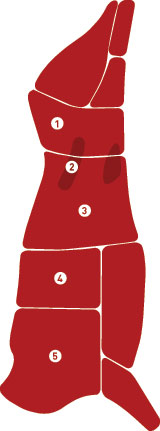
Not only will you need to work your way through all the jargon, you’ll have to choose between the different cuts – rump, eye fillet, sirloin, scotch fillet, blade and T-bone (eye fillet on the smaller side of the bone and sirloin on the larger side).
So which cut is best for your cooking method?
WHICH PIECE OF MEAT IS BEST FOR WHICH PURPOSE?
Oven roast
Pan- fry
Stir- fry
Grill/
char-
grill
Braise/ casserole
Shabu- shabu*
BBQ
1. Rump
•
•
•
•
•
•
•
2. Eye fillet
•
•
•
•
•
•
3. Sirloin
•
•
•
•
•
•
4. Scotch fillet
•
•
•
•
•
•
5. Blade
•
•
•
•
•
•
•
3. T-bone **
•
•
•
* Shabu-shabu is a Japanese variant of hot pot
** T-bone – Eye fillet on the smaller side of the bone and sirloin on the larger side.
How to pick a good steak
Fine texture and firm to touch
A piece of steak that holds its structure well is ideal. Meat shouldn’t feel slimy and if there is blood it shouldn’t be firm or gelatinous.
Bright cherry-red colour
Vibrant colour indicates freshness. Some meat might appear brown if other items have been resting on it. This is because it hasn’t been able to receive any oxygen. The red colour should come back once it’s exposed to oxygen again. Stay away from meat that has a brownish and/or grey tinge, as these pieces will have a sour taste when cooked.
Marbling
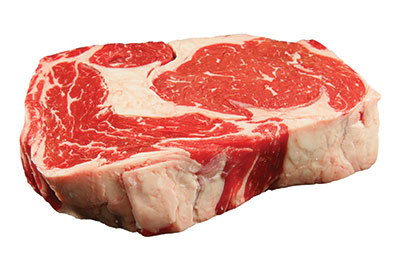
Threads of fat running through the meat increase its juiciness, tenderness and flavor. You don’t always need marbling, you can still get a good piece of meat without it.
Use-by-date
This is very important if you’re buying pre-packaged meat. Meat normally has a use-by-date of about five days if stored correctly.
Moisture
If you’re buying pre-packaged meat you should check that it doesn’t have excessive moisture at the bottom of the package – when cooked it will taste dried-out.
Thickness
Where possible, always buy steak of consistent thickness, as it will cook evenly.
Colour of fat/bone
The fat and bone should be whitish in colour. If it has a brownish colour, you might get a sour taste once it’s cooked. For T-bone steak, freshness can largely be determined by the colour of the bone.
Smell
This is hard to assess if you’re buying pre-packaged meat. Old meat will smell rancid and unpleasant.
MSA certified
Ask the butcher or retailer if the meat is Meat Standards Australia (MSA) certified. If it is, they should be able to give you information about the recommended cooking style.
Age matters
In 2010 beef labelling requirements were introduced that place obligations on retailers when beef is labelled for sale. The aim of this legislation is to help consumers know more about what they’re buying.
Under these requirements beef must be categorised based on age – the youngest cuts warrant a premium price tag while the oldest cuts are the least expensive. They are categorised based on the following descriptions and ages:
Yearling – 18 months or less
Young – 18 months or 2.5 years
Intermediate – 2.5 to 3 years
Mature – 3 to 3.5 years
Economy – 3.5 years or more
What affects eating quality?
The overall eating quality of beef is largely out of consumers’ control. The best carcass can be reduced to low-quality, unacceptable meat from the two-week pre-slaughter period right up to the first few hours post-slaughter.
Factors that can affect eating quality include:
Stress
Meat Standards Australia says the damage is mainly caused by changes in the cattle’s energy reserve (muscle glycogen). Feeding increases the energy reserve but stress quickly reduces it. Keeping cattle calm by reducing stress factors before slaughter can keep glycogen levels high.
pH levels
The ideal pH range is between 5.30-5.70. Levels above 5.70 result in dark meat (purple rather than bright red), coarse texture and reduced shelf life. At the point of slaughter, muscle glycogen is converted to lactic acid, which decreases the pH. High energy (glycogen) levels in the cattle pre-slaughter will enable the pH to fall within the ideal range.
Marbling
Threads of fat running through the meat make it tasty and tender. This fat is the last to be deposited but the first to be used by the animal as an energy source, so it takes good nutrition to keep the marbling throughout the meat. Stress and fasting pre-slaughter can rapidly decrease the amount of marbling.
Hormone Growth Promotants (HGPs)
HPGs are supplements of naturally-occurring hormones used by some producers to help cattle meet market weight at an earlier age. They’re placed under the skin on the back of the ear of the cattle, releasing low doses of hormones. In general, marbling is reduced in treated cattle. MSA claims HGPs affect the eating quality of some cuts.
Hanging method during chilling
The carcass can be hung in two ways:
Traditional method – by the Achilles tendon
Tenderstretch method – suspended by the pelvis
The tenderstretch method is said to improve eating quality of many cuts of meat like rump and sirloin.
Ageing
After slaughter, muscle fibres break down and become weakened, so meat becomes more tender with age. Beef is generally aged for 14 days (MSA requirements range from five to 35 days), after which time the amount of change is minimal. Aged steak generally has superior flavour and texture, but it also generally comes with a higher price tag.
Cooking methods
Muscles are made up of fibre groups surrounded and supported by connective tissue. The amount of connective tissue in a piece of meat is related to the amount and type of work that particular muscle has to do, which is why certain cuts of meat are more tender than others. Blade muscles, for example, are constantly used and so have high connective tissue content. This type of meat is best for casseroles, as the slow cooking process helps to break down the connective tissue. By contrast, a muscle such as the fillet (tenderloin) does very little work with almost no connective tissue, resulting in a very tender piece of meat. In a casserole, the fillet’s structure would be completely broken down, so it is best suited to pan-frying or grilling.
Cooking the perfect steak
Once you’ve chosen your perfect piece of steak, here’s how to cook it to perfection:
Pre-heat your frypan/griddle/barbecue for 3-5 minutes
Sprinkle salt and olive oil over the meat
Sear the meat on each side for about three minutes, depending on the thickness of the steak (if you continually turn it over it will dry out)
Don’t pierce the steak with a fork or knife as this will let the juices escape
Cook to your liking (see below) then remove the steak and rest it for approximately three minutes
Enjoy!
How do I judge if the steak is cooked to my liking?
It’s all about feel. Once you get the hang of it you should be able to get it right every time. Use our guide:
Rare: Hold one hand up loosely and with the other hand press the ball of your thumb (this is the fleshy part of your hand directly under your thumb). This should give you the feeling of a rare steak.
Medium: Bring your index finger to your thumb and make a circle. Using your other hand, press the ball of your thumb to get the feeling of a steak that’s medium done.
Well done: Bring your middle finger to your thumb to make a circle, using your other hand press the ball of your thumb to get the feeling of a well done steak.
Rebecca Ciaramidaro is a Content producer in the Household team at CHOICE. Rebecca writes about a wide range of children's and household products, ranging from cots and strollers to ovens, BBQs, espresso machines and electric blankets. And also grocery items such as nappies, sanitary pads and laundry detergents.
Previously at CHOICE, Rebecca worked as a Test officer in the kitchen lab.
Rebecca has a Bachelor of Science (Nutrition and Food) from the University of Western Sydney. LinkedIn
Rebecca Ciaramidaro is a Content producer in the Household team at CHOICE. Rebecca writes about a wide range of children's and household products, ranging from cots and strollers to ovens, BBQs, espresso machines and electric blankets. And also grocery items such as nappies, sanitary pads and laundry detergents.
Previously at CHOICE, Rebecca worked as a Test officer in the kitchen lab.
Rebecca has a Bachelor of Science (Nutrition and Food) from the University of Western Sydney. LinkedIn
For more than 60 years, CHOICE has been fighting the good fight for Australian consumers.
In the past year alone we've uncovered systemic issues with sunscreens, investigated shonky supermarket pricing, fought for stronger scam protections and helped make complex energy pricing fairer and clearer.
CHOICE is here to provide unbiased advice and independent testing in our world-class labs. We buy the products we test, just like you do, and our expert reviews are influence free. We’re here to help you choose smarter. Hopefully you’ll also save some money along the way.
Thanks to CHOICE, you’ll never be alone when a business treats you unfairly. You can support our work by joining or donating to our cause.