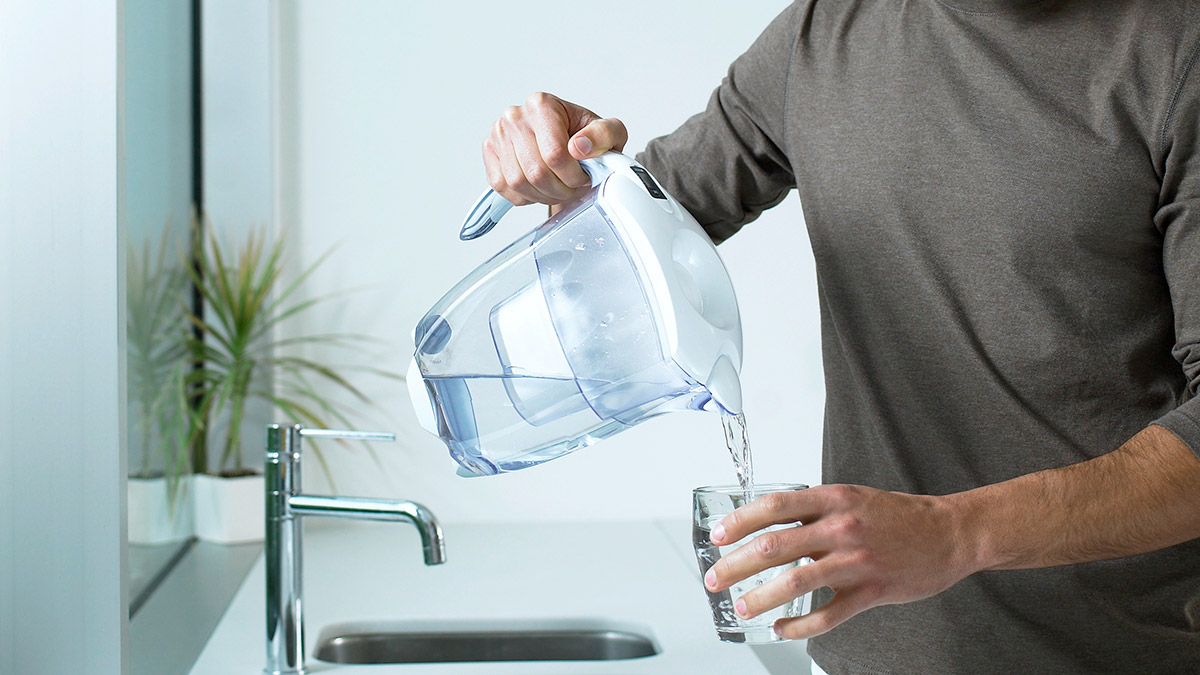
If you’ve ever turned on the tap and wondered about the quality of the water coming out, you can be reasonably confident it’s been thoroughly tested before it reaches your home. But is it good enough to drink?
Safe drinking water requires additives you can often smell or taste, such as chlorine, a disinfectant widely used by Australian water suppliers. Your water supplier’s website more than likely carries regular reports on its water quality.
Filtering the water at the tap is one way of removing the taste of additives. But first you must decide what you want to filter out, what filtering device to use, and how much you want to spend. CHOICE looks at the pros and cons of buying a water filter.
Do you need a water filter?
Tap water is one of our most important basic necessities and can contain many impurities, both natural and artificial. Some are harmless, or only affect what the water looks, tastes or smells like. Others can give you an immediate infection or slowly damage your health over a long period of time.
Some chemicals (such as chlorine and fluoride) are added to your water in the treatment plant. There are ongoing discussions over potential health risks as a result of this, but the benefits of using the chemicals are still thought to outweigh any potential risk. Generally, most Australians don’t have to worry about getting sick from the water they’re supplied with.
Most Australians don’t have to worry about getting sick from the water they’re supplied with
The Australian Drinking Water Guidelines specify that water “should contain no harmful concentrations of chemicals or pathogenic microorganisms, and ideally it should be aesthetically pleasing in regard to appearance, taste and odour”.
Water authorities use settling, coagulation, filtering and disinfecting to ensure the safety of our drinking water, using sufficient disinfectant to stop the re-growth of microorganisms as the water travels through the pipe system to your home.
The downside of ensuring safe drinking water is the lingering taste and smell of disinfectant. If you fill up a jug with tap water and leave it to sit for a couple of hours, the disinfectant smell and taste will gradually dissipate, but many people opt for a water filtering system.
How can you be sure water filters do what they say, without proof? One thing to look for is certification. The NSF International provides a range of certifications for products that involve initial and periodic testing:
NSF 42 covers aesthetic effects such as chlorine, taste, odour and particles.
NSF 53 covers health effects such as cysts (giardia, cryptosporidium), a range of organic chemicals (such as THM and pesticides) and heavy metals.
The Australian standard AS/NZS 4348 covers a wide range of contaminants, such as taste, odour and microbiological and chemical impurities. There are also standards for water softeners – cation exchangers (NSF 44), reverse-osmosis (NSF 58) and distillation (NSF 62) systems.
There may be models that claim to meet relevant performance standards but aren’t certified (certification costs money, which can be an obstacle for smaller businesses). However, how can you be sure? If you’re treating a potential health threat you have to be able to rely on the filter’s performance, and certification is the best available guarantee.
If you’re not happy with the aesthetics of your tap water (its taste, look or smell), looking for a certified product is still a good idea, but may not be as important. In any case, be aware that a filter can make your water’s quality worse if you don’t use it properly.
Types of water filters: pros and cons
The basic pros and cons of each type of water filtering system are included below, as well as a rough estimate of initial costs. Ongoing costs can be determined by checking the volume or time it claims to filter before requiring replacement. Be sure to factor in the cost of replacement filter cartridges and always replace as instructed, as spent cartridges can themselves harbour microorganisms. What each cartridge can filter varies even within the different types of dispensers.
Bottle filter
Prices: $18–30 initial (up to $180/yr ongoing)
Pros: Convenient, portable, and easy to use and replace filters.
Cons: Heavier than normal water bottles, short filter lives (high ongoing costs) and limitations on filtering.
Jug filter
Prices: $20–75 initial ($84–432/yr ongoing)
Pros: Convenient and easy to use and replace filters.
Cons: Some are slow, prone to clogging and have short filter lives, meaning high ongoing costs.
Tap mounted
Prices: $25–75 initial ($50–120/yr ongoing)
Pros: Most convenient at tap filter, small, and easy to use and replace filters. Easily swap between filtered and non-filtered water. Portable if you rent.
Cons: Slows the flow of water and cannot be used on all taps.
Counter-top
Prices: $60–350 initial ($100–200/yr ongoing)
Pros: Filters large amounts of water without plumbing modification. Less likely to clog than jug or tap-mounted filters. Portable if you rent.
Cons: Clutters countertops and cannot be used on all taps.
Under-sink
Prices: $180–600 initial ($200–800/yr ongoing)
Pros: Filters large amounts of water without cluttering up countertop, or attaching to existing tap. Less likely to clog than jug or tap-mounted filters.
Cons: Takes up under-sink space and requires plumbing modification. Most expensive upfront cost option.
Fridge filter
Prices: Supplied initially ($50–100/yr ongoing)
Pros: Easy to replace, usually just a push/twist motion. Can filter as well as countertop/under-sink options, depending on filter.
Cons: No option but to replace it – it’s a cost that comes with the fridge.
You can also buy shower filters or ones built into fridge ice and water systems. These are generally carbon filters.
There is also an option to fit out the entire house, but they’re expensive and generally only justified in quite specific situations (for example, if you have a poor-quality water supply).
Filter mediums
All the filter systems above can have different types or combinations of filter mediums. Your choice depends on what you want to filter out.
Filtration/adsorption: Filtration involves using a substance, typically carbon, to make contaminants adhere to the many pores (like pumice) within the carbon source, also called adsorption. The source of carbon can be coconut, charcoal, ceramic, etc. This helps remove odour, taste and particles in the water.
Softeners: If you have a hard water source, you’ll notice a build-up in kettles, bathtubs and sinks. These are normally a result of large amounts of minerals in your water. A softener medium will reduce the amount of minerals.
UV treatment: This uses ultraviolet light to disinfect water. However, it only works on relatively clear water, otherwise the light doesn’t penetrate sufficiently.
Reverse-osmosis: This uses water pressure from your pipes to pass water through a thin membrane. Most contaminants are physically blocked and washed away. It uses a lot of water, and some use energy as well – up to 60% of the water can be wasted in the process. However, it does remove a wide range of contaminants.
Distillation: This is also energy intensive. It boils the water, collecting the condensing water to remove many contaminants, though not all.
What if you have your own water supply?
If you’re not connected to town water, but use rain or bore water, it’s important to protect your supply from contamination – particularly with bore water – and inspect it regularly.
For example, an animal carcass close to your bore can be a serious health threat, and herbicides or fertilisers may leach into your water supply over time. A dirty roof, peeling paint or bird droppings can affect the quality of collected rain water.
Many water authorities or your local health department will have brochures on what to look for, and how to maintain a storage tank.
Have your water supply tested regularly, and contact your local or state health department. It may check the water body you’re drawing from as part of its own monitoring program, or it can test your water – in many cases free of charge if you have a health concern.
It will also be able to advise you on how to rectify a problem. As a last resort, you may want to consider buying a suitable water filter.
When you turn on your tap, you should see clear, uncloudy water. If not, or it tastes strange, then there are ways to find out why.
If your water looks, smells or tastes strange, or if your clothing and plumbing (such as sinks and toilets) become stained by it, use our table below as a starting point to narrow down the number of possible causes.
Ask your neighbours whether they have similar concerns. This may help to find out whether it’s a general supply problem, or one caused by your home’s plumbing.
Talk to your water supplier about your concerns. If you’ve recognised a potential problem, tell them – it may help them assess and solve the problem more quickly. Ask them for the latest analytical results of your water supply, and the corresponding Drinking Water Guidelines recommendations. If you still have doubts, get a water sample analysed. Your supplier may do that free of charge, especially if there’s a health concern.
Your water supplier may be able to solve some aesthetic problems fairly easily by flushing the mains, while other problems may require more extensive cleaning or repair of the distribution system in your area, or work on your home’s plumbing.
If you’ve suffered damage (for example, rust-spotted clothes after a wash), you may be able to negotiate compensation from your supplier.
Types of problems with your water
Except for microorganisms and lead, most of these contaminants are an aesthetic rather than a health problem, as long as they don’t occur in very high concentrations.
What’s the problem?
Symptom
Likely cause
Stained plumbing and clothes
Red or brown, black-green or blue
Iron, manganese, copper.
Reddish-brown slime in water and pipes
Slime
Iron (bacteria that feed on the iron cause the slime).
Discoloured water
Cloudy, black-red, brown or yellow
Turbidity (fine suspended particles – air bubbles may also cause water to be temporarily cloudy when it comes out of the tap), hydrogen sulphide, iron, manganese, humic and tannic acids.
Unusual taste or odour
Rotten egg, metallic, salty, musty, earthy, bleach-like, petrol
Hydrogen sulphide, pH (acid-alkaline balance) is too low, iron, zinc, copper, lead, total dissolved solids (TDS), chloride, bacteria or algae, chlorine, paint soaking into plastic piping used for newer houses.
Corrosive water
Deposits, pitting of plumbing
pH, copper, lead.
Source: Originally NSF International (formerly the US National Sanitation Foundation). Updated with help from Sydney Water.
Supplying water that’s free from pathogenic microorganisms (those that can make you sick) is the most important task for water authorities.
Bacteria: Most pathogenic bacteria found in water come from contamination by human or animal faeces. Disinfection (for example, with chlorine) usually kills all bacteria. Another potential threat is bacteria growing in the water mains. That’s why water suppliers try to ensure there’s a residue of chlorine to protect the water on its way from the treatment plant to your home.
Protozoa: This group includes cryptosporidium and giardia. These can cause severe illness, and their cysts can often resist disinfection.
Viruses: Some viruses that can be found in water are potentially harmful. While disinfecting the water usually kills most viruses, some may survive and make you sick. However, it’s not known how big a problem this is in Australia, as the source of a viral infection (whether it’s water, food or contact with another infected person) is difficult to trace.
Chemical risks
Pesticides and herbicides: These can leach into waterways in rural areas. Some are potentially carcinogenic and live in the environment for a long time. While low concentrations of these chemicals have sometimes been found, our drinking water is usually free of them when tested. However, not all water authorities check for them regularly.
Nitrate/nitrite: The main sources for these chemicals in waterways are sewage and fertiliser run-off. Groundwater supplies in rural areas are most likely to have high nitrate concentrations. While nitrate itself is harmless, it can be converted into nitrite, which mainly poses a problem to babies and young children – it can reduce the amount of oxygen the blood can carry. In areas where nitrate is a problem, the water supplier will usually advise people to use bottled or rainwater for children under three months.
Chlorine and chlorination by-products: Chlorine or chloramine is usually added to kill bugs in the water that passes through the treatment plant and to protect against recontamination while the water’s travelling through the distribution system. However, these chemicals can – depending on a number of parameters – react with naturally occurring organic substances in the water to form potentially harmful by-products (mainly so-called trihalomethanes, or THM). The Drinking Water Guidelines state a maximum concentration for these by-products. They also point out that while their concentration should be minimised, the disinfection of drinking water must not be compromised. The risk posed by by-products is considerably smaller than that posed by the presence of pathogenic microorganisms.
Fluoride: This has been added to drinking water since the 1960s and 1970s as it has a proven record of reducing tooth decay. However, fluoride protection is now available from more sources, like many toothpastes or from fluoride treatments applied by your dentist. Critics say fluoridated water is unnecessary, as it may lead to dental fluorosis (mottled teeth) in people who get too much, and we don’t know the potential health risk of drinking fluoridated water over a lifetime.
Aluminium: Chemicals containing aluminium are used in a process called flocculation, which removes suspended particles from the water, making it clearer. While most of the aluminium used can be filtered out of the water, small amounts may pass through. Some water authorities have phased out the use of aluminium chemicals in favour of alternatives.
Matthew Steen is the Director of Reviews and Testing, which conducts all the testing for CHOICE. He has had a long and storied history in the consumer movement.
Matthew is driven to work at CHOICE for its constitutional mission and its dedication to making Australia more fair, safe and just.
Matthew represents CHOICE as a council member on the Standards Australia Council. He is also responsible for CHOICE lowering its environmental footprint.
Find Matthew on LinkedIn.
Matthew Steen is the Director of Reviews and Testing, which conducts all the testing for CHOICE. He has had a long and storied history in the consumer movement.
Matthew is driven to work at CHOICE for its constitutional mission and its dedication to making Australia more fair, safe and just.
Matthew represents CHOICE as a council member on the Standards Australia Council. He is also responsible for CHOICE lowering its environmental footprint.
Find Matthew on LinkedIn.
For more than 60 years, CHOICE has been fighting the good fight for Australian consumers.
In the past year alone we've uncovered systemic issues with sunscreens, investigated shonky supermarket pricing, fought for stronger scam protections and helped make complex energy pricing fairer and clearer.
CHOICE is here to provide unbiased advice and independent testing in our world-class labs. We buy the products we test, just like you do, and our expert reviews are influence free. We’re here to help you choose smarter. Hopefully you’ll also save some money along the way.
Thanks to CHOICE, you’ll never be alone when a business treats you unfairly. You can support our work by joining or donating to our cause.