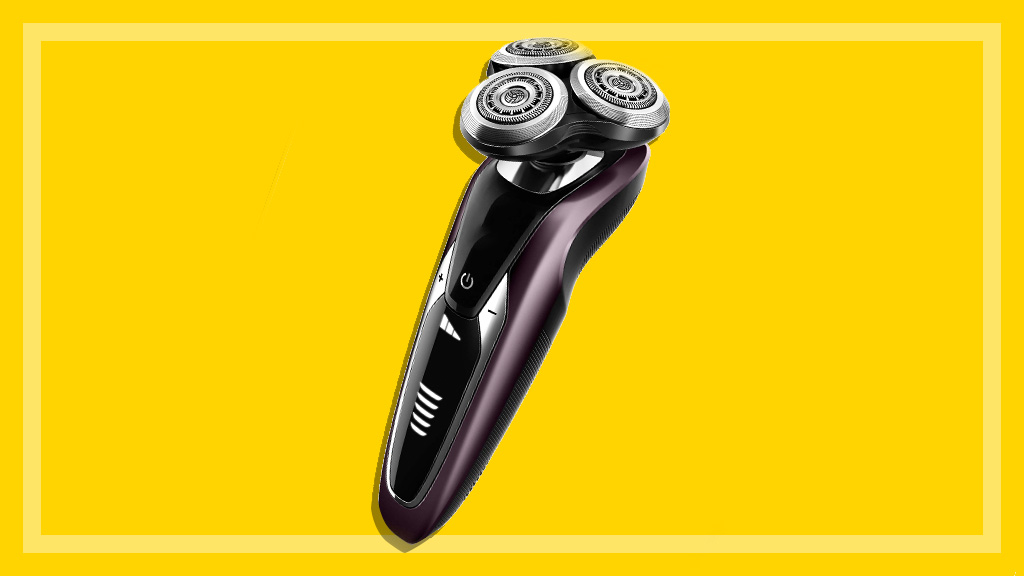

Getting the most from your electric shaver
Give your face a chance. If you’re changing from a razor to an electric shaver, your skin needs up to a month of continuous use to become accustomed to it.
- Clean your shaver following the manufacturer’s instructions.
- Hold the shaver at right angles to your skin.
- Don’t press hard against the skin to avoid irritation and/or damage the shaving heads.
- Go against the grain of the hair growth for best results.

- For rotary shavers, small circular strokes will give a closer shave.
- Pull the skin taut as this will allow you to get better access to the hairs.
- Stretch your top lip taut over your teeth for a closer shave under your nose.
- Change the heads as recommended or when wear is evident (poor cutting, irritation and pulling).
- General recommended replacement periods (can vary depending on model):
- Philips - every 2 years.
- Braun - every 18 months.
- Remington - every 6 months
- Panasonic foil - outer foil – once a year; inner blade: once every 2 years.
- Panasonic rotary - every 6 months.
Features
- Battery-powered models are ideal for convenience – you can shave anywhere, which is one of the main attractions of an electric shaver. Some models use a Nickel Metal Hydride (NiMH) rechargeable battery, which is much more effective and long lasting than older Nickel Cadmium (NiCad) types. A few models also use Lithium Ion (Li-Ion) which are claimed to be just as effective and lighter than NiMH).
- A beard trimmer is important – particularly if you don’t shave very often as trimming a longer growth is recommended before shaving. The Philips SensoTouch 2D RQ1160 had a separate trimmer rather than an integrated pop-up one, which one of our testers found fiddly to use.
- A wet shave option allows you to use water, a shaving balm or oil to minimise irritation. You can also use them in the shower.
- Washable A shaver that you can clean under a running tap.
- A docking/cleaning station can provide either a convenient base to recharge your shaver or can also incorporate a cleaning solution to ensure that your shaver will be as good as new every morning. One model on test has two separate units. However, cleaning stations are not all they’re cracked up to be and can lock you in to purchasing branded cleaning solutions when all the shaver needs is a good clean under the tap. All testers found these to be wasteful, fiddly and unnecessary, and that rinsing the shavers under running water was quicker and just as effective.
- A charging indicator helps to ensure that your shaver will be ready to go at all times.
- Shaving aids dispense an oil or balm, from a cartridge in the shaver to lubricate your skin while shaving (none in this test have this feature). These can help minimise irritation, but any shaver that can be used wet (see wet shave in the table) can also be used with a balm, oil or a powder stick of your choice, so aids are not necessary. This also means you’re not limited to the one shaving aid type or brand. Dry shave only models may be used with powder sticks.
Warranty exclusions - don't be misled
Many of the express warranties for these products specify so many exclusions, you’re led to believe that no part of the product is actually under guarantee. It's easy to be misled, however you are still entitled to statutory rights.
From 1 January 2011, a new law – the Australian Consumer Law - protects people from faulty goods. In some cases, this means a refund, a free repair or replacement of the faulty good. The terms warranty and implied conditions have been replaced by consumer guarantees.
In short: goods should meet an acceptable level of quality and keep working for a reasonable period. If they don't, you are entitled to redress, which may be a replacement, repair or a refund. Your rights apply even if you haven’t purchased an ‘extended warranty’. Don’t let anyone try to tell you otherwise.
The seller has to help you with your problem. They cannot tell you that it’s not their problem and that you need to contact the manufacturer.
The new laws make an important distinction between major and minor failures with the good. A minor failure to comply with a consumer guarantee means the seller can choose to offer you a refund, replacement or repair. This must be provided free of charge and within a reasonable time.
You cannot immediately reject the goods and demand a refund - you must give the supplier a chance to fix the problem. But in the case of a major failure, which generally means it can’t be fixed or is too difficult to fix, you get to choose between a refund, replacement or compensation for the drop in value caused by the problem.