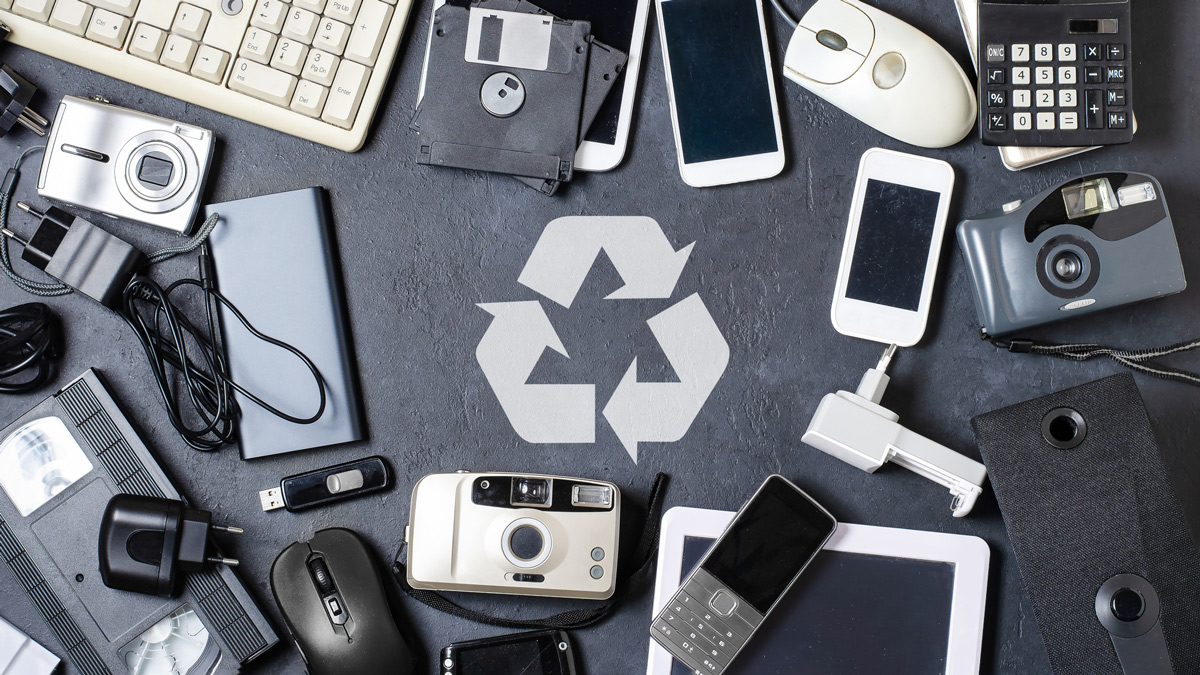
Computers, smartphones, tablets and more are an integral part of daily life, but as they become obsolete more and more quickly, we’re faced with the growing problem of disposing of all our e-waste properly. Not only do electronic products thrown into landfill leak toxic materials into soil and water, it also means rare and non-renewable materials are wasted instead of being re-used.
You may be able to donate or repurpose old electronics if they’re still in good working order. Some charities even accept broken goods for repair so they can be passed on to people in need. But there are times when busted bits of tech have to go in the bin and there are plenty of ways to recycle them responsibly.
Why is e-waste so bad?
Toxic materials and hazardous chemicals are often used in the manufacture of computers and electronic equipment. When parts are disposed of improperly, these chemicals can leach into soil and water and lead to environmental contamination.
It doesn’t just happen in landfill either. Computers sitting on the curb for collection can also leak, particularly during wet weather. On an individual level, personal data can be harvested from hard drives that haven’t been wiped and disposed of correctly.
The sheer amount of waste that goes into landfill every year is staggering. In 2019, just 17.4% of global e-waste was correctly collected and recycled according to the Global E-waste Statistics Partnership (GESP), a branch of the United Nations. And Australia is no better. In 2018 we generated 650 kilotonnes of e-waste and only 59 kilotonnes were correctly collected and recycled.
The World Health Organisation (WHO) also found that children, adolescents and expectant mothers are facing health risks by being exposed to illegally processed e-waste.
Chemicals in your computer (and other devices)
While manufacturing methods are said to have improved, many companies continue to use toxic chemicals and primary materials over recycled parts.
The roll call of toxic materials is long and includes:
mercury (used in LCD screens)
lead
cadmium (used in batteries) – known to cause cancer in humans
beryllium (found in motherboards) – a known carcinogen and can cause lung disorders if inhaled
chromium (used to prevent corrosion) – can cause liver and kidney damage as well as skin reactions
antimony – can cause gastrointestinal disorders
arsenic – a known carcinogen
brominated flame retardants (used in circuit boards, cables and plastic casing) and polyvinyl chloride (PVC) (used in casing and connectors) – toxic when burned and can collect in the environment.
Where to recycle old electronics
Responsible e-cycling is easier than it might seem. There are government-supported recycling services, charities and even independent businesses that will take your old gear off your hands. However, they’re unlikely to accept hazardous or dangerous items.
Recycling Near You
Recycling Near You is one-stop shop for all the e-cycling information you need. It’s an extensive database run by Planet Ark that lists recycling information, drop-off locations and curbside collection contact information relative to your postcode. This includes government-backed services, charities and private organisations. You can search for computers and accessories (keyboards, mice, monitors etc.) and printer cartridges at these links.
The National Television and Computer Recycling Scheme (NTCRS) lets homes and small businesses dispose of their computers, printers, peripherals, components (keyboards, monitors, mice, etc.) and TVs at drop-off points in each state and territory, free of charge. Under the scheme, any company that makes or imports TVs or computers into Australia is required to pay for the end-of-life recycling of their products.
TechCollect partners with businesses to create e-waste drop-off points.
Most locations in the Recycling Near You database are part of the NTCRS. Officeworks, for example, collects many electronic goods under the scheme. Note that drop-off points may not accept all items covered under the scheme for one reason or another, so it’s worth calling ahead before you haul everything down there. For a full list of accepted products, visit the NTCRS website.
TechCollect and eCycle Solutions also coordinate recycling on behalf of the NTCRS. They even list drop-off points and provide collection services, which is useful if you don’t live close to or are unable to get to an NTCRS partner.
In addition to this, many state and local governments have their own schemes or collection events in place. Sydney City Council runs a free collection service, for example, so visit your council website to find out about any local services that may be operating near you.
Retailer recycling
JB Hi-Fi and The Good Guys run an extensive e-cycling program called Ecoactive which also helps provide meals for people in need. All you need to do is head to the Ecoactive website, enter your details and the items you’d like to recycle, and a staff member will get in touch.
Some manufacturers offer trade-in programs as well. Apple, for example, has a list of eligible products that can go towards the cost of a new purchase. These aren’t as common as they used to be but it’s worth asking the manufacturer, or retailers, if recycling rebates are available.
Recycling an old phone
Did you know 99% of the materials in your smartphone can be recycled? Mobile Muster is a free industry-backed organisation that recycles mobile phones, smartphones, phone batteries, power banks and accessories.
You can drop accepted items off at a number of locations including supermarkets, Optus, Telstra and Vodafone stores, Officeworks and even some council chambers. Enter your postcode here to find your nearest location.
There’s also a free mail-in option that’s run in conjunction with Australia Post and JB Hi-Fi. Almost all new phones sold in Australia come with a pre-paid Mobile Muster satchel in the box that you can use to return your old device and these satchels are also available for free at their brick-and-mortar locations.
You can also request a free, pre-paid postage label by filling out the post back form online. Once it arrives, just pack up your phone, stick the label on and pop it in a red post box. Packages have a 15kg limit but you can request multiple labels. Ecoactiv accepts smartphones as well.
Recycling smartwatches and fitness trackers
Mobile Muster will take smartwatches and fitness trackers via the same smartphone recycling channels explained above.
Recycling batteries
Smartphone batteries are covered by Mobile Muster but NTCRS partners may not accept your e-waste until the battery is removed. That’s where Recycling Near You and the Australian Battery Recycling Initiative (ABRI) come in handy. They can point you towards places that will safely dispose of or recycle your old batteries.
Mainstream consumer batteries such as AA, button (aka coin cell) and 9V can’t go in the bin when they die. Woolworths, Aldi and Bunnings provide free disposal bins instore for these types of batteries. Anyone can use them, even if you’re not a customer. Bunnings also accepts batteries for power tools.
Battery World broadly accepts batteries for all other household devices such as laptops, speakers or older portable gaming units (e.g. PlayStation Portable). However, this may vary from store to store so it’s worth calling ahead before heading down there.
What about mobile power banks?
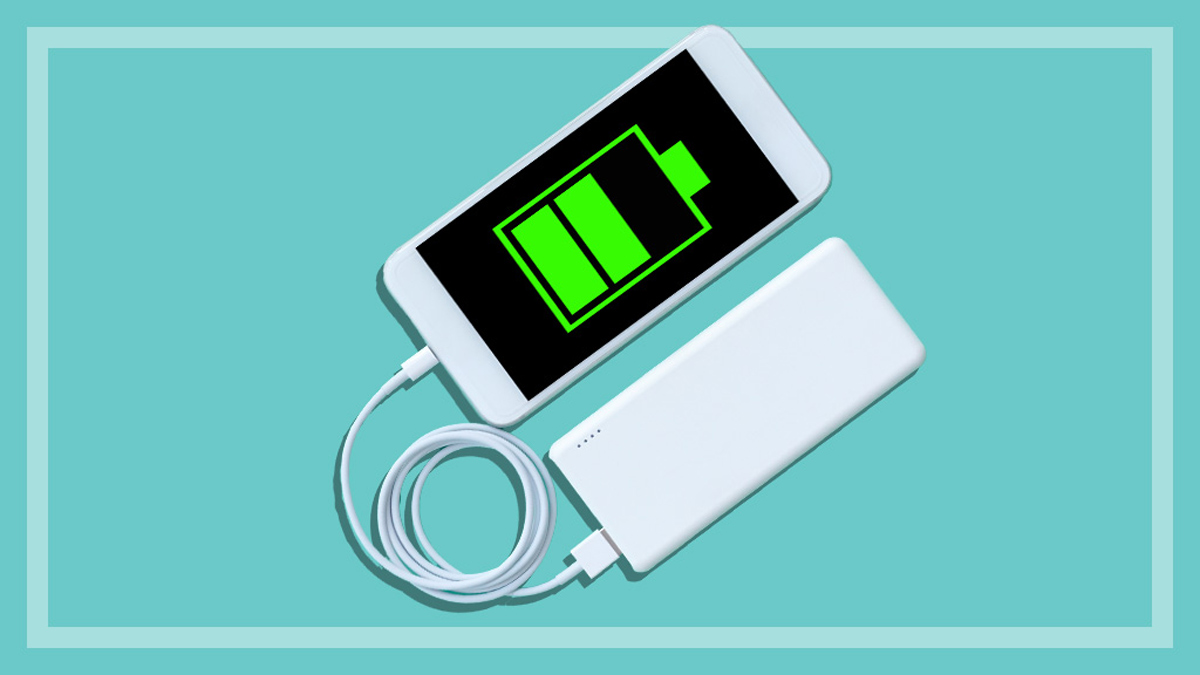
These count as mobile phone accessories. You can take them to any Mobile Muster drop-off point, Woolworths or mail them in with a Mobile Muster satchel or pre-paid postage label.
How to repurpose your old tech
An ageing desktop, laptop, smartphone or tablet may be lacking the grunt required to meet demanding tasks. But old equipment can still be useful for jobs that require a little less processing power.
Smartphones and tablets often find new life as a universal remote to control smart devices and their various apps around the home. You can also use them to play music and video from streaming services or a home server and cast to compatible devices.
It’s not uncommon to see an old iPad attached to the wall as a digital calendar or family planner either, and you can save a bundle on baby monitors by mounting a phone or tablet with a monitoring app above the bassinet.
Remote/media player
An old Android device can make a great universal remote, as long as the apps are still compatible. You can control a range of smart devices such as lights, cameras and thermostats, as well as audio and video streaming services.
More and more apps are adding a remote function that’s similar to casting. Instead of casting data from your device, however, it connects to the other device, such as a smart TV or laptop, via Wi-Fi to allow easier navigation compared to a TV remote. The content itself is played on the other device, which means your phone or tablet is essentially a Wi-Fi enabled universal remote. Spotify Connect is a good example. This also works if you want to control media stored on a local server, such as a NAS, using DLNA.
You can also repurpose a smartphone as a digital music player, which can save storage and help preserve the battery life of the phone you’re currently using. If you prefer streaming music, throw in a cheap, data-heavy prepaid SIM and stream songs without worrying about going over your limit – or use the device as a Wi-Fi hotspot in your car and on the road.
Video surveillance/baby monitor
Instead of buying a baby monitor, you can buy and install a monitoring app on an old smartphone or tablet as well as your primary phone. Then, all you need to do is mount the old device nearby or above the bassinet and you have a perfectly good Wi-Fi baby monitor for a fraction of the price. Phones have most of the same features as a dedicated camera except for pan and tilt.
As well as offering most of the same features, these apps can usually connect to other devices on your network including dedicated cameras. Just remember to keep an eye on the battery or, better yet, leave the phone permanently plugged in.
Family planner/smart display
Repurpose an old iPad or tablet as a family calendar and message board in the kitchen. Sync the family calendars, tasks and to-do lists so everyone knows whose turn it is to take out the garbage and who’s busy next Sunday.
Also, there’s no need to shell out for one of those fancy new smart displays. An old iPad or Android tablet can do the same things and it should support the respective digital assistants unless it’s particularly old. Just prop it up and presto, now you can use the tablet as a digital cookbook or a tool for adding shopping lists to other devices synced across your account, like your phone. Can’t quite get your head around the recipe? Fire up an instructional video on YouTube.
If you’re looking for something a little more advanced, you can turn an old computer into a home server, also known as network attached storage or NAS. Though they have a number of applications, consumers typically use them for automated backup, home security that connects to your network-enabled security cameras or as a media server.
The last feature is particularly popular as media servers can run on low performance systems compared to the demands of day-to-day tasks. All you need is a lot of storage but that’s just a matter of upgrading the hard drives. Then, with a bit of networking know-how, you can beam movies, TV shows, music and more to all your entertainment devices around the house.
Of course, there’s always the option to upgrade or replace broken parts but that’s only really open to tech-savvy sorts that own desktop ‘tower’ PCs. Tech hand-me-downs are also a great way to introduce kids to their first smartphone or computer before they’re old enough (see: responsible enough) to own a new model.
How to wipe a hard drive completely
The onus is on you to wipe the data from your devices before they go off to the recycling centre. No one is going to check for you, and you leave yourself open to cybercrime if this step slips your memory. Fortunately, factory resets aren’t difficult at all.
Wiping your devices
Smartphones and tablets can be reset to factory settings with a few simple steps.
iPhone and iPads: Settings > General > Transfer or Reset iPhone > Reset > Erase All Content and Settings.
Android devices: System > Reset options > Erase all data (factory reset) > Delete all data. Enter your password, if needed.
Windows and macOS methods vary depending on the operating system. You may have an older version of Windows or macOS on the computer you want to recycle, so the steps in these drop down menus cover the last few iterations of each brand.
Deleting data from Windows
If your computer has multiple drives or partitions, then you need to delete the data manually before clearing the operating system (OS). Windows installs the OS data on the C: drive by default, so any other drives labelled D: to Z: are good to go.
Go to My Computer or This PC (the name changes on different versions of Windows, but it’s the same thing), right-click the drive you want to clear, scroll down to Format then click Start in the pop-up window. Do not change any settings, especially quick format as this method is not as secure.
Once you have formatted the additional drives, you can wipe the operating system and any other data on the C: drive. Your computer may reinstall the operating system during this process, but it will not recover your data unless you create an account and log back in. At this point it could try to recover your files from the cloud if you installed and activated cloud backup. Just shut down the computer when Windows setup wizard starts.
Windows 10 and Windows 11: Go to Settings > Update & Security > Recovery and click Get started under Reset this PC. Then select Remove everything in the pop-up window.
Windows 8: Go to Settings > Change PC settings > Update & recovery > Recovery and click Get started under Remove everything and reinstall Windows. A pop-up window will appear. Click Next > Fully clean the drive > Reset.
Windows XP/Vista/7: These operating systems require an original install or recovery disc to wipe the drive. Also, recovery tools varied between manufacturers. It’s long, it’s complex and you probably don’t have the discs lying around anymore. Instead, grab some precision screw drivers, open your tower/remove the base plate on your laptop and remove the drive. You can hold onto it for secure destruction later on, or format it by plugging it into another PC using a USB hard drive. The PC will treat it like a thumb drive so just follow the same formatting steps above.
You can also try Disk Wipe, a popular formatting utility that can completely wipe drives on operating systems going all the way back to Windows XP. It installs and runs just like a regular program so you don’t need to worry about creating boot drives and so on, but the catch is it needs an operating system to, well, operate. That means it can remove everything but Windows itself.
Deleting data from macOS
Apple hasn’t made any major changes to its disc utility tool in some time which is great, because it means these steps will work on any iMac, MacBook, Mac mini or Pro released in the last few years. It also means Apple can maintain a couple of official guides that walk you through recycling your computer and erasing the startup disk that houses the operating system
Then, erase additional drives or partitions, followed by the startup disk using this guide.
Bear in mind that these methods will wipe all of your personal data, but the operating system can still be reinstalled using recovery tools. So while all of your personal information is gone, technically the drives aren’t completely cleaned and that’s not good enough for some people.
There is one more method that’s not for the faint of heart but it does guarantee complete data destruction, including the operating system. Darik’s Boot and Nuke or DBAN is a popular open-source program that completely obliterates the data on your drive beyond the point of recovery, but using it requires a bit of tech know-how.
DBAN – the hardcore way to delete your data
DBAN is an open-source data destruction program that erases your data then replaces it with a random selection of numbers to ensure it’s both deleted and no longer marked for recovery. If nefarious sorts tried to dig through the drive with data recovery software, all they’d find is a long, long, long number.
Though development stopped in 2015 it’s still cited as the go-to program for this sort of work. You can find a free, legal copy at Sourceforge. The original domain lapsed (dban.org) and is now owned by another company trying to sell their own software, so don’t bother looking there.
It does require a bit of tech knowledge to use, as you need to install it on a drive or disc then boot into it before opening your operating system. Once that’s done, all you need to do is follow the instructions then let DBAN do its thing, which will take a few hours.
Buying green tech
Computers, tablets and smartphones aren’t exactly the most environmentally friendly products. However, there are resources that can help you find somewhat greener devices and manufacturers.
The Electronic Product Environmental Assessment Tool (EPEAT) rates and compares the environmental impact of computer products on the environment. Based on its set of environmentally friendly criteria it issues bronze, silver or gold medals.
Information on EPEAT is available free of charge and is well regarded, so much so it’s even mandatory for US federal agencies to consult EPEAT when buying computer equipment. Participation in EPEAT is voluntary, however, so it may not include the brand you’re considering.
Shop Ethical is another handy resource, but its overall scores include extra ethical factors that don’t relate to green manufacturing. Remember to dig into the details for more information on a company’s environmental track record.
Greenpeace Guide to Greener Electronics
From 2006 to 2017, this guide from Greenpeace tracked the environmental impact of major tech companies. This was based on three critical measures: energy, resource consumption and chemicals.
Energy rates the reduction of greenhouse gases though efficiency and renewable energy.
Resource consumption focuses on sustainable design and the use of recycled materials.
Chemicals rates the elimination of hazardous chemicals in the products and in manufacturing.
Unfortunately the guide hasn’t been updated in some time so the data isn’t accurate for today. But it was a very comprehensive piece at the time, and is still a solid jumping off point for researching which brands are green and not so good for the environment.
Peter Zaluzny is a Content producer in the Digital home team. He covers everything from home entertainment and personal safety devices to tech for your car and mattresses.
Peter enjoys cutting through the nonsense to help people understand the products they’re considering to buy. He helps consumers make educated, informed decisions.
Peter has a Bachelor's degree in Journalism and a Bachelor of Arts from the University of Wollongong.
Peter Zaluzny is a Content producer in the Digital home team. He covers everything from home entertainment and personal safety devices to tech for your car and mattresses.
Peter enjoys cutting through the nonsense to help people understand the products they’re considering to buy. He helps consumers make educated, informed decisions.
Peter has a Bachelor's degree in Journalism and a Bachelor of Arts from the University of Wollongong.
For more than 60 years, CHOICE has been fighting the good fight for Australian consumers.
In the past year alone we've uncovered systemic issues with sunscreens, investigated shonky supermarket pricing, fought for stronger scam protections and helped make complex energy pricing fairer and clearer.
CHOICE is here to provide unbiased advice and independent testing in our world-class labs. We buy the products we test, just like you do, and our expert reviews are influence free. We’re here to help you choose smarter. Hopefully you’ll also save some money along the way.
Thanks to CHOICE, you’ll never be alone when a business treats you unfairly. You can support our work by joining or donating to our cause.