01.How they work
Please note: this information was current as of November 2006 but is still a useful guide to today's market. For more recent information, see our 2012 Car GPS review.
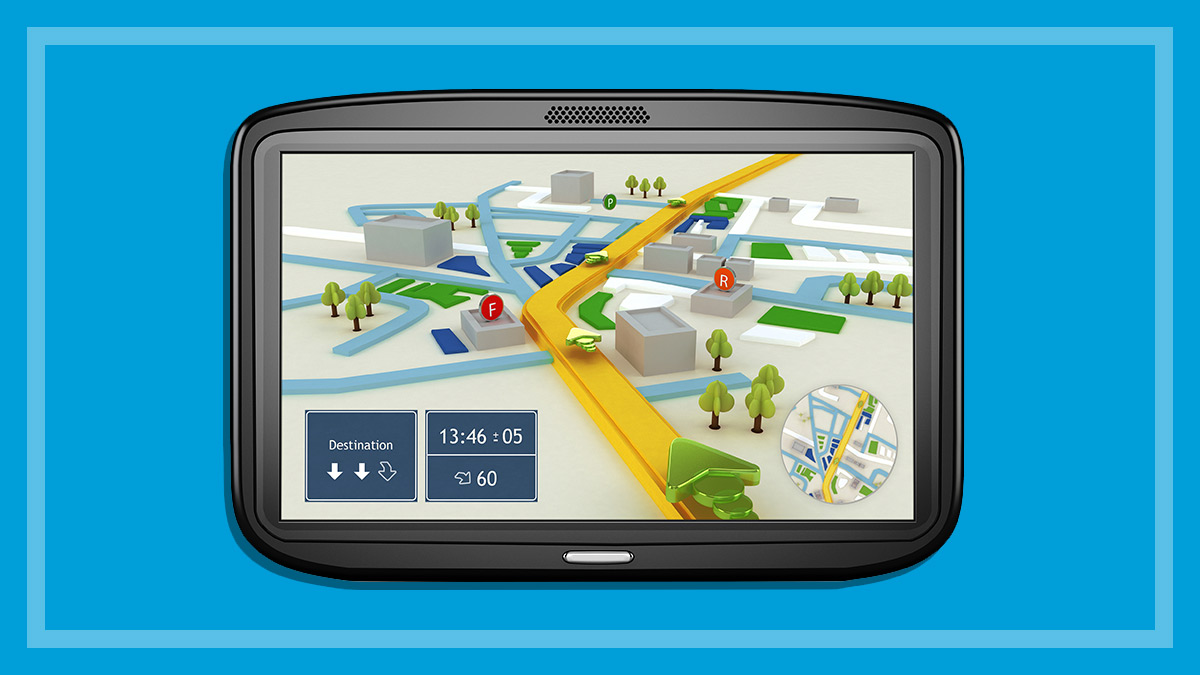
A car navigation system consists of: 
- A Global Positioning System or GPS receiver that picks up satellite signals which allow it to determine your exact position.
- A map database This includes a large number of ‘points of interest’, such as schools, police stations, car parks, petrol stations and hospitals. Most car navigation systems available in Australia use the same mapping data. So the difference between the tested models is how they let you use and display the data.
- A computer processor to calculate routes, distances and times.
- A screen displaying maps and route instructions.
- A loudspeaker for verbal instructions.
You enter into the system where you want to go. Using the map data, it then plots a route (you can usually choose between the fastest or the shortest route — which aren’t necessarily the same — or specifically exclude toll roads or highways), calculates the travel distance and estimated time of arrival, and displays the route on a map.
Using satellite signals, it keeps track of your position and guides you along the plotted route with travel instructions on the display and verbally via a computer-generated voice.
Portable units sit in a cradle with a suction cap that can be attached to the windscreen. They plug into the cigarette lighter, but also have a battery that provides a few hours of operation. They’re installed within moments, and can therefore easily be moved from car to car.
Integrated systems are usually connected to the car’s electronics, and can overcome some of the limitations of portable units. For example, they can use speed information to keep calculating your position when there’s no satellite signal (for example, in a tunnel).
General limitations
- No satellite signal, no guidance. Car navigation doesn't work when you're in an underground car park or tunnel. And even high-rise buildings in a CBD can block the view of the sky to an extent that leaves navigation systems lost or at least handicapped.
- The systems can only be as good as the mapping data allows. Currently there are still big gaps outside major centres.
- Don't blindly trust your navigation system. There may be traffic situations that are simply too tricky to handle for navigation.
11 Mar 2013
|
We've tested nine of the latest car GPS units, priced from $129 to $449.
26 Nov 2009
|
CHOICE took 12 car GPS units to the streets and we also looked at three devices designed for motorcycles.
8 Jul 2010
|
Turn your iPhone into a satellite navigation GPS with one of these handy new apps.
1 Aug 2008
|
If you’ve ever bought a new car, you’ll have experienced the hard sell from the dealer, pushing you to add options to the vehicle. Are any of them worth the money?