CHOICE 50th anniversary

See the changing face of CHOICE over 50 years, as we roll back the decades.
 
Get access to all CHOICE BENEFITS
$1.91/wk
*Billed quarterly


  • Updated:23 Mar 2010
 

05.Noughties

June 2001

2000

Our annual supermarket survey noted Franklins, leader in the price-conscious category since 1994, now had Coles and Woolies hot on its heels. Aldi was also preparing its assault on the Aussie market.
To all the supermarkets, CHOICE made yet another heartfelt plea: “Consumers want unit pricing. Your refusal to give it does no good for your image and you appear greedy and unhelpful.”
For our male readers, we sized up Viagra as well as propecia for male baldness. We happily revealed another use for Viagra – flowers stand up straight and last a week longer (though we added it would be cheaper to buy new flowers).
The GST is a fact of life, we said. “The most significant transformation of Australia’s tax system ever, there are too many unanswered questions.” We tried to deliver some answers.
We began our Home Tester panel. More than 1500 people volunteered and the first 300 dipped and sipped their way through 14 brands of teabags to find the best cuppa.


Video: 50th Anniversary - 2000s

The final in our five-part series looks at CHOICE in the Noughties.

The final in our five-part series looks at CHOICE in the Noughties.

2010_04_anniversary_2000s


2001 

In a busy year for ACA, CHOICE got a new look, with a new masthead and call-to-action slogan, “Independent Information for Smart Consumers”.
We introduced CHOICE Shopper, a free service where you tell us the product you want to buy and price you want to beat. Products covered include electrical appliances, cameras, printers and computers.
Computer CHOICE tested digital cameras for the first time, finding all produced images as sharp or even sharper than a compact camera (and we’re talking resolutions of 1.9-4.3 megapixels here).
Because more than 80% of consumers thought it was important to buy Australian, we explained the difference between Australian-made and Australian-owned.
We got to the bottom of things in our report on toilet papers, titled “Got the Sheets?” It was not good news for the greenies among us: users panned the recycled and bleached brands, saying they scored well for strength, but were short on smoothness, softness and absorbency.

2002

Our website was going gangbusters, with 90,000 visitors per month.
We hit out at food labels, saying “this product may contain traces of … nuts and egg” made life more difficult for people with allergies who avoided products they didn’t need to.
We had given soft-serve ice cream a licking years before, finding more than half with high levels of bacteria. In true wowser fashion, we warned people off, adding such a poor-quality product is a health hazard. However, our latest test “didn’t find any of the nasty bacteria we were looking for”.
“A PDA in the hand … is what? It’s a personal digital assistant – gadget or godsend?” We concluded PDAs were useful, but not worth the expense.
And our latest bank survey was again unflattering. Almost all members said a bank account is an essential service, but 69% said banks didn’t care about their community obligations and two-thirds thought their bank was concerned with increasing profits. “The bigger the institution, the less you like it: the Big Four are at the bottom of the heap.”

2003

“We have a very scary article in this issue,” we warned readers.
Once again, financial planners came under the spotlight. Our survey of plans showed 27% rated poor or very poor, while 24% were just borderline.
Fast food was in the fryer for urging us to upsize. One study found an upsize deal that delivered 50% more fat, calories and sugar for just 16% more money. How’s that for value?, we asked.
“Although digital cameras are growing in popularity, non-digital cameras are still worth buying,” we advised readers, adding they were often a cheaper upfront purchase and film was a relatively cheap storage medium for images.

2004

Things got steamy within the pages of CHOICE. “In a world of sexy products, plasma screens are currently one of the most desirable, but are they worth the high cost?” we asked. “They have great picture quality and their slimline look is very sexy.” However, we argued they were expensive and could suffer ‘burn-in’ and broken pixels.
Members told us their most useful gadgets. Topping the list were electric water filters, hair clippers and rice cookers; bottom were electric massagers, foot spas and facial saunas.
ACA announced the launch of a magazine spin-off, CHOICE Money & Rights. “We can ‘up the ante’ on Australia’s lawmakers and financial services providers,” we told readers.

2005 September 2003

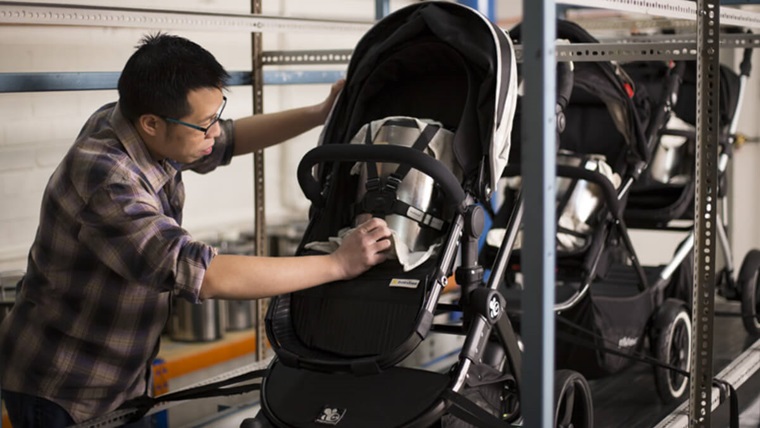
Only five out of 10 cots passed our safety tests. “If a cot doesn’t pass, it shouldn’t be on sale – but this is an improvement on our previous test, when only one out of nine passed.”
Also on health and safety, we revealed another unfriendly fat: “Trans fat, hidden in many processed foods, is even worse for your heart than the saturated fat you know about. You can’t tell how much is in a food from the label.”
A win for consumers – and us – as component pricing got the thumbs down. CHOICE had long called for a single price for goods and services. Changes to the Trade Practices Act required businesses to disclose the full, single-figure price. “You’ve complained long and hard about airlines printing airfares in bits and pieces, with the full price stated nowhere,” we told readers.
Is bottled water a triumph of marketing, we asked. “You have a product that is cheap, safe and pleasant to drink: tap water. Along comes bottled water that’s no safer, is often indistinguishable from tap water, and costs much more. And we buy it by the millions of litres and dollars per year.”
We lamented the deregulated power market. Instead of producing lower prices and better supply, it had done the opposite: SA consumers faced a 30% hike in their bills.
Everyone was cluing up on the internet. We explored the ins and outs of eBay, “an online bazaar that lets you buy and sell all kinds of items. It has millions of satisfied customers, but you need to know the rules to use it wisely.” And more than half of all Computer CHOICE readers were using broadband, compared to just 16% two years earlier.

2006

We started calling ourselves, not just the magazine, CHOICE. “Research found CHOICE was well-recognised but the Australian Consumers’ Association wasn’t and people confused it with government,” said then-CEO Peter Kell.
And we shimmied to iPods and MP3 players. “Digital music players have revolutionised the way we listen to music … holding your whole music collection on a device little bigger than a matchbox may seem strange after the chunky Walkman.”
CHOICE sounded the alarm over baby dummies; six failed the standard, which wasn’t mandatory.
We also took up the campaign against child obesity, which had reached epidemic proportions.
About 70% of parents CHOICE surveyed thought the government should regulate food and drink marketing to children.
Our shadow shoppers sharpened their talons by visiting nail salons. More than a third were unsatisfactory, with shoddy manicures and sloppy hygiene such as washing hand towels in the foot spa.
Still with our claws out, we unveiled the Shonky Awards – “the top 10 dishonest, unsafe, unethical, mean or downright useless products and services of the past year”.

2007

We reported that comparing bundled phone and internet packages was just about impossible because they were so complex. And it wasn’t just us – PhoneChoice, a comparison website, told CHOICE that not even quantitative analysis and computer modelling could successfully unravel and compare bundled packages.
Another plea for unit pricing: “If shops displayed a unit price, shoppers would be in a much better position to judge value.” It was mandatory in the EU and widely used in the US, so “why is Australia still behind the times in consumer protection?”
CHOICE chose the web for two new initiatives. First, we launched CHOICE Food for Kids offering “independent advice about how healthy kids’ foods really are”.
And campaigning against unfair bank penalty fees, we set up our Fair Fees campaign, in conjunction with Consumer Action Law Centre. The user could send an email to the Treasurer, sharing their stories about unfair fees. More than 1000 people sent an email, while others shared their experiences online.
In October, CHOICE launched a consumer news section.

2008 August 2006

“Who eats a healthy diet?” we asked. Analysing the eating patterns of six members, we revealed diets that look good on the surface can have hidden traps – too much salt and not enough calcium, fibre or water.
With Australia’s aging population, we reported on how to improve brain function and help prevent dementia. As far as taking pills went,“if you don’t eat fish, supplements may help (for omega-3), but it’s not worth spending money on other pills”.
Transparency became a buzzword, as we called for hospitals to report publicly on infection rates, adverse events and surgery outcomes.
We hit out at product safety – “a staggering 33% of children’s products failed safety standards”.
And CHOICE joined forces with the Australian Conservation Foundation and Australian Council of Social Services on the Energy Efficiency: Preparing Households For Climate Change report. “Energy-efficient appliances will make cuts in greenhouse gas emissions,” we said.
Fifty-seven blokes tested men’s moisturisers. We cheekily threw in sorbolene, but our discerning panel gave it the instant thumbs down.

2009

CHOICE took over the government’s GroceryChoice website. A revised site was to be launched with up-to-date grocery price comparisons . We were bewildered when the government pulled the plug just five days before launch.
CHOICE welcomed ratification of the Kyoto Protocol but criticised the low target of the Carbon Pollution Reduction Scheme (CPRS). We also pushed for more information on how consumers could lessen their household emissions.
The GFC and plunging sharemarket created opportunities for bargain-hunters. We steered first-time investors through the bewildering array of options – and told those who lost their jobs how they could pay their bills. Later in the year, we looked at investing in gold as a possible port in the storm.
Our longstanding campaign on bank penalty fees bore fruit. NAB scrapped its $30 account overdrawn fee, while Westpac and the Commonwealth Bank reduced their penalty fees and tackled credit card fees.
We called for a mandatory traffic light colour-coding system for all packaged foods. Saturated fat, salt and sugar would all be rated using these red (high), amber (medium) and green (low) symbols.
Englishman Nick Stace became CEO. CHOICE was already a household name, but Stace’s ambition was “to make it essential for every household”. Members could ring him personally “to start a conversation about the issues that matter most to you”.

How to comment

Here's your chance to join in the debate. Just click in the comment box and let the CHOICE Community know what you think, or view all of the comments on this article.

Reporting offensive comments

If you see something offensive or something that just shouldn't be there, hit the report button and let us know immediately. View the Terms of use for user comments.


Make a Comment