These days, our personal libraries of movies, music and photos grow at a ridiculous rate and become too much for our devices to handle on their own. Enter digital storage devices, particularly those of a portable nature. And the more portable, the better.
You can take a huge amount of data with you wherever you go, simply by picking the right sort of file storage device. The type of storage device that’s right for you, though, will depend not only on the kinds of files you want to store or their size, but also on what you’re planning to do with them.
Portable drive options
These days, portable storage falls into three main categories. Choosing between the different types of portable storage means a trade-off between size, speed and capacity.
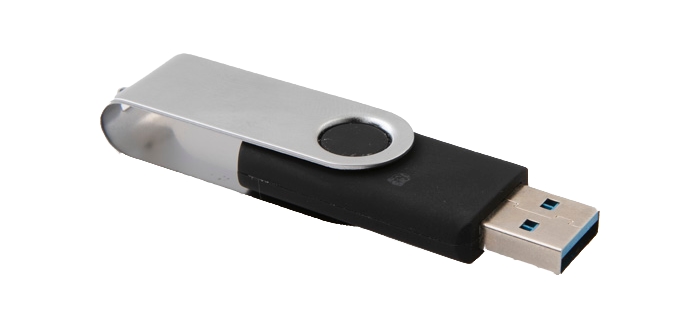
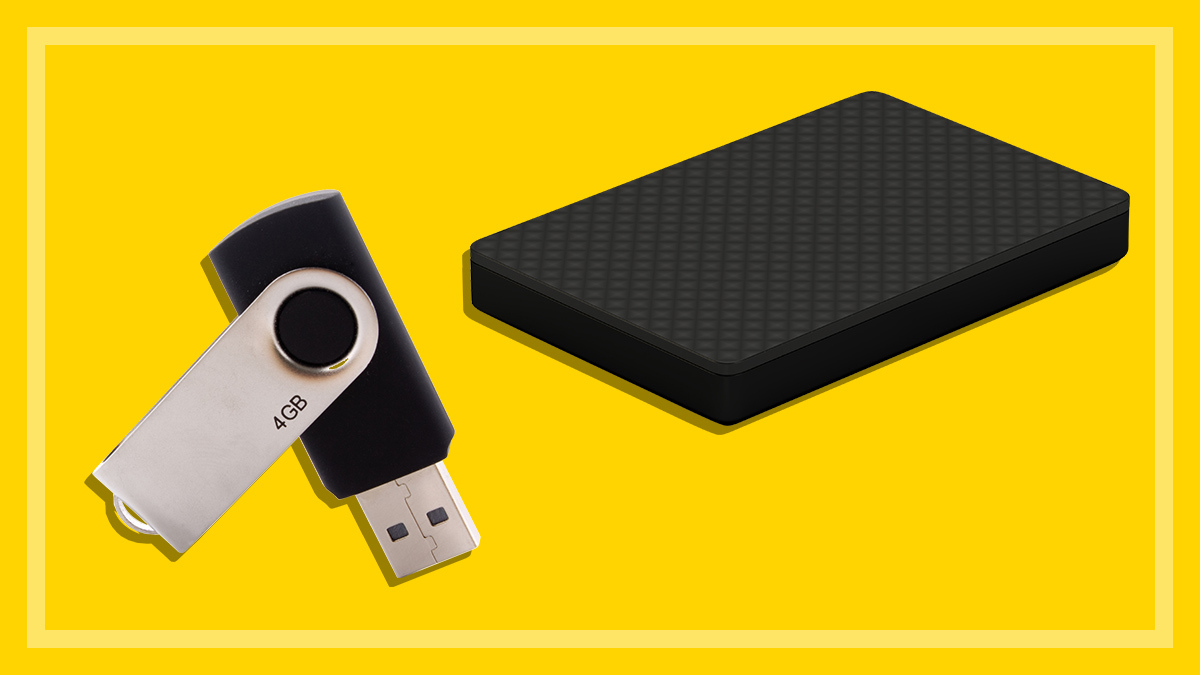
USB flash drives (also called thumb drives) are physically the smallest, but can still hold up to 256GB (gigabytes) or more and be very fast.
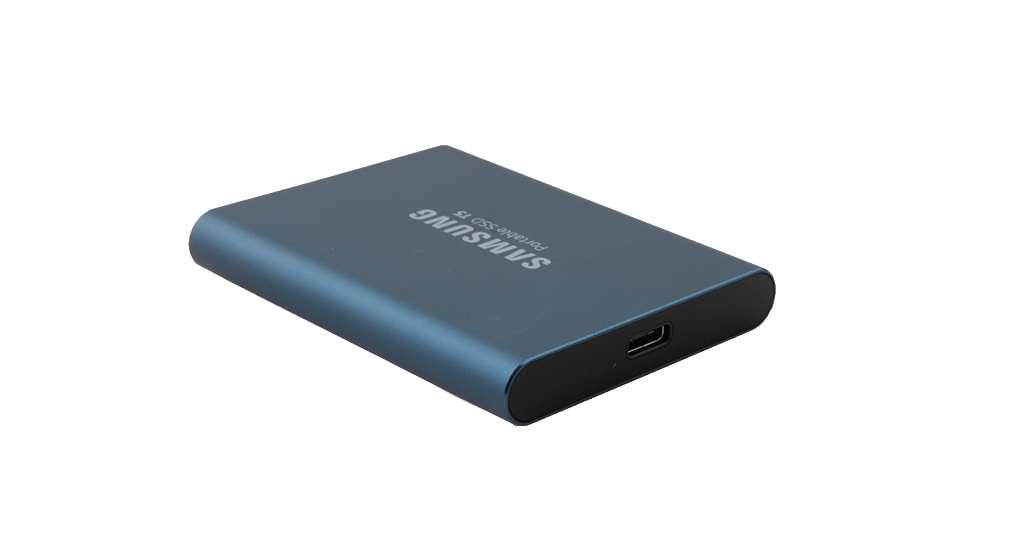
External SSDs (SSDs) are generally larger than thumb drives, but still pocketable. They’re usually the fastest drives and can have up to 2TB (terabytes) capacity, but cost a lot more than hard drives.
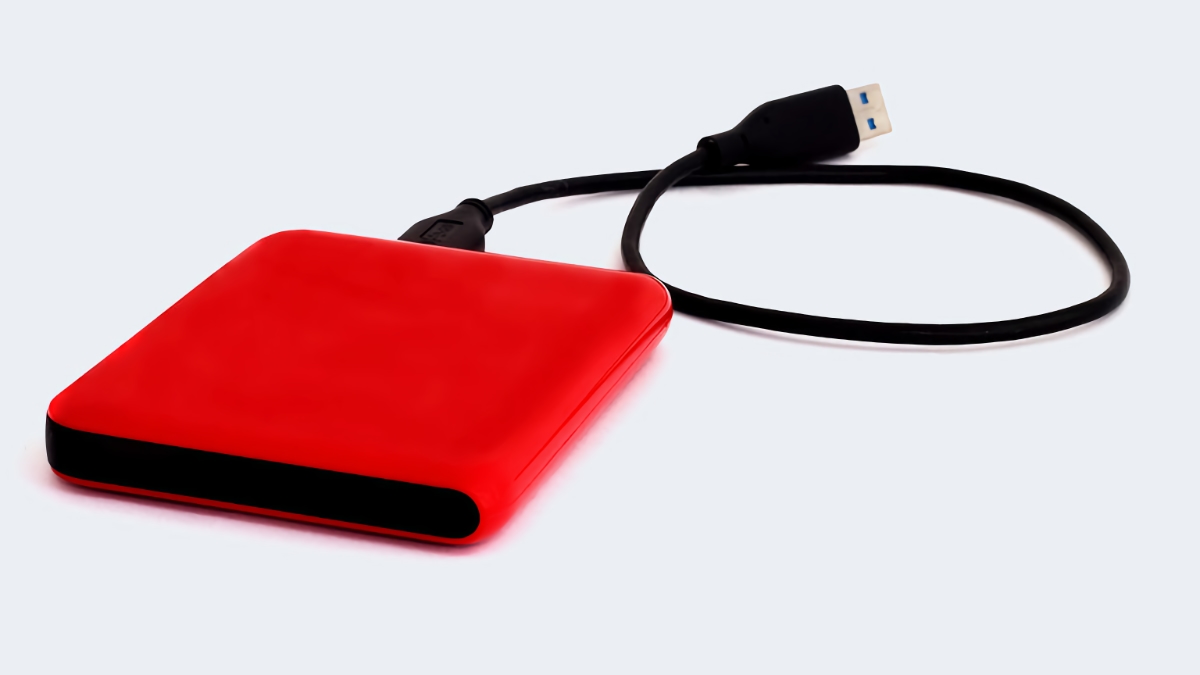
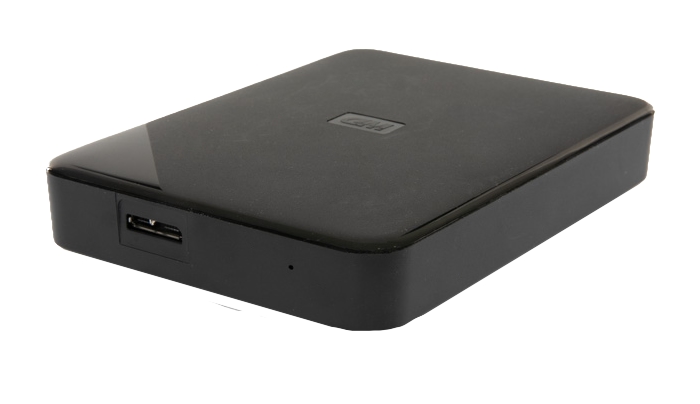
Portable hard drives (HDs) are much slower than SSDs and many thumb drives, but offer greater capacity and a much lower cost-per-GB. You can still stuff them in a handbag or (large) pocket and they’re available up to 5TB capacity.
USB flash drive
USB flash drives (also known as USB keys or thumb drives) are one of the smallest forms of self-contained portable storage. Like memory cards, they use solid-state flash memory chips, but have a built-in USB connector. They’ve become the modern equivalent of the floppy disk, offering cheap, compact and convenient data storage.
They commonly range from 2GB to 256GB capacity, but 512GB models are also available. The more expensive versions may offer faster performance or better security such as built-in hardware encryption to protect your drive from being access by unauthorised users.
The weak points of the cheaper USB flash drives have always been reliability and speed. Despite having no moving parts, they can sometimes fail for no apparent reason.
The kind of USB technology is also important. USB 3.0 and first-generation USB 3.1 are essentially the same technology, offering the same connection speed, up to 5Gbps (gigabits per second). The second-generation of USB 3.1 (called, simply, USB 3.1 Gen-2) is rated at double the speed (10Gbps). However, you can’t tell the difference by just looking at it – you need to consult the specs for the device.
The better versions (look for a “name” brand) are becoming more robust and secure. Some offer built-in, military-grade, hardware-based encryption to keep your data safe. This uses a special chip on the drive to handle encryption duties (the “hardware” part of hardware encryption). Hardware encryption is generally more secure and faster than encryption via a software program (software encryption).
There’s also a whole class of ruggedised devices, meaning they’re designed to be protected against impact, dust and water, but you can expect to pay more for this extra peace of mind.
But whether they’re cheap or expensive, simple or full-featured, their compactness can actually work against them on occasion – they’re small so they’re really easy to lose.
An SSD has no moving parts. These days, the term is often used when referring to flash storage drives larger than a USB thumb drive and connected by a cable, rather than plugged in directly. Though technically USB flash drives can be classed as SSDs, this is not common in product names or marketing.
In testing SSDs from Samsung, Western Digital (WD), LaCie, and Verbatim, we found their average speeds were generally faster than other types of portable storage devices.
Though SSDs are often faster and have more storage than a USB flash drive, the cost-per-GB is usually similar. However, neither category comes close to the low cost-per-GB of portable hard drives.
Pros:
No moving parts means more durability than HDs.
Usually faster than USB flash drives.
Two to five times faster than portable HDs.
Lightweight and usually smaller than portable HDs.
Cons:
Larger and less portable than USB flash drives (though still relatively small).
The cost-per-GB can be several times that of portable HDs.
Portable hard drive (HD)
Portable (and desktop) HDs use technology based on spinning metal discs and magnetic recording. The moving parts make them heavier and likely less-durable than SSDs and thumb drives. They’re more susceptible to damage if dropped while working.
HD technology generally has much slower read and write speeds than portable SSDs and high-quality USB flash drives. HD speed test results are generally between half and one-fifth the speed of SSDs in our testing. This can make a huge difference if you’re transferring large amounts of data, such as video files or a computer backup.
On the plus side, HDs are relatively cheap. The cost-per-GB for a portable HD can be around one-tenth that of USB flash drives or SSDs, though SSDs are becoming more price competitive.
It’s worth noting that portable HDs are also generally poor performers compared to desktop HDs, which are physically larger and need to be plugged into mains power. Desktop drives can also be up to 8TB capacity and cheaper per GB. But that’s the price you pay for portability.
Pros:
Very low cost-per-gigabyte.
Readily available with multi-terabyte storage.
Cons:
Slower performance than SSDs or high-quality USB flash drives.
Heaviest and largest.
Easier to damage.
Wireless portable storage
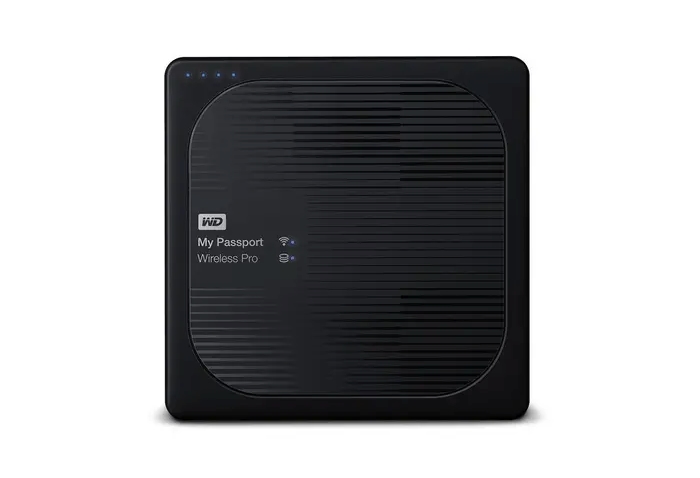
Another semi-category to consider is wireless portable storage. These devices are mobile data banks that can give you extra terabytes of space that you can access without any physical cable attached.
Wireless portable storage isn’t a separate category in itself; it includes HDs, SDDs and models that can let you plug in SD memory cards or thumb drives. The difference is that they don’t need a direct cable connection or even a power connection, thanks to a built-in battery.
All connect to your smartphone, tablet or even laptop by creating their own wireless (Wi-Fi) hotspot. They can also let you connect to the internet at the same time, via a ‘passthrough connection’.
Wireless drives let you connect multiple devices to the one drive simultaneously, which is great for media streaming to several phones, tablets or laptops at once
They’re relatively easy to set up and getting your content onto them is as simple as plugging in a USB drive. You then connect them wirelessly to your mobile device by turning on the built-in Wi-Fi hotspot in their app and connecting to it just as you’d connect to your local Wi-Fi network.
Usually the app lets you organise your files (some automatically categorise videos, music and documents for easy browsing). Most will also let you copy files from the storage unit directly to your mobile device and vice versa. This can make them a good temporary backup/archive unit for your mobile device when it gets too full.
In addition to their own app, they often allow you to open a third-party media player, such as VLC, for handling various video and audio file formats. The most popular are AVI, MKV, MP4, MOV and WMV.
The internet pass-through function is handy if you want to browse files on the device while simultaneously having a connection to the internet. In our testing, we found the ease of setting up internet pass-through, for connection to the web at the same time, varied quite a bit. We also found notable differences in connection reliability.
Wireless portable storage devices also have a big advantage over direct-connect devices in that you can connect multiple devices simultaneously via Wi-Fi. So if you want to carry around a large movie and/or music collection to keep the kids happy in the car on a long trip, for example, wireless portable storage devices can be a sanity saver.
What happens if you lose your drive? Portability is handy, but it definitely increases the risk of theft or loss. Without the safeguard of encryption, somebody could easily get their hands on all your files.
Encryption is becoming more common on portable drives, but poses its own problems and makes the need for backup even more vital. There are two ways of encoding your files:
Hardware encryption
Hardware encryption is the safer method, but the downside is that if your hardware-encrypted drive fails, it’s much harder – or even impossible – to retrieve your data.
The upside, however, is that hardware encryption is much harder to break than software-based encryption, so it’s better at keeping your personal data away from prying eyes. It also means that you don’t need to completely erase/wipe your drive before disposing it as your data is secure.
Software encryption
Software encryption can provide some peace of mind if your drive’s stolen, although it’s not as fast as the more convenient hardware encryption, which encrypts all files automatically.
You can apply software encryption yourself if you want using a specialised program, or you might find encryption software provided on the drive. Mac users can use the Disk Utility program that comes with macOS to encrypt almost any drive or folder for that platform.
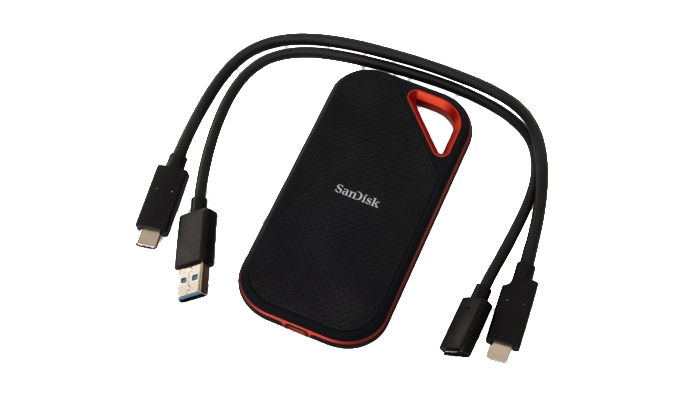
Some drives come with both USB Type-A and USB Type-C cables.
Consider your connections
It has to be said that computer connections these days are an alphabet soup of similarly named standards.
It used to be simply USB 2.0 or USB 3.0 for the most part, but the advent of USB-C as the “one plug for all” has actually created more confusion. Especially since USB-C 3.1 was recently rebranded as USB 3.2!
These days, the USB 2.0 port is the lowest common denominator and a speed bottleneck for performance, as it is only rated at 480Mbps (megabits per second) data transfer rate. For transferring small amounts of data and possibly general backup, USB 2.0 may be OK. It can just chug along in the background.
But USB 3.0 or the newer USB-C 3.2 (Gen-1) is a far better choice. Both are rated at 5Gbps (gigabits per second).
And if you’re working “live” from an external drive, the faster USB 3.2 (Gen-2), which is rated at 10Gbps, may be a better option.
But if you’re working with large files and want maximum speed, Thunderbolt 3 (rated at up to 40Gbps) is the ultimate.
USB in detail
Connection types and speeds both need to be matched by your computer for the highest throughput. The popular connector speeds are rated as follows, but note this is the theoretical maximum speed of the connection standard. Real-world transfer throughput speeds will be less (and possibly a lot less), depending on the type and quality of storage device.
Also note that whatever you use, larger files tend to transfer faster than an equivalent amount of small files.
USB 2.0: 480Mbps (megabits per second), which is nominally 60MBps (megabytes per second). Usually uses a USB-A shape connector.
USB 3.0: 5Gbps (gigabits per second), or 625MBps. Usually uses a USB-A shape connector with a blue insert for identification.
USB 3.1 (Gen-1): Same as USB 3.0. May use USB-A shape connector or USB-C shape connector.
USB 3.2now replaces the USB 3.1 standard. It keeps the USB 3.1 SuperSpeed and SuperSpeed+ data modes but adds two new SuperSpeed+ transfer modes to produce 10Gbps and 20Gbps speeds.
USB 3.2 (Gen-1): Same speed as USB 3.1 (5Gbps). Uses USB-C shape connector.
USB 3.2 (Gen-2): 10Gbps, or 1250MBps. Uses USB-C shape connector.
USB 3.2 (Gen-2×2): 20Gbps or 2500MBps. Uses USB-C shape connector.
Thunderbolt 2: 20Gbps or 2500MBps. Uses a proprietary dome-shaped connector compatible with Mini DisplayPort.
Thunderbolt 3: 40Gbps or 5000MBps. Uses USB-C shape connector.
Unless you have at least USB 3.0 on both connections (drive and computer), you won’t realise the full speed of even a modern portable hard drive, and you’ll need USB 3.2 or faster for an SSD or high-quality thumb drive.
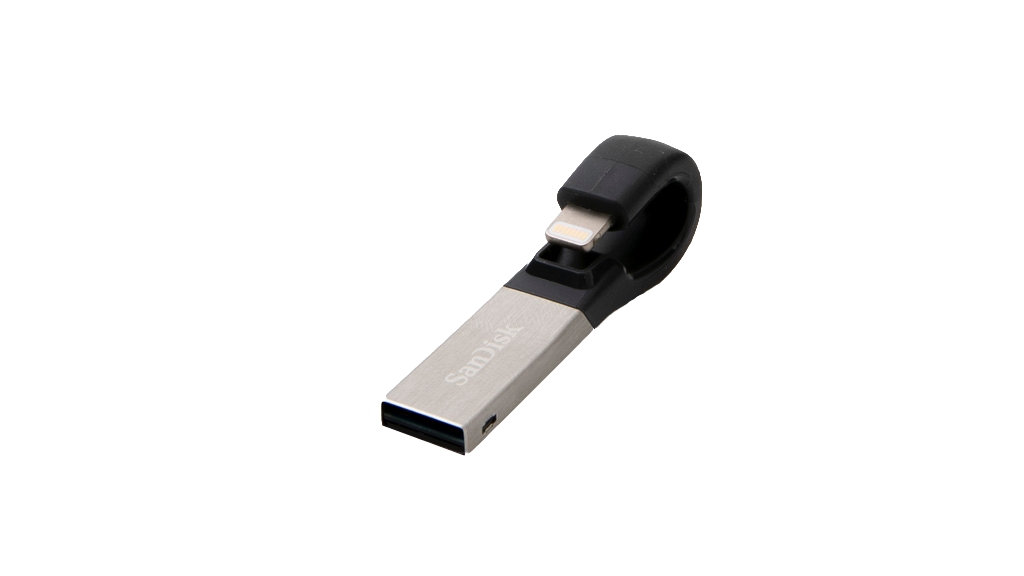
The Sandisk iExpand drive has both USB Type-A and Lightning connectors, along with software for file transfers to iPhone and iPad.
What to look for
Once you’ve decided on the type of storage solution that suits your needs, there are some other features that you should think about.
Capacity
For backup duties, this is one of the biggest considerations. If you want a portable backup, go for the largest drive available that you can afford, preferably twice the size of the drive you’re backing up.
An incremental backup (the most common kind) adds versions of new and altered files incrementally to your backup set, making it grow over time. Don’t let your drive fill up completely or it won’t work efficiently – allow for at least 20% of unused space.
Software
Many external hard drives will include backup software on the drive, which is handy if you don’t have any. But you don’t have to use it if you already have backup software on your PC or a third-party program. Before you use the supplied software, check if it’s a full version, trial version or a special (limited) version.
If it’s a trial version, it may be fully functional but time-limited, or it may be limited in what it can do. If time-limited, once the trial period has expired, you won’t be able to access your backed-up files unless you pay extra for the full version.
Ideally, your backup software should be able to do a disk image (full) backup, which can restore everything in the event of drive failure, including the operating system and all programs as well as your files.
Some backup software also ties in with online backup services to give you automatic offsite backup for a smaller amount of your most important files, as well as your full local backup. This also may be a time-limited or extra-cost option. Other software provided on a portable hard drive can include formatting or power management utilities.
Note that if you’re buying an external drive to use with a recent Mac model, you won’t necessarily require extra backup software as macOS (formerly called OS X) comes with Time Machine backup software. However, this will require the drive to be formatted for macOS, which can be easily done with the built-in Disk Utility software.
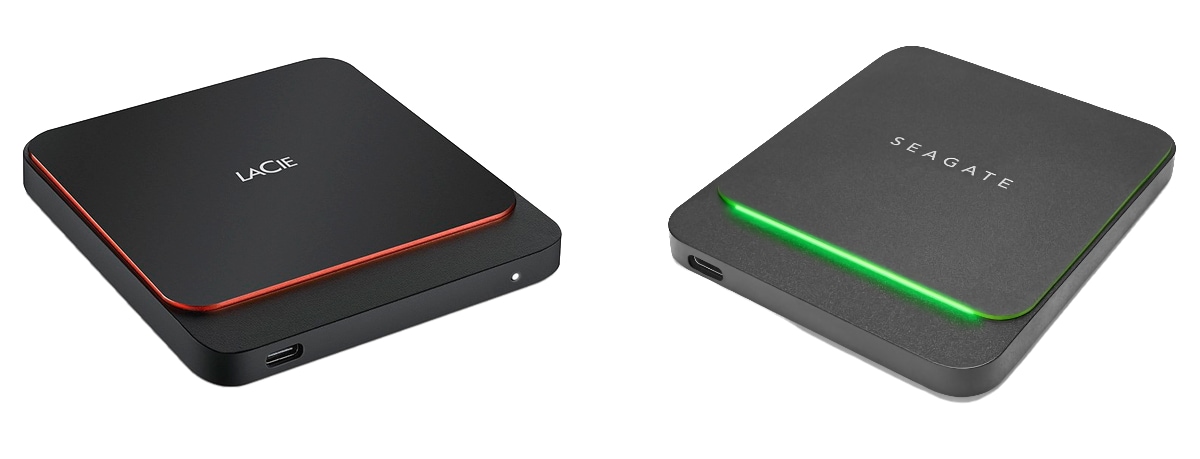
Different brand drives can be very similar, such as these LaCie and Seagate portable SSDs. Seagate owns LaCie.
Formatting
Most high-capacity external drives will come pre-formatted for PC, usually in NTFS format, though these days it’s becoming more common for them to be formatted in the more recent exFAT format. If you have a Windows PC, either format is fine.
If you have a Mac, the exFAT format is also fine. However, the NTFS format can present a problem as it can be read by, but not written to, without extra software such as Microsoft NTFS for Mac by Paragon Software ($32 at paragon-software).
Some Seagate external drives come with a no-cost specially modified version of NTFS for Mac, which eliminates the need to reformat the drive. However, the cut-down version only works for mounting Seagate NTFS-formatted drives on a Mac.
Some manufacturers (most notably Western Digital) market drives specifically for Macs, pre-formatted and ready for Time Machine. Otherwise, any PC-formatted (NTFS, exFAT or FAT 32) drive can be formatted using OS X’s Disk Utility software. If you want the drive to be bootable (for use as a bootable system drive or a Time Machine drive, for example), set it to HFS+, Journaled, with GUID partition table.
There are four common drive formats:
NTFS – the most common and efficient format for large volumes on Windows and Linux.
HFS+ (for Macs) – the most common and efficient format for large volumes on macOS/OS X. The replacement for HFS+ is APFS (Apple File System), a new format optimised for solid-state drives in Apple devices. You can reformat external drives to APFS using a Mac, but drives aren’t commonly sold in this format.
FAT32 – can be used across Windows and Mac OS platforms, but individual files can be no larger than 4GB.
exFAT – can be used on both platforms without the limitations of FAT32.
Warranty
Drive failures aren’t common, but they can happen to any drive without warning (thus the need for regular backups). Most drives have two or three years’ warranty, but some have lifetime warranty. Either way, a warranty won’t cover lost data unless specifically mentioned, just the hardware itself. Always keep a backup and, if you’re very security-minded, keep a backup of your backup. Data recovery by a specialist service can be quite expensive.
Why we've partnered with WhistleOut

We've partnered with search engine WhistleOut to help you find and buy the right plan for you.  While we make money if you buy through WhistleOut, this doesn't influence our rankings. 100% of the money we make goes straight back into our nonprofit mission.
For more than 60 years, CHOICE has been fighting the good fight for Australian consumers.
In the past year alone we've uncovered systemic issues with sunscreens, investigated shonky supermarket pricing, fought for stronger scam protections and helped make complex energy pricing fairer and clearer.
CHOICE is here to provide unbiased advice and independent testing in our world-class labs. We buy the products we test, just like you do, and our expert reviews are influence free. We’re here to help you choose smarter. Hopefully you’ll also save some money along the way.
Thanks to CHOICE, you’ll never be alone when a business treats you unfairly. You can support our work by joining or donating to our cause.