Freeview labelling - do we need it?
25 Mar 11 08:00AM EST |
Post by
Scott O'Keefe
Digital TV is already being broadcast across much of Australia. By 2014, remaining analogue TV broadcasts will be shut down, and you’ll have no choice but to watch digital TV. The federal government is doing a pretty good job of educating Australians about the transition to digital, and what consumers need to do.
But then there is Freeview - is it a help, a hindrance, or just plain old marketing hype?
What is Freeview anyway?
Freeview is a consortium of Australian TV broadcasters - not just the longstanding commercial networks like Seven and Nine, but the ABC and SBS as well.
Freeview is also the name that the consortium has given to FTA (Free To Air) TV broadcasts. So when someone says “Freeview” they might mean one or the other, or both.
Why would I want Freeview?
You really don’t have much choice. If you want to continue to watch FTA TV - by 2014 (or earlier in some areas) – you’ll have to watch Freeview (or else sign up with a cable or satellite provider).
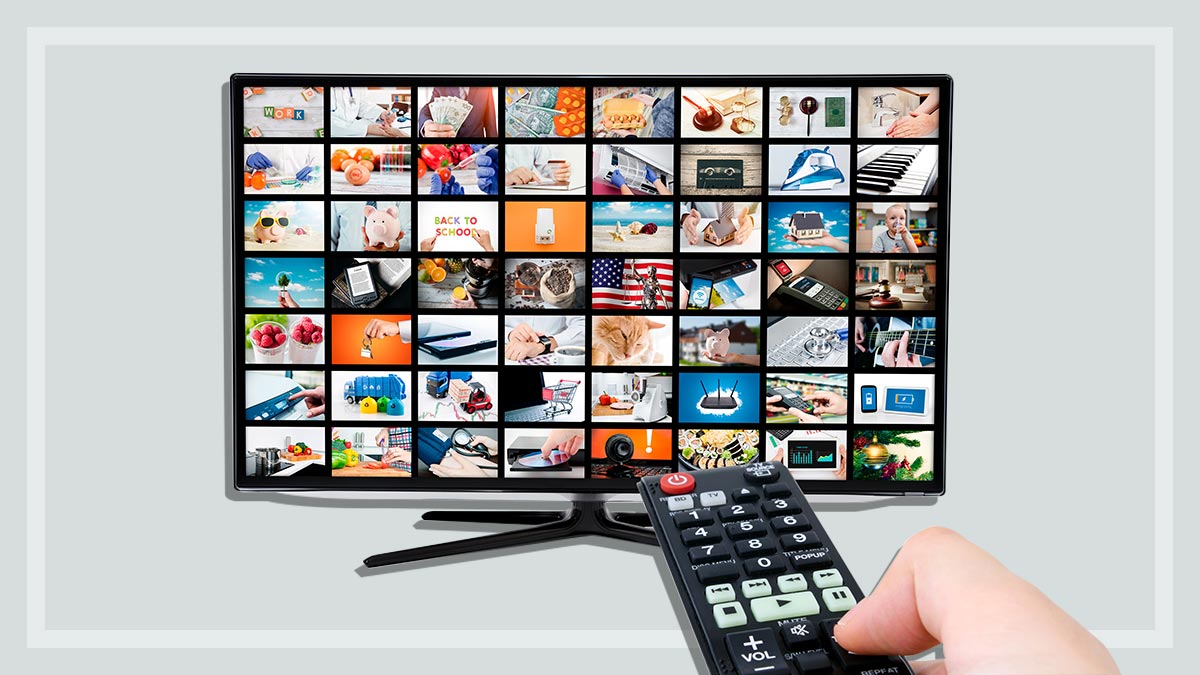
To watch Freeview, most people will use a digital TV, a digital STB (Set Top Box) connected to an analogue TV, or a DVR (Digital Video Recorder - a STB with the ability to record to a hard disk drive, DVD, etc.).
You don’t need any of these products to be labelled with the Freeview logo. Just look for the government’s “digital TV READY” label.
But what does it mean if the product does have the Freeview label?
Freeview labelled products
Products that are labelled with the red and white Freeview logo are approved and licensed by the Freeview consortium. There are certain features that these products must have. Two of them are:
-
HD (High Definition) tuner(s). This is probably a good thing. Even though not much that is broadcast on the HD channels is actually in HD (are you enjoying all of those Standard Definition programs on 7mate and Gem?), you still need an HD tuner to watch them. Products with HD tuners are available without the Freeview label.
-
MPEG4 compatible. This might be important in the future, but really, why bother about future-proofing when MPEG4 broadcasts aren’t even on the radar yet? By the time MPEG4 broadcasting does arrive, some other new technology probably will too, and there’s no guarantee your Freeview labelled product will be ready for that.
There are certain restrictions for Freeview labelled products, and the most important one is:
-
No ad skipping. If you read online forum discussions, the ad skipping feature is the feature that most people complain is missing from products that carry the Freeview label.
Does CHOICE recommend that you buy a Freeview product rather than one without the red and white Freeview label? No, we don’t.
But wait, there’s more - the Freeview EPG
As well as the red Freeview label, products can also be licensed by Freeview to carry a similar looking Freeview EPG label. What is this all about?
A consumer might well be forgiven for thinking that the Freeview EPG is the Electronic Program Guide that is broadcast along with Freeview and accessible by anyone with a digital receiver. That makes sense, right? Wrong.
There is of course an existing EPG, which I’ll call the FTA EPG, because Freeview EPG is something different, and it’s something exclusive. If you’re not confused yet, hang on for the ride.
The FTA EPG is broadcast within the stream of each individual broadcast. So, if you’re watching Seven, your receiver can grab the EPG details for Seven out of the stream. However, if you want to check the EPG details for ABC, one of two things needs to happen:
- You need to change the channel to ABC, or
- Your receiver needs to have a second tuner that it can use to get the ABC EPG data whilst you continue to watch Seven.
The Freeview EPG improves on this situation by having every broadcaster transmit the EPG data for everyone else. But only products that carry the Freeview EPG label can use this new EPG.
The Freeview EPG also carries a unique identifier for every showing of every program. This can be useful if your DVR is automatically recording an entire series, because it will be able to spot repeats and avoid recording them a second time.
I personally like the sound of these benefits of the Freeview EPG, but it’s a shame that not every receiver manufacturer is able to offer them. Restricting these features to a subset of manufacturers limits choice for Australian consumers.
This is not the whole story
It’s not meant to be, and in fact it can’t be. That’s because Freeview are secretive about certain aspects of what they’re up to, and if Freeview was just the commercial broadcasters then I might understand that.
I’m annoyed that at a time when people are confused enough about digital TV, the broadcasters have to make it just that much more confusing. I’m especially upset with our Auntie ABC getting involved in the whole deal.
Do you think the Freeview consortium is making it easier or harder for consumers to get a handle on digital TV? Will you be looking for Freeview and Freeview EPG labelled products or is the government’s “digital TV READY” label enough for you?